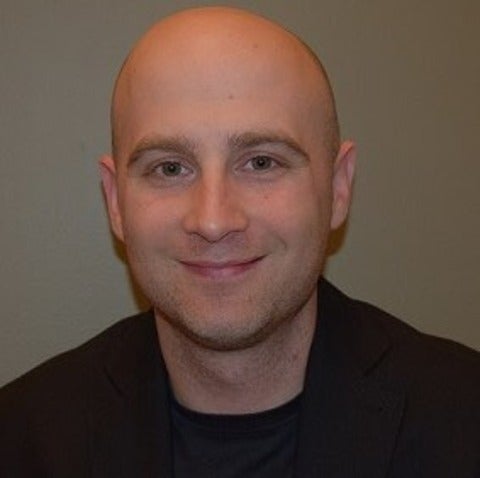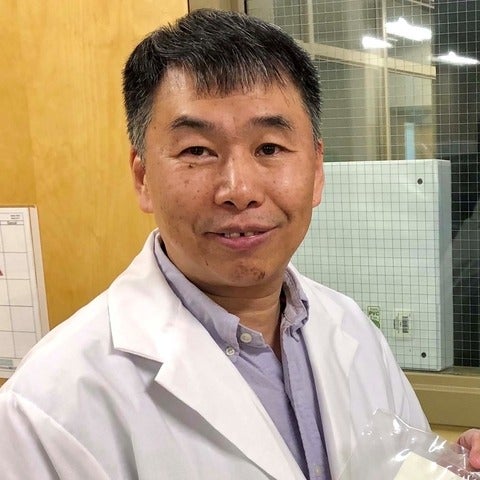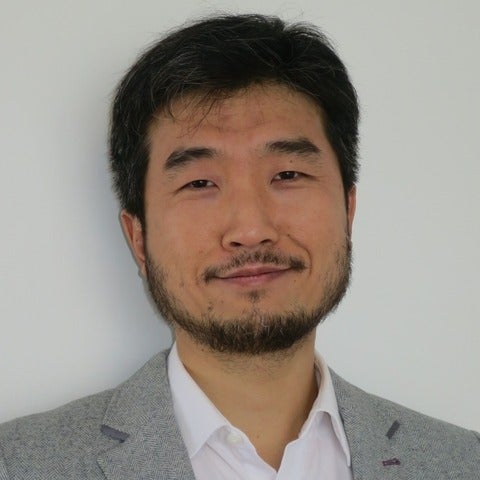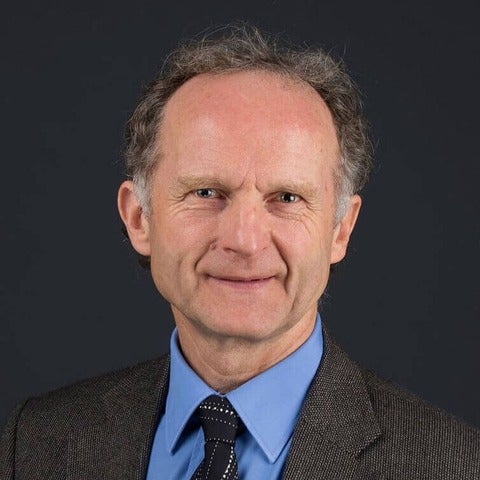
WISA Talks

Fatma Gzara

Professor, Department of Management Sciences

Fatma Gzara is an Associate Professor with the Department of Management Sciences at the University of Waterloo. Her research interests lie in the areas of optimization, network models, supply chain management, transportation risk and logistics. Currently, she uses bi-level mathematical modelling to determine the routes that trucks carrying hazardous materials will be most likely to take. Professor Gzara gathers real data and uses it to keep residential and industrial areas safe. In the last few years, she has written articles for journals such as Operations Research Letters, Telecommunication Systems, and the European Journal of Operational Research. 

Ewa Niechwiej-Szwedo

Associate Professor, Kinesiology

Dr. Ewa Niechwiej-Szwedo completed her graduate work at the University of Toronto and joined the University of Waterloo in 2012. Her research program is grounded in systems neuroscience and focuses on discovering the fundamental mechanisms involved in the central nervous system control of eye and hand movements across the lifespan. She has expertise in the field of visuomotor neuroscience, including gaze behaviour, hand-eye coordination, motor skill development and learning. 

Suzanne Kearns

Founding Director, Associate Professor, Aviation

Dr. Suzanne Kearns is an aviation academic with a focus on education and optimizing pilot performance, receiving her PhD from Capella University in 2007. Her research explores how to optimize the next generation of aviation professionals (NGAP) by analyzing processes to attract people to the field of aviation, optimizing and innovating the traditional education pathway, and improving the retention of professionals within the field. She is a former airplane and helicopter pilot and is internationally recognized within the aviation industry.

Evan F. Risko

Associate Professor, Department of Psychology, Board Member

Dr. Evan Risko is currently an associate professor and a Canada Research Chair in Embodied and Embedded Cognition in the Department of Psychology at the University of Waterloo. Since receiving his PhD at the University of Waterloo, he has been pursuing his research interests in issues related to the embodied and embedded nature of cognition and the utilization of cognitive psychology to help improve practices in education and training. He has published over 100 papers, received research funding from numerous agencies (i.e., NSERC, SSHRC, CFI), worked with numerous industry partners and received various accolades for his research including Early Career awards from the Psychonomic Society, the Province of Ontario, and the Canadian Society for Brain, Behaviour and Cognitive Science.

Daniel Scott

Professor, Geography and Environmental Management, University Research Chair,

University research chair in Global Change and Tourism, Dr. Daniel Scott is a professor in and the director of the Master of Climate Change program. Scott received his doctorate in 1998 and has served in a variety of directorships and chair roles at the University of Waterloo since 2003, including executive director of the Interdisciplinary Centre on Climate Change at the University of Waterloo. Scott has worked extensively in the area of climate change and the global tourism sector, including the transition to a low carbon tourism economy and adaptation to the complex impacts of a changing climate, having published more than 130 peer-reviewed articles on these topics.

Xianguo Li

Professor, Mechanical and Mechatronics Engineering; Director, Fuel Cell and Green Energy Lab

Xianguo is a Professor in the Deparment of Mechanical and Mechatronics Engineering at the University of Waterloo. His main research interests and activities are in the area of thermal fluid/science, including energy systems and energy storage, various energy conversion devices, propulsion and power generation systems, aerosol generation and applications, and transportation fuel cell and battery systems. 

Derek T. Robinson

Associate Professor, Geography and Environmental Management

To advance science in these areas of interests, Derek is currently using remotely piloted aircraft to remotely sense agriculture and urban areas using thermal, multi-spectral, and LiDAR sensors. Collected data are used for a variety of purposes that include: quantifying natural processes (e.g., erosion, carbon storage) at the scale of individual property parcels or agricultural fields; calibrate and validate models of natural processes; and among other interests, generate 3D immersive environments for visualization and knowledge transfer.

Shi Cao

Associate Professor, Systems Design Engineering; CAP Committee Chair

Shi Cao (“SHER TSAO”) studies human factors engineering. His research projects include human performance and workload modeling, human-machine system reliability, the applications of virtual and augmented reality, and new aviation training technologies. Cao has developed computational cognitive models and human performance prediction systems (Google Scholar list). He is also the director of Human Optimization Modelling Lab (HOMLab) and the Committee Chair of the Collaborative Aeronautics Program.

Paul Parker

Professor Emeritus, Faculty of Environment, Board Member; Former Director, Economic Development Program

Paul is a sustainability researcher with a passion for low carbon aviation and a love of teaching. He brings social science expertise to a diverse set of energy and development research projects, often with engineer colleagues. He has 175 publications and over 230 presentations on a broad range of projects: zero-carbon buildings, energy retrofits, smart grid technologies, renewables in remote communities, sustainable economic development and community energy planning. Electric and low carbon aviation is the next challenge.                                      

Elizabeth Irving

Professor, Optometry and Vision Science

Dr. Elizabeth Irving is a clinician/scientist with internationally recognized expertise in vision science including eye tracking and binocular vision. Good vision is widely being advocated as an important factor learning. Irving has led a variety of different types of studies; evaluating ocular parameters, validating novel testing procedures, investigating the need for stereopsis (depth perception) in military helicopter pilots, studying the effects of space flight on the eye, studying eye tracking in concussion and investigating new ways of educating the public on eye disease and eye care.