The flooding and the damage done, Blair Feltmate comments


The laboratories of Barb Katzenback and Paul Craig at the University of Waterloo, are seeking a PhD student for a Global Water Futures-funded environmental genomics research project: "Next generation solutions to ensure healthy water resources for future generations."

Water Institute member, Peter Huck, comments.
As part of the Water Institute WaterTalks lecture series, with Günter Blöschl, head of the Institute of Hydraulic Engineering and Water Resources Management and professor of Hydrology and Water Resources at Vienna University of Technology, will be presenting "Emerging outcomes from a cross-disciplinary doctoral programme on water resource systems."
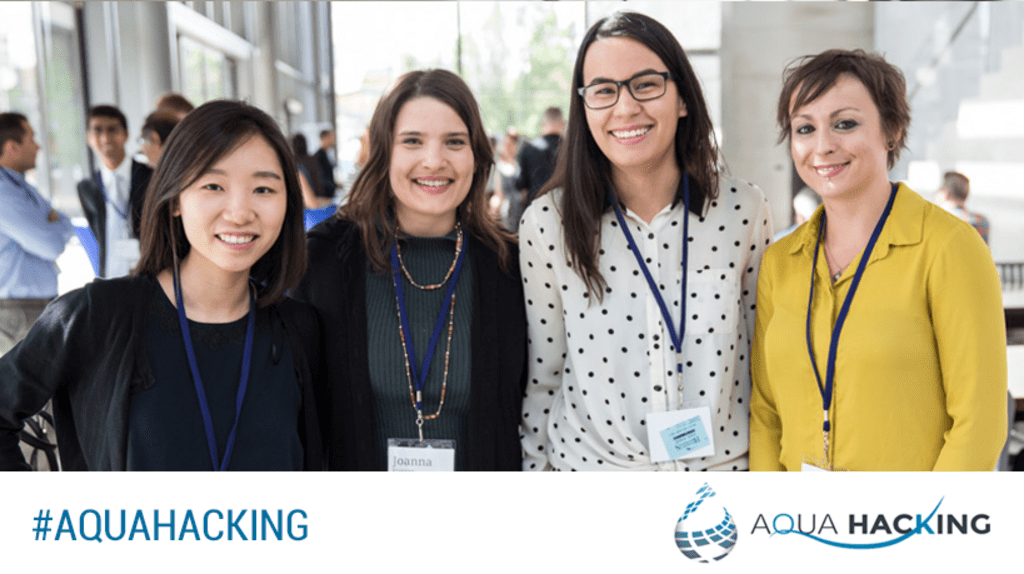
The AquaHacking 2017 semi-final competition unfolded last week at CIGI. By the end of the evening, five teams were chosen to move on to the final competition at Waterloo on September 13. It was a difficult decision for the five judges, as all 17 teams that competed offered innovative ideas that tackled the challenges and opportunities facing Lake Erie.

The second International Conference on Amphibious Architecture, Design and Engineering – hosted by Water Institute member and associate professor Elizabeth English – took place June 25-28, and brought together academics, practitioners, professionals and policymakers to discuss amphibious architecture.
Water Institute member and professor in the School of Environment, Enterprise and Development, Larry Swatuk, is the author of a new book titled “Water in Southern Africa.”
Larry lived for 14 years in Africa, primarily in Botswana, where he was a lecturer at the University of Botswana and associate professor of Resource Governance at the Okavango Research Institute. He has published extensively on issues pertaining to the ‘wise use’ of the resources of the Okavango River basin.
In this Water Institute seminar, professor Sascha Oswald from the University of Potsdam's Institute of Earth and Environmental Sciences presents, "Detailed monitoring of microplastic particles in an urban water course facilitated by a novel, powerful detection method - an approach for identifying dynamic inputs of microplastics."
Coffee and refreshments will be provided.

As part of Ecohydrology's seminar series, professor Sabine Attinger from the Department of Computational Hydrosystems, Helmholtz Centre for Environmental Research will present, "Catchment scale flow and transport: selecting model complexity and using parametrization and scaling methods to develop robust and efficient models."
Coffee will be provided.