News

Filter by:

Limit to news where the title matches:
Limit to items where the date of the news item:
Date range
Limit to news items tagged with one or more of:
Limit to news items where the audience is one or more of:
Limit to news items where the faculty or school is one or more of:

A virus that infects harmful freshwater cyanobacteria is challenging one of biology’s most fundamental assumptions about the difference between viruses and living cells.

Published in The ISME Journal, new research reveals that the jumbo cyanophage PhiMa05 carries the largest set of ribosomal protein genes ever found in a virus. The discovery is prompting scientists to rethink how viruses evolve and where the line between viral and cellular life truly lies.

Friday, July 10, 2026

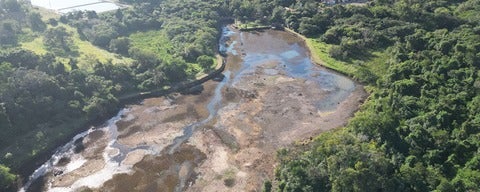
Living with scarcity: Researching Bauru, Brazil’s hidden water systems

by Fernanda Souto Barreto and Fernando Schuh Rörig, International Visiting Graduate Students at the University of Waterloo

This article brings together the work of two graduate students studying water scarcity in Bauru, Brazil, from complementary perspectives. One examines the fragile groundwater systems beneath the city and the risks created by aging infrastructure. The other investigates how households cope when the formal water supply becomes unreliable. Together, their research reveals how hidden water systems, both underground and within homes, are sustaining the city, while also creating new risks and inequities.

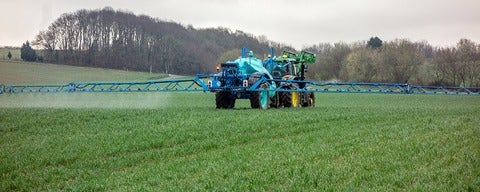
New research from University of Waterloo and Penn State researchers suggests that fertilizer shortages linked to global conflict may be having an unexpected effect on water quality.

The researchers found that in nutrient-rich agricultural systems, farmers may be able to tap into legacy nutrient reserves already stored in the soil, reducing the need for additional fertilizer and decreasing nutrient runoff into rivers, lakes and streams.

Ocean conservation efforts are often guided by ambitious global targets, from protecting 30 per cent of marine and coastal areas to advancing the United Nations Ocean Decade goals. But new thinking co-authored by Water Institute member Derek Armitage and published in The Conversation argues that targets alone are not enough to ensure meaningful progress.

Dr. Nandita Basu delivered a distinguished public lecture at the University of Victoria, highlighting integrated pathways to water, food, and energy sustainability through the SOLUTIONSCAPES framework. Her talk emphasized that while many effective environmental solutions already exist, their impact depends on coordinated, landscape-scale implementation that accounts for real-world complexity. The lecture also marked her recognition with the Distinguished Women Scholars Award.

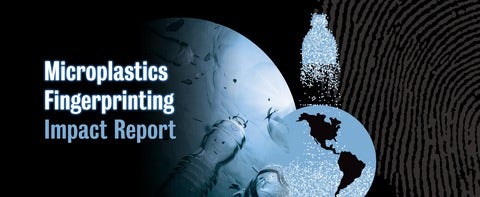
The Microplastics Fingerprinting research project has released their latest impact report. This report showcases the remarkable scientific advancements and societal contributions our researchers have made since the microplastics fingerprinting research group's launch.

A new study led by Water Institute researcher Mark Servos and colleagues in the Servos Group has detected antidepressants, opioids and other drugs of abuse accumulating in freshwater fish living downstream of urban wastewater treatment plants. Using a newly developed analytical method, the team found compounds such as fentanyl, methadone and venlafaxine in multiple wild fish species, marking the first documentation of these substances in wild fish in Canada.

Peatlands cover upwards of 12 per cent of Canada’s landscape and store more carbon than all other ecosystems in the country combined, making them one of Canada’s most powerful natural climate allies. Yet until now, information on these critical ecosystems has been difficult to find. To address this gap, the Can-Peat Network at the University of Waterloo launched the Canadian Peatland Data Portal in early January, the country’s first national platform dedicated to centralizing peatland carbon metadata.

Friday, April 3, 2026

Listening to farmers, learning from nature

by Fridah Silas, PhD student in the School of Environment, Resources and Sustainability and Collaborative Water Program

New research by Fridah Silas, a PhD student in the School of Environment, Resources and Sustainability and Collaborative Water Program student working with Dr. Dustin Garrick is exploring how farmers and actors across food, water, and energy sectors can work with nature, and with each other, to support more sustainable agriculture in Ontario.

Carter McCrae, a master’s student in Climate Change, and Aidan Iapicco, an MSc candidate in Biogeochemistry and a student in the Collaborative Water Program (CWP), are developing a solution that links water, energy, and circular economy thinking. It is the first project to combine solar panel pumps and repurposed electric vehicle batteries in a system that will enable millions of small farms and billions of people to access water for irrigation. The solution aims to reduce costs and improve reliability for farmers facing growing water and energy constraints.