News

Filter by:

Limit to news where the title matches:
Limit to items where the date of the news item:
Date range
Limit to news items tagged with one or more of:
Limit to news items where the audience is one or more of:

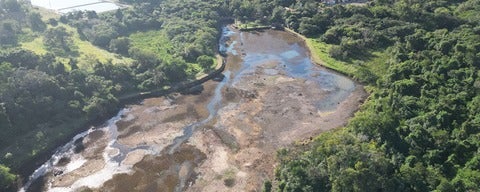
Researchers and community partners gathered in Calgary on November 26 and 27 for the forWater Network Insights Forum. Established in 2017 as a national network dedicated to advancing science on forested drinking water sources, forWater used this event to mark the conclusion of its initial research program and reflect on nearly a decade of collaboration. The two-day forum, held at the city’s Ralph Klein Park Environmental Education Centre, brought together members of the forWater Network and partners from across Canada to share research, identify emerging challenges, and plan next steps for forest water protection efforts.

How do we protect water quality in a world increasingly shaped by synthetic chemicals. Research by Water Institute member Dr. Maricor Arlos explores this challenge by tracking harmful micropollutants through urban water systems and translating technical data into practical solutions. Based in the Faculty of Engineering, Arlos leads a community focused research lab that combines advanced analytical tools, policy relevant insights and hands on student training to support more informed wastewater treatment and water management decisions. Her work, conducted in partnership with municipalities and communities across Canada, reflects the strength of Waterloo’s water research community and its commitment to protecting water for people and ecosystems alike.

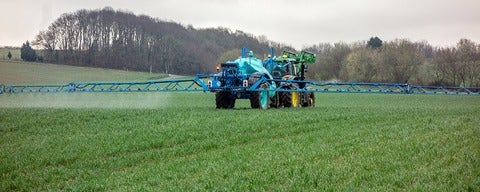
Carter McCrae, a master’s student in Climate Change, and Aidan Iapicco, an MSc candidate in Biogeochemistry and a student in the Collaborative Water Program (CWP), are developing a solution that links water, energy, and circular economy thinking. It is the first project to combine solar panel pumps and repurposed electric vehicle batteries in a system that will enable millions of small farms and billions of people to access water for irrigation. The solution aims to reduce costs and improve reliability for farmers facing growing water and energy constraints.

On January 16, the Society of the Water Institute Graduate Students (SWIGS) welcomed researchers to the third annual Bake Your Research competition. The much-loved event once again challenged participants to translate complex water research into edible creations that were as informative as they were delicious.

The Can-Peat network’s December 2025 sharing session offered a lively glimpse into the realities of peatland research and restoration, creating a space where seasoned researchers, students, and practitioners could swap stories from the field, compare methods, and celebrate both successes and challenges. Rather than formal presentations, the session leaned into the joy of shared experience, highlighting how field seasons shape research questions, collaborations, and community connections.

The Water Institute is pleased to announce that Dr. Andrea Brookfield has been appointed director of the University of Waterloo’s Collaborative Water Program for a two-year term, effective January 1, 2026. An associate professor in the Department of Earth and Environmental Sciences and a Water Institute member, Dr. Brookfield brings deep expertise in hydrology and water resource management. Her work focuses on developing and applying hydrological models that help us better understand how water and contaminants move through surface and groundwater systems and how decisions about energy, agriculture, and urban development shape the health of our watersheds. Her research aims to balance competing demands to support economic, social, and environmental stability.

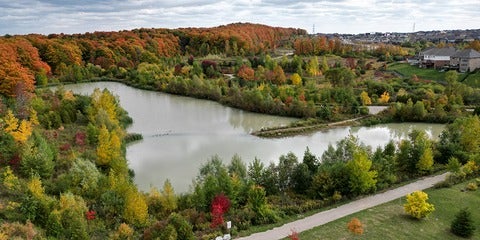
A new University of Waterloo study reveals that shoreline erosion plays a far greater role in the health of our Great Lakes than previously understood. Findings for Lake Erie suggest that coastal erosion and the associated input of the essential nutrient element phosphorus could partially offset the water quality improvements expected from watershed management efforts.

A new chapter in water economics research is beginning with the introduction of the Journal of Water Economics (JWE), the open-access continuation of Water Resources and Economics (WRE), a leading journal in the field since 2013. Originally published by Elsevier, WRE will be discontinued at the end of 2025, after 52 issues and more than 250 articles. Its founding Editors-in-Chief, Roy Brouwer (Department of Economics, University of Waterloo) and Erik Ansink (School of Business & Economics, Vrije Universiteit Amsterdam), built the journal into a respected forum presenting (beyond) state-of-the-art research on the economics of water resources.

A team of Waterloo students, including two from the Water Institute’s Collaborative Water Program, earned international recognition this fall as they represented Waterloo at the Water Environment Federation’s Technical Exhibition and Conference (WEFTEC). WEFTEC is North America’s largest annual gathering for water-quality professionals and a major international showcase for wastewater technology and design, where they won second place in the Student Design Competition.

After more than four decades supporting water research, teaching and student success in the Faculty of Science, long-time staff member Marianne Vandergriendt has been named an Honorary Member of the University of Waterloo. From her early days in Dr. James Barker’s Organic Geochemistry Lab to her key role in establishing the Ecohydrology Research Group (ERG) with Dr. Philippe Van Cappellen, Marianne’s career has been defined by technical excellence, compassion and mentorship. Her colleagues and students describe her as a role model whose kindness and dedication shaped generations of researchers.