News

Filter by:

Limit to news where the title matches:
Limit to items where the date of the news item:
Date range
Limit to news items tagged with one or more of:
Limit to news items where the audience is one or more of:
Limit to news items where the faculty or school is one or more of:

New research shows fluctuating water tables can accelerate contaminant breakdown

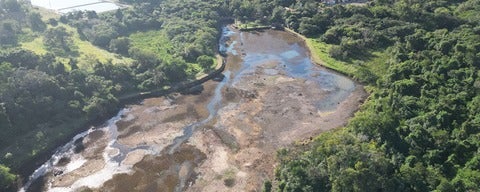
Old petroleum spills can continue to contaminate soil and groundwater for decades, making remediation slow, costly and difficult to predict. New research from the Ecohydrology Research Group shows that a natural process, the rise and fall of the water table, can significantly influence how quickly petroleum contaminants breakdown.

A virus that infects harmful freshwater cyanobacteria is challenging one of biology’s most fundamental assumptions about the difference between viruses and living cells.

Published in The ISME Journal, new research reveals that the jumbo cyanophage PhiMa05 carries the largest set of ribosomal protein genes ever found in a virus. The discovery is prompting scientists to rethink how viruses evolve and where the line between viral and cellular life truly lies.

Friday, July 10, 2026

Living with scarcity: Researching Bauru, Brazil’s hidden water systems

by Fernanda Souto Barreto and Fernando Schuh Rörig, International Visiting Graduate Students at the University of Waterloo

This article brings together the work of two graduate students studying water scarcity in Bauru, Brazil, from complementary perspectives. One examines the fragile groundwater systems beneath the city and the risks created by aging infrastructure. The other investigates how households cope when the formal water supply becomes unreliable. Together, their research reveals how hidden water systems, both underground and within homes, are sustaining the city, while also creating new risks and inequities.

Dr. Nandita Basu delivered a distinguished public lecture at the University of Victoria, highlighting integrated pathways to water, food, and energy sustainability through the SOLUTIONSCAPES framework. Her talk emphasized that while many effective environmental solutions already exist, their impact depends on coordinated, landscape-scale implementation that accounts for real-world complexity. The lecture also marked her recognition with the Distinguished Women Scholars Award.