From résumé to runtime: Four tips to impress in technical interviews
By: Mary Lynne Bartlett
You’ve landed your first technical interview! Not sure where to begin? The Centre for Career Development (CCD) is here to help. With supports to help you navigate technical interviews and build your career skills, you can feel confident and prepared to succeed.
Technical interviews assess both your technical and communication skills. Employers want to see how you solve problems, explain your thinking and talk about your past projects and experience. While some students imagine a stressful test, technical interviews are about showing the employer how you reason, communicate and learn from past mistakes.
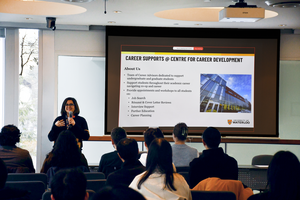

The CCD recently partnered with technology company D2L, to offer an interactive workshop called Technical Interview Success. Alex Whitelaw, early talent acquisition associate, and Andrew Alkema, senior software developer at D2L, led the session. Fourth-year Waterloo students, Vinayak Bector and Komal Vachhani, joined the panel discussion to share their own insights and advice.
Missed the workshop? We’ve got you! Here are the top four tips from the workshop to help with your next technical interview:
1. Optimize your résumé
Before you land that technical interview, you'll need to submit an application package. The CCD’s online resource, CareerHub, is a great place to begin. CareerHub covers more than résumés; it includes tips on workplace success, identity in career development and further education pathways.
Under the Application documents tab, you’ll find six sections to help you create your application package. The résumé section explains how to tailor a résumé and how to create a generic résumé. It also has examples of three main résumé formats.
When considering the structure of your résumé and cover letter, you’ll want to think about content and placement. Companies will prioritize certain information over others.
“Easy-to-find stats or numbers on your résumé are helpful. Explain what you did personally on individual and team projects. What were your contributions?” Whitelaw said. “Other valuable information that I don't see everyone include is highlighting not only when you started your program, but when your anticipated graduation date is. This is helpful in terms of hiring planning.”
From a student perspective, Vachhani recommends researching the company you’re applying to. By researching the organization, you’ll get an indication of where to place education and experience information. “If you're applying for a smaller startup, they'll value your experiences a lot more than your education,” Vachhani said. “Being a Waterloo student is a huge pull for them, but they would value your experience a lot more. Put your experiences at the top.”

Career advisors are available to help you get started on creating a résumé or reviewing one you’ve already crafted. Book an appointment today!
2. Debug for clarity
Interviews help you and the employer learn about each other through behavioural, situational and technical questions. Interviewers want to see that you understand the job, can solve problems and can handle mistakes.
Interviewers may use hands-on assessment methods like pair programming, where two people work on the same task. These kinds of assessment methods can help interviewers see how you think, communicate and collaborate. You show your skills by explaining your logic, asking clear questions and demonstrating your knowledge.

Talking through your approach shows problem-solving skills that don’t always appear in your code. “We’re focused on how you apply your skills, not just getting the right answer,” Alkema said.
Career advisors can’t predict the exact technical interview questions you’ll be asked, but they can help you practice to boost your confidence. According to CCD career advisor Laura Ashfield, “Practicing answers out loud can help you feel more confident and natural. We give feedback to help you improve clarity and structure.”
3. Focus on your thought process, not the “right” answer
A common misconception about technical interviews is that they're a test that you must pass to get the job. Think of a technical interview like a puzzle you talk through, explaining your steps so interviewers can see how you’d solve it in real life. Employers care more about how you think than whether your first answer is perfect.
“I once had no idea how to solve the question," Bector says. "I shared what I thought might work, and the interviewer guided me in the right direction. Once you realize they’re not testing you but trying to see how you’d work with minimal guidance, it becomes easier.”
Even if you don’t have the right answer immediately or if you have a partial idea, talk through your thinking and problem-solving. This helps to demonstrate your ability to think creatively and collaboratively.
You may find GenAI tools to be helpful in preparing for an interview, but don't use AI answers and represent them as your own. Employers can often recognize when you use AI answers, and would prefer to understand how you think, reflect and communicate. Check out the Using Generative AI for Interviews section on CareerHub for tips and best practices.
4. Use silence to your advantage
Whether online or in person, bring a copy of your résumé, cover letter and paper or notepad to take notes. This helps you stay organized and on topic, especially if you need time to process information or think through answers visually.
You may find some interview questions complex or multifaceted, and you may be unsure how to respond. It could result in some silence while you think and the interviewer waits for your response. Silence might feel awkward, but taking time to think is expected. When you pause, you demonstrate reflection and calm as opposed to panic and impulse.

There should be silence. You might need a second to think. If you’re not comfortable with silence, try mock interviews with friends or a career advisor. Practice pausing, because that moment to think can change your interview.

Ways to use silence well include:
- Asking to hear the question again.
- Staying calm and positive.
- Returning to the question later, if needed.
- Breaking the question into smaller steps.
Learn more about using silence in interviews on CareerHub or by booking an appointment with a career advisor.
Cracking the code
Technical interviews can feel intimidating, but you can succeed with the right preparation and mindset. When you build a strong résumé, practice assessment methods, focus on your thought process and use silence to think, you show potential employers how you solve problems and handle difficult situations. Interviewers want you to succeed — they're looking for potential, not perfection.
The CCD is here to support you at every step. Explore CareerHub, book an appointment with a career advisor, polish your résumé and keep practicing your skills. With preparation and confidence, you can show employers exactly what you bring to the table and take the next step in your career journey.