
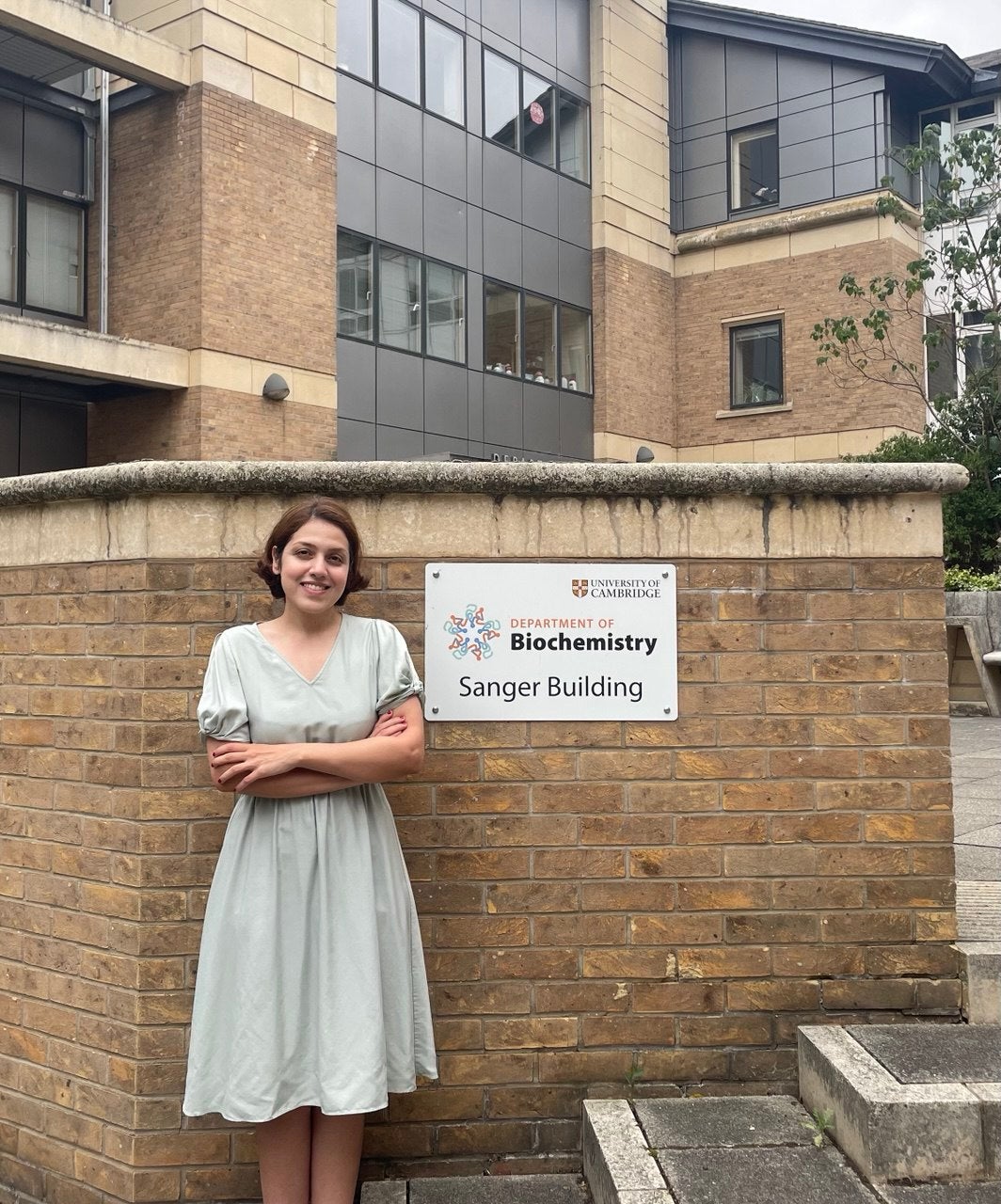
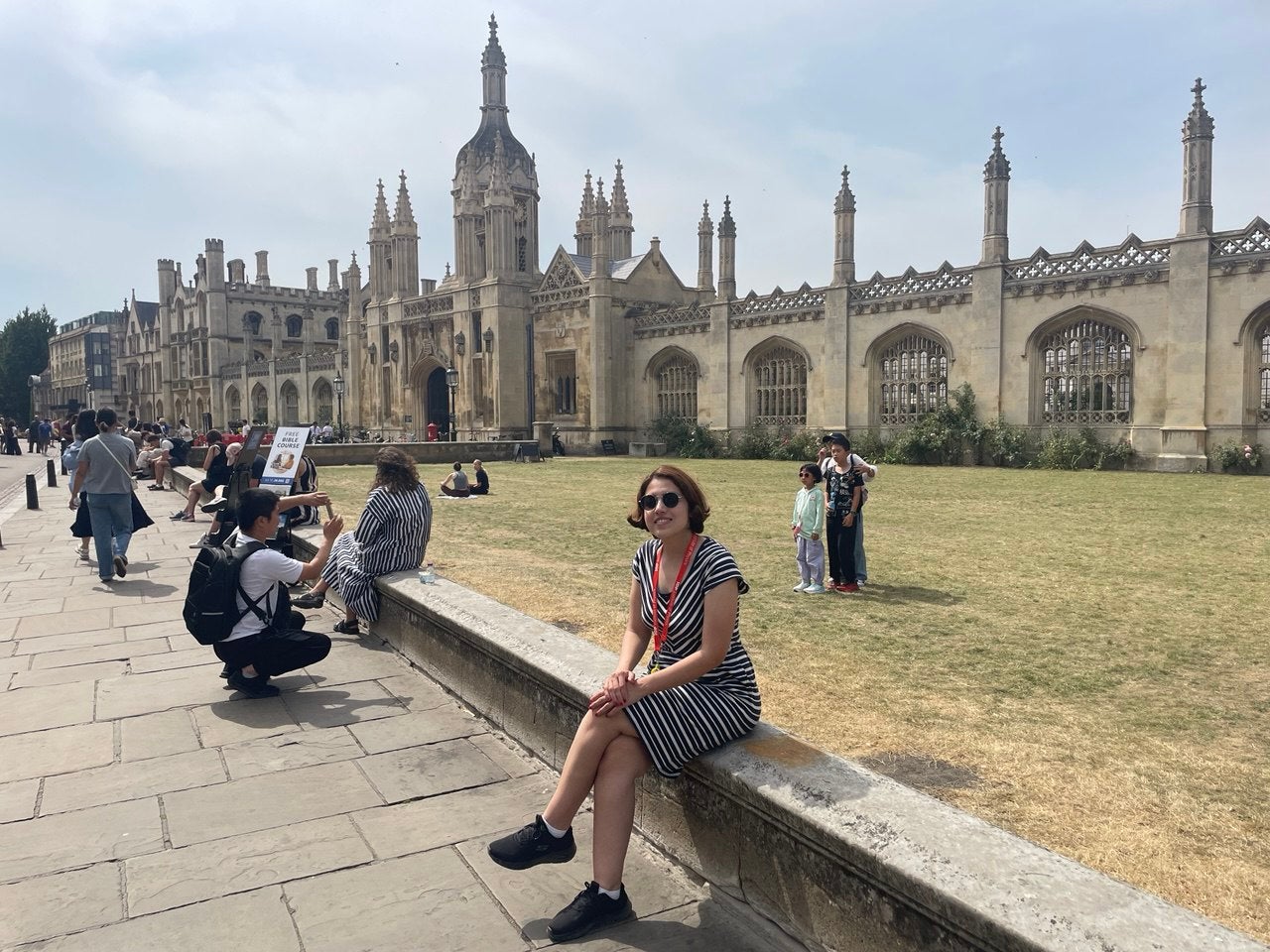
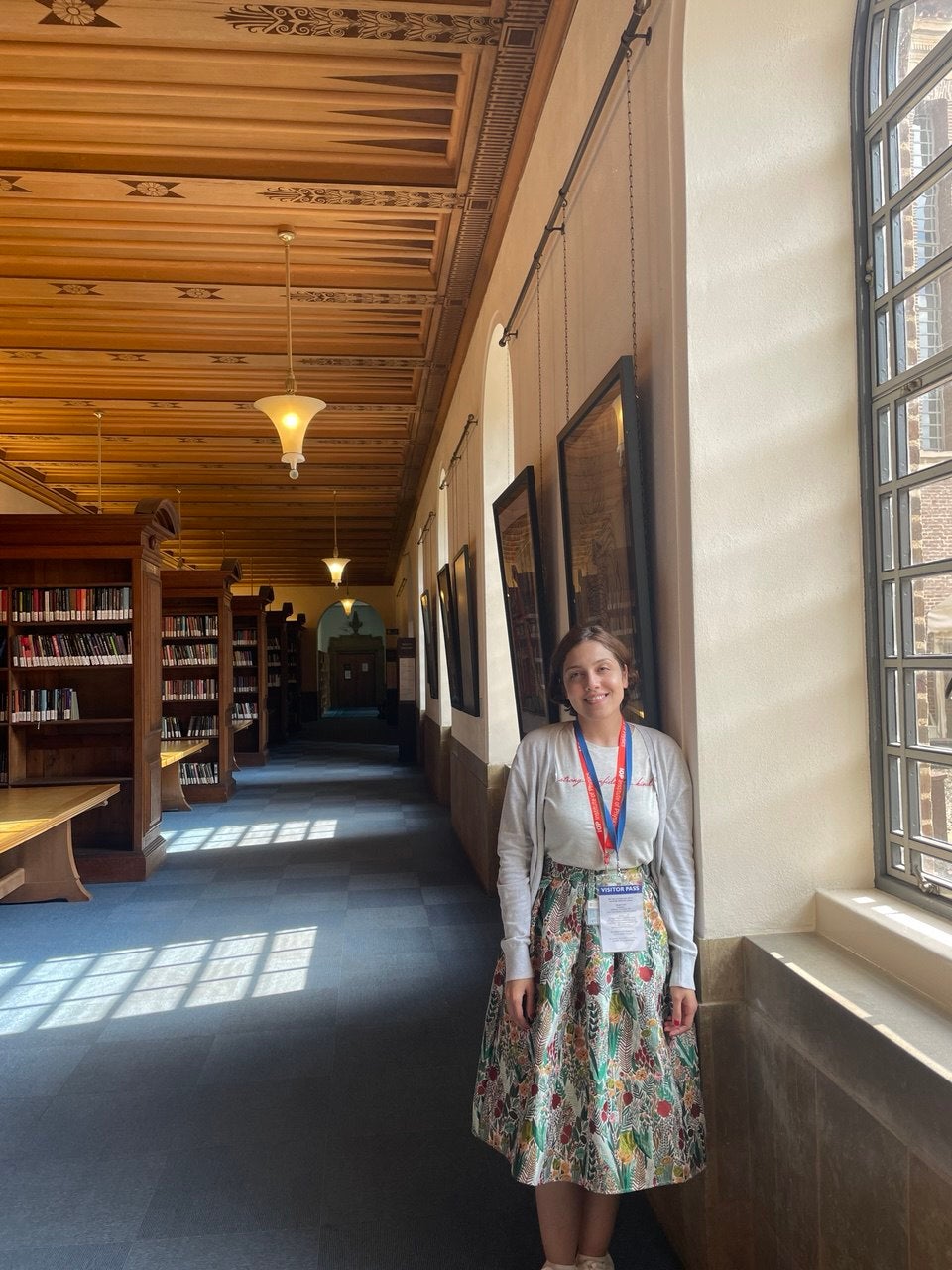
Atiyeh Ahmadi travelled to Cambridge, U.K. to expand her PhD research on astrobiology and the origin of life. Supported by her supervisor, Dr. Brian Ingalls, and an International Experience Award, she was able to research many different aspects of chemistry, physics, biology, and more at the University of Cambridge. Atiyeh spent her time in the U.K. with the goal of answering the fundamental question of, “How did life begin?”
Atiyeh was drawn to the University of Cambridge because of the alignment of her research interests with the faculty and programs offered there. “I chose the University of Cambridge because it’s one of the few places in the world where the question “How did life begin?” is being explored from so many different angles: from biology and chemistry to astronomy and planetary science. Another major reason was the opportunity to learn from and be inspired by people like Professor Didier Queloz, a Nobel Laureate whose discovery of exoplanets opened entirely new perspectives on where and how life might exist beyond Earth. The Origins of Life Initiative at Cambridge brings together scientists who are not only experts in their fields but also curious about the same fundamental questions that drive me.”
Through the combination of several scientific fields, Atiyeh was able to deepen her research in Cambridge.
“During my visit to Dr. Claudia Bonfio’s lab at the University of Cambridge, I learned an incredible amount about the chemistry and physics that could have driven the earliest steps toward life. Working closely with her team, I explored protocell dynamics: how primitive, cell-like structures might have formed and evolved under prebiotic conditions. My main contribution was on the computational side, helping to model and analyse the behaviour of these protocellular systems to better understand how simple compartments might have grown, interacted, and eventually given rise to the first biological functions. Beyond the technical skills, I learned how powerful interdisciplinary collaboration can be; bringing together chemists, biologists, and computational scientists to ask one of the most profound questions: how did life begin?”
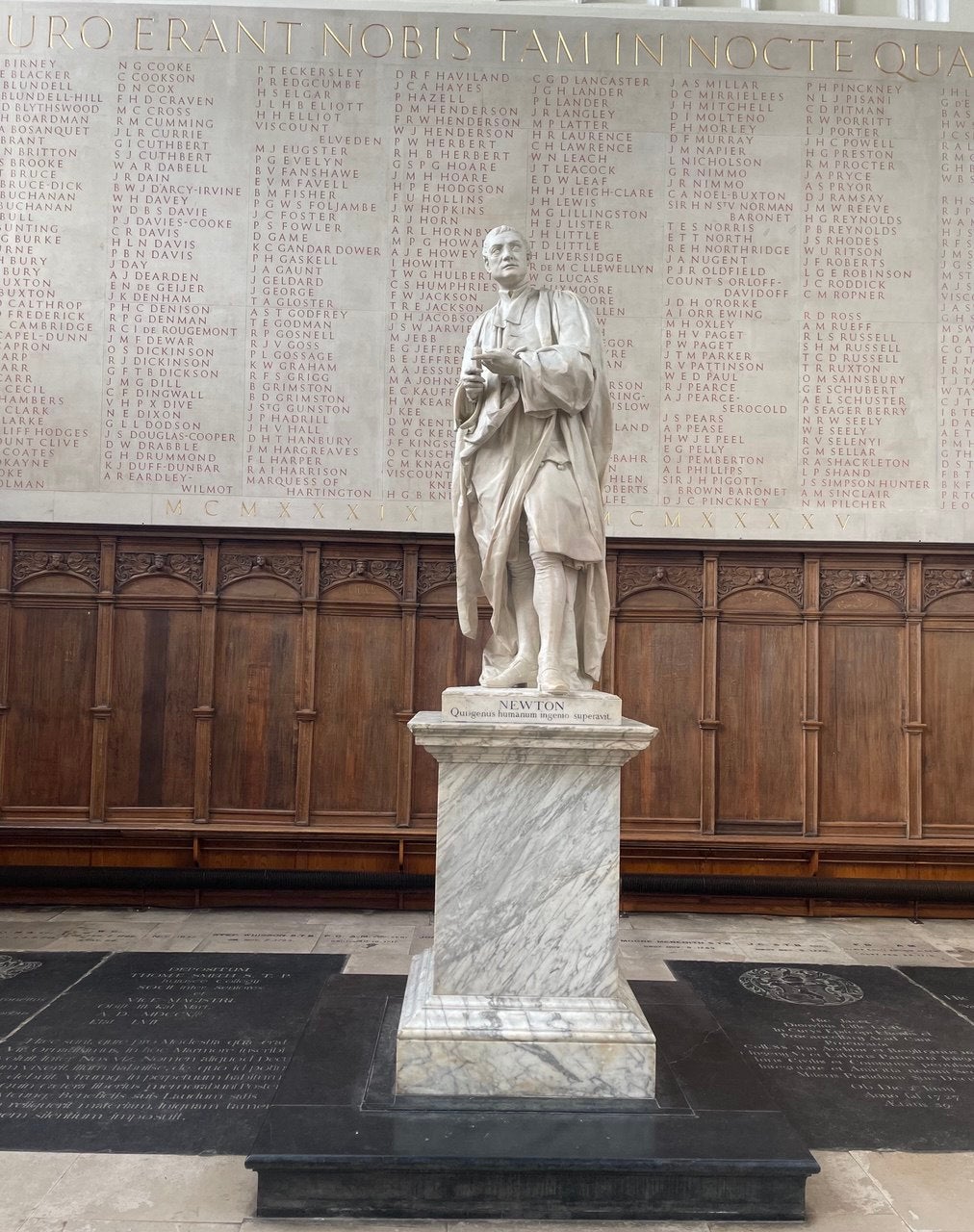
Atiyeh was inspired by the history of the University of Cambridge and enjoyed being surrounded by excellent researchers: “My favourite part of the experience was the sense of inspiration I felt every single day, both inside the lab and outside it. Being in the UK, I had the chance to visit and meet with professors across Cambridge, Oxford, and Edinburgh, each conversation opening new perspectives and sparking new ideas about life’s origins and the intersection of biology, chemistry, and planetary science. But beyond the science, what moved me deeply was simply being there: walking the same streets that Alan Turing, Isaac Newton, and Stephen Hawking once walked. There’s something profoundly humbling about being surrounded by that kind of history and intellect. It reminded me why I chose this path in the first place: the pursuit of knowledge, curiosity, and wonder. Every moment, from discussions in the lab to quiet walks through the colleges, made me feel part of a long tradition of people who dared to ask big questions about the universe and our place in it.”
Atiyeh advises that having a growth mindset is the key to getting the most out of an international experience.
“My advice to other students would be to absolutely take the opportunity and to approach it with an open mind and curiosity. An international experience is so much more than just research or study; it’s a chance to see your field, and even yourself, from a completely new perspective. Don’t be afraid to step outside your comfort zone, ask questions, and connect with people from different backgrounds; those conversations often lead to the most unexpected ideas. Also, take time to experience the culture around you; those moments, whether it’s a walk through a historic campus or a chat over coffee with a local researcher, often become the most memorable and inspiring parts of the journey. Most importantly, go with the mindset not just to learn, but to grow, both as a scientist and as a person.”


Graduate Student International Experience award funds are available to University of Waterloo graduate students who participate in:
- An academic exchange
- A study term abroad related to research or an academic requirement
- Work or volunteer experience in another country