Editor:
Brandon Sweet
University Communications
bulletin@uwaterloo.ca
The evolution of Environment’s Geomatics program
This article was originally published on the Faculty of Environment's website.
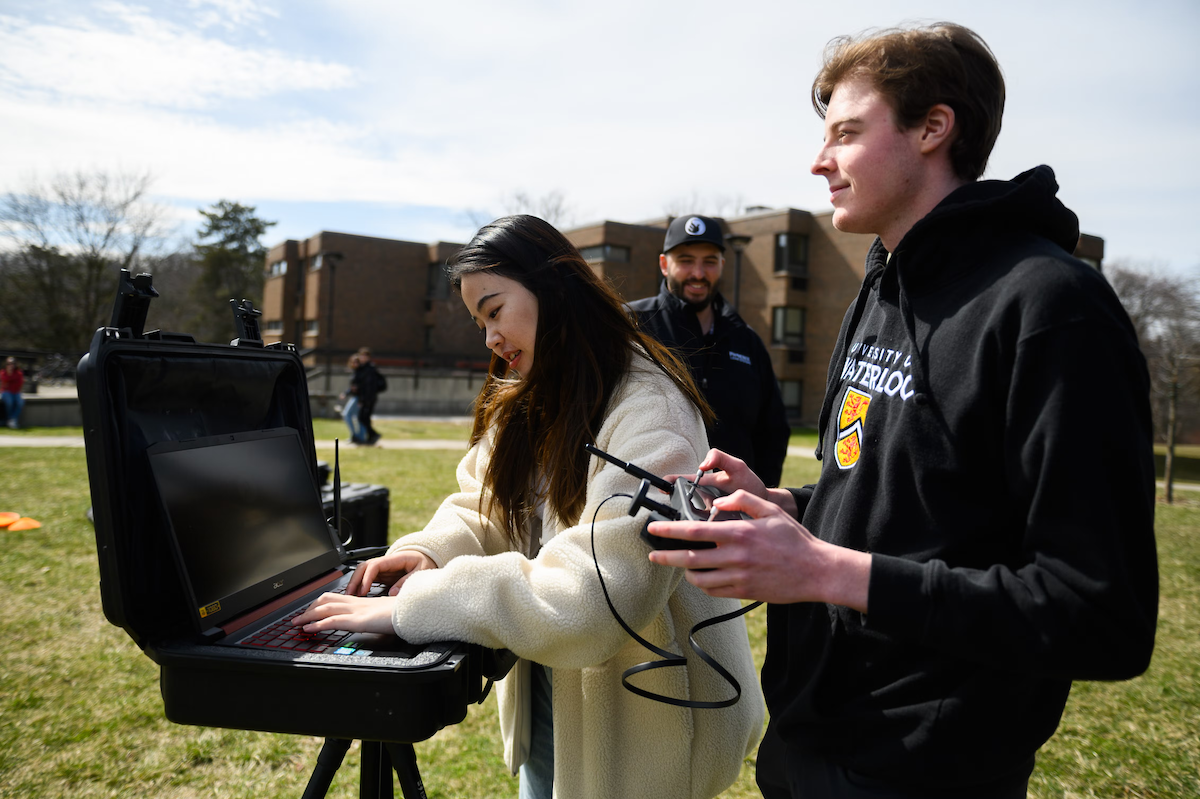
The University of Waterloo is announcing an important evolution in one of its longstanding academic programs: the transition from Geomatics to Geospatial Data Science. This change reflects more than a shift in terminology. It marks the University’s response to technological, industrial and educational transformations that have reshaped the field over the past two decades.
As geospatial technologies have expanded from traditional surveying into advanced GIS, remote sensing, spatial analytics and data-driven environmental applications, the program has evolved accordingly. While surveying remains a part of the program, the dominant interest amongst students and faculty within Geomatics is in the geospatial data science aspects (GIS, remote sensing and geospatial analysis). These are the elements for which our program and graduates are known for and creates the core of our disciplinary identity. Therefore, the new name aligns the curriculum with the modern tools, methods and career pathways that now define the discipline, ensuring that students, employers and partners clearly understand the program’s contemporary focus and strengths.
At Waterloo, the re-branding of Geomatics to Geospatial Data Science better reflects what is taught in our program where students complete courses in geospatial data science, geography, environmental studies, computer science and math. Geospatial data science explicitly deals with the acquisition and analysis of geospatial data and its adoption for environmental, policy and planning applications. For several years now, our introductory course for Geomatics students has been named Geospatial Data Science as an attempt to better communicate to our first-year class the specifics of the plan they are embarking on. Going one step further to change the degree name to Geospatial Data Science will:
-
Better reflect the nature of our teaching and learning expertise in Geography and Environmental Management (GIS, remote sensing, geospatial analysis, environmental and policy applications).
-
Better resonate with high school students who are interested in the environmental applications of geospatial data science.
-
Better serve students by incorporating professor's research applications into lesson planning.
-
Better prepare students for co-op positions, so potential employers have a clear sense of the training the student has received.
-
Enable us to better leverage our research applications into teaching.
-
Maintain a strong link with industry partners which students can leverage through co-op and post-graduation.
For the past 50 years, the University has been a leader in sustainability research and education, and the Faculty of Environment has been a catalyst for environmental innovation, solutions and talent developed with the world, for the world. The shift to Geospatial Data Science is the latest step in this ongoing work, reflecting both how far the field has advanced and the University’s commitment to preparing students for the rapidly growing world of geospatial analytics and environmental applications. Now approved, the new program name will go into effect this September 2026.
Have questions about the transition? Email us at envinfo@uwaterloo.ca and if you applied to Geomatics, watch this video to get answers to the most common questions.
Prof receives funding from Princess Margaret Cancer Centre to develop modular AI system
This article originally appeared on the Cheriton School of Computer Science website.
Princess Margaret Cancer Centre has awarded resources equivalent to $250,000 to Professor Ana Crisan through its Cancer Digital Intelligence team, supporting her research under the 2025–26 Grand Challenge: From AI Algorithm to Implementation.
The resources will support MedDataOS: A Human-Centered Multi-Agent Framework for Biomedical Data Analysis, a research project led by Professor Crisan that aims to develop a multi-agent AI system to integrate and analyze clinical data on head and neck cancers. Support from Princess Margaret Cancer Centre is provided as in-kind resources, and includes project management, analyst, developer and data scientist expertise.
“Congratulations to Ana on receiving this support to help improve healthcare outcomes for patients with cancer,” said Raouf Boutaba, University Professor and Director of the Cheriton School of Computer Science. “This award is an important part of Waterloo’s recent partnership with Princess Margaret Cancer Centre. It brings together Ana’s strengths in data visualization and artificial intelligence with Princess Margaret’s clinical expertise to create a collaborative tool to integrate patient data.”
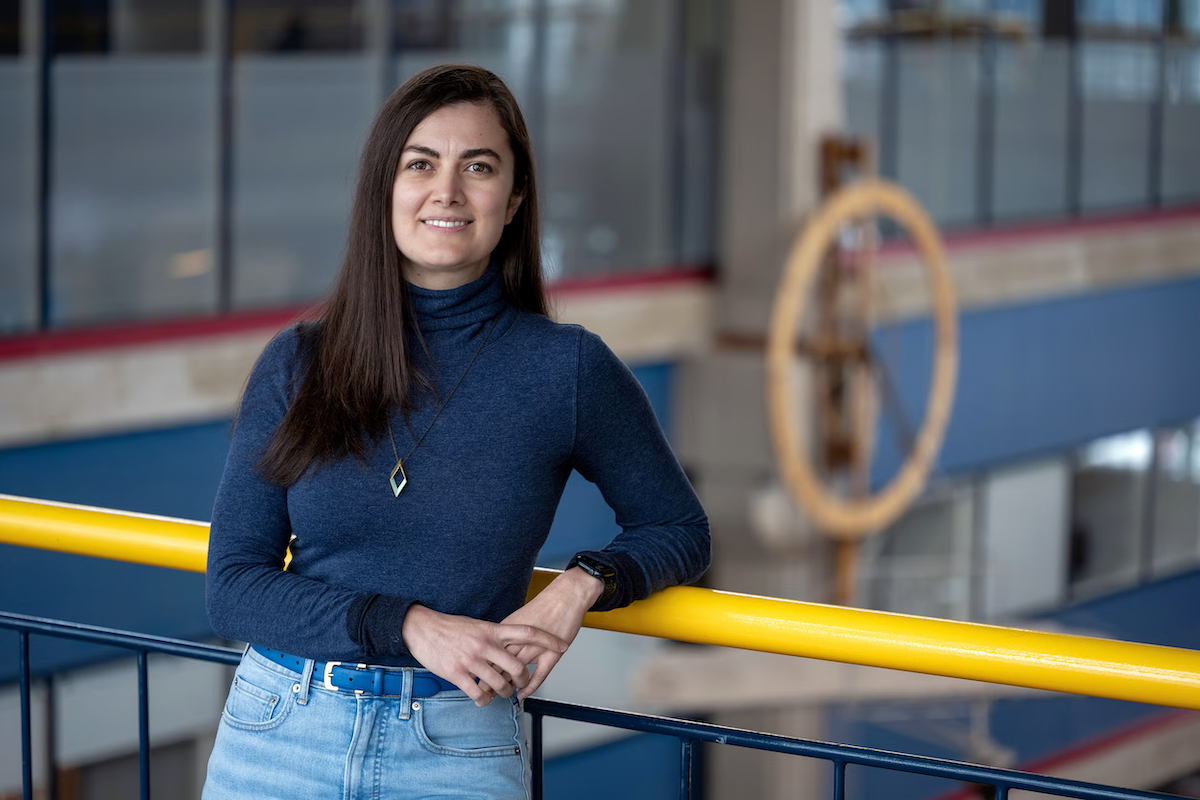
Ana Crisan is an Assistant Professor at the Cheriton School of Computer Science. Her interdisciplinary research lies at the intersection of human–computer interaction, data visualization, and applied AI and machine learning, with a focus on developing human-centered, transparent and trustworthy AI systems. She also designs interactive visualization tools to support data-driven decision-making and applies data science and visualization to advance research in medicine, healthcare and public health.
She leads the Intelligent Systems for Guided, Human-Centered Technology (INSIGHT) Lab, a research team advancing the next generation of intelligent systems that empower people to make complex, data-driven decisions.
More about this research
Diagnosing head and neck cancers requires clinicians to synthesize diverse clinical information from multiple sources and systems. These data range from imaging studies such as CT scans and pathology reports to surgical notes and electronic health records. Because no single tool can manage all of these data types, clinicians often integrate information manually, a process that is both time consuming and prone to error. While artificial intelligence has been proposed as a solution, the heterogeneity and complexity of biomedical data challenge even the most advanced models.
Professor Crisan’s newly funded project will address this challenge by developing an iterative, modular system that combines specialized AI agents with human oversight.
Over the year-long funding period, Professor Crisan will collaborate with Dr. Benjamin Haibe-Kains, Senior Scientist at Princess Margaret Cancer Centre and Executive AI Scientific Director and Co-Director of the UHN AI Hub, along with Dr. Jun Ma, AI Scientist at Princess Margaret Cancer Centre, and Princess Margaret’s Cancer Digital Intelligence team to advance the capabilities of MedDataOS. Their work will focus on enabling the platform to ingest and analyze a broader range of clinical data types and enhancing the application to ensure strong clinical impact.
“With support from Princess Margaret Cancer Centre, we will develop MedDataOS, a human-centered, multi-agent system that jointly queries and analyzes diverse biomedical data to support diagnosis and biomarker identification in patients with head and neck cancers,” Professor Crisan explains. “Our approach will integrate smaller, specialized AI models with existing biomedical tools tailored to specific data sources such as electronic health records, CT scans and surgical reports, and then orchestrate them using a central AI agent that allows natural language interaction with patient data.”
The research builds on an existing prototype developed by Professor Crisan’s team that uses two AI agents, one for tabular clinical data and another for CT image data. These agents are coordinated through a central orchestrator that processes clinician queries through a web-based conversational interface.
“Working with Ana and the INSIGHT Lab is an exciting step toward solving the real-world challenge of data fragmentation in oncology,” says Dr. Ma. “By integrating diverse sources such as pathology and clinical data into a single modular system, we look forward to improving healthcare outcomes and diagnosis for patients with head and neck cancer.”
This modular design offers several key advantages. It is more flexible and often more cost-effective than large foundation models. Moreover, individual agents can be updated or replaced without retraining the entire system. It also improves transparency by clearly showing how each type of data is processed and analyzed.
“Agentic AI systems have enormous potential to carry out complex analyses efficiently and comprehensively,” says Dr. Haibe-Kains. “But they also come with real risks. Agents can confabulate or follow the wrong analytical path, so we need to design the right kind of human supervision to keep these systems trustworthy and clinically safe.”
The goal for MedDataOS is to serve as a real-time collaborative tool that allows clinicians to interact with multiple patient data sources during diagnosis, while also acting as an always-on analyst capable of scanning patient cohorts to identify candidate biomarkers for treatment. The project’s ultimate goal is to improve patient care directly while providing a transparent, practical alternative to costly foundation models.
Racial trauma isn’t always visible, but its impact is

A message from the Equity, Diversity, Inclusion and Anti-Racism Office (EDI-R).
What happens when an experience lingers not just in memory, but in your body? When everyday moments shift how safe you feel in a space?
Racial trauma is the cumulative impact of racism on the body, mind and dignity. It is ongoing, shaped by daily interactions and institutional and systemic inequities, and it can influence how you feel, respond, and move through the world. As long as racism and discrimination continue to exist within our institutions, racial trauma cannot be fully resolved at the individual level alone.
The Healing from Racial Trauma workshop is designed by Jennisha Wilson and Mifrah Abid, from the Office of EDI-R, to support that process. Open to racialized students, staff, and faculty, this session offers a supportive space to better understand how racial stress manifests and to learn practical strategies for grounding, self-awareness, and care. No personal sharing is required.
Upcoming system outages
Quest will be down and unavailable due to scheduled maintenance on Sunday, April 12 from 6:45 a.m. to 1:00 p.m.
The Catering and Event Services online ordering and room booking system will be unavailable due to scheduled maintenance from Monday, April 13 at 5:00 p.m. to Tuesday, April 14 at 12 noon. Users are encouraged to check back shortly once maintenance is complete.
Upcoming office closure
Finance (including Student Financial Services) will be closed today from 11:00 a.m. to 1:00 p.m. for a staff event. The front counter in East Campus 5 (EC5) will be closed during this time. Normal operations will resume today at 1:00 p.m.
Link of the day
When and where
The Campus Wellness Student Medical Clinic offers healthcare visits with Physicians and Nurse Practitioners to current undergraduate and graduate students. Services include: vaccinations, immunity testing, naturopathic services and more. Counselling Services offers appointments with counsellors in person as well as via phone and video. Students can book appointments for these services by calling Campus Wellness at 519-888-4096.
The privately-run Student Health Pharmacy (located in the lower level of the Student Life Centre) is now offering new COVID booster shots and flu shots. Covid booster shots are available by appointment only – please call ext. 33784 or 519-746-4500. The Student Health Pharmacy’s summer hours are Monday to Friday, 9:30 a.m. to 4:30 p.m. Naloxone kits are still available – pick them up in the pharmacy at no charge.
The Waterloo Eye Institute optometry clinics in Waterloo and downtown Kitchener offer comprehensive eye exams and eyewear, including glasses and contact lenses, with the Waterloo location offering various specialized services including urgent eye care. Discounts apply for University of Waterloo students and employees. The Waterloo Clinic is at a nearby interim location, 419C Phillip St, during construction at the School of Optometry and Vision Science. The Kitchener Clinic remains at the Health Sciences Campus, 10B Victoria St. S. Book online or by phone at 519-888-4062.
Warriors Summer Youth Camps, registration is now open for multi-sport and games, baseball, basketball, eSports, football and hockey camps for boys and girls ages 5 to 18. Register today!
Final examination period, Thursday, April 9 to Thursday, April 23.
The Language Café: Am I good enough? Understanding imposter feelings, Thursday, April 9, 3:00 p.m. to 4:15 p.m., Needles Hall 1124, International Experience Centre. Register online.
UW Administrative Professionals Community of Practice event registration deadline, Friday, April 10.
WIN-BME Joint Seminar: "Beyond Static Imaging: Structural and Functional Insights through X-ray microCT" with Marketa Kaiser and Jakub Salplachta, Tuesday, April 14, 12 noon to 1:30 p.m., PSE 231.
GenAI in Teaching Material Development - In Person (CTE7553), Tuesday, April 14, 1:00 p.m. to 2:30 p.m., MC 2036.
Board of Governors meeting, Tuesday, April 14, 1:30 p.m., NH 3407 and Zoom.
Cooperathon powered by Desjardins: registration AMA, Wednesday, April 15, 12 noon to 12:30 p.m., online.
Master of Taxation virtual information session, Wednesday, April 15, 12 noon.
Anti-Racism Reads Series: Algorithms of Oppression, Thursday, April 16, 12 noon to 1:00 p.m., Dana Porter Library Room 338.
Rock Your Thesis 3: Revise and Submit, Thursday, April 16, 1:00 p.m. to 4:00 p.m., SLC 3216 (Grad Lounge).
NEW - Assessment Redesign and Generative Artificial Intelligence (GenAI) - (CTE7556) – Part One, Tuesday, April 21, 9:30 a.m. to 12:30 p.m., MC 2036.
UW Administrative Professionals Community of Practice Event, Wednesday, April 22. Register by Friday, April 10.
NEW - W3+Presents Holding It Together, Wednesday, April 22, 12 noon to 1:30 p.m., Grad House (upper floor).
NEW - WISE Public Lecture, “Architected Porous Media in Electrochemical Energy Systems” by Dr. Maxime van Der Heijden, Assistant Professor, University of Waterloo, Wednesday, April 22, 1:30 p.m. to 2:30 p.m., DC 1302 and on Zoom. Register today!
NEW - Vision Science Graduate Student Conference registration deadline, Thursday, April 23.
NEW - Assessment Redesign and Generative Artificial Intelligence (GenAI) - (CTE7556) – Part Two, Thursday, April 23, 9:30 a.m. to 12:30 p.m., MC 2036.
NEW - CPI Talk: Intimate Images, Deep Fakes and the Law, Thursday, April 23, 2:30 p.m. to 4:00 p.m., EC5-1101/1111.
PhD oral defences
Earth and Environmental Sciences. Alexandra Kunert, “Late Paleoproterozoic ocean redox history from sedimentary thallium and uranium isotopes and implications for eukaryotic evolution.” Supervisor, Dr. Brian Kendall. Visit the Faculty of Science Thesis Submission Notices website for details on requesting a copy to review. Oral defence Thursday, April 16, 3:00 p.m., remote via MS Teams.
Electrical and Computer Engineering. Hang Yu, “Load Modulation Resilient and Average Efficiency Enhanced Power Amplifiers for 5G/6G MIMO System.” Supervisor, Dr. Slim Boumaiza. Thesis available via SharePoint – email eng.phd@uwaterloo.ca to request a viewing link. Oral defence Friday, April 17, 9:30 a.m., EIT 3142.
Applied Mathematics. Sefah Frimpong, "Coupled behaviour-disease modelling for insights into pandemic waves, control measures, and emergence of social norms." Supervisor, Dr. Chris Bauch. Thesis available via MGO - mgo@uwaterloo.ca. Oral defence Friday, April 17, 10:00 a.m., MC 6460.
Civil and Environmental Engineering. Mohammad Oyarhossein, “Probabilistic Modeling for Fracture Height Measures to Assess Groundwater Contamination Risk.” Supervisor, Dr. Maurice Dusseault. Thesis available via SharePoint – email eng.phd@uwaterloo.ca to request a viewing link. Oral defence Monday, April 20, 10:00 a.m., remote.
Upcoming service interruptions
Stay up to date on service interruptions, campus construction, and other operational changes on the Plant Operations website. Upcoming service interruptions include:
-
Warrior Field bleachers excavation work, Thursday, April 9, 7:00 a.m. to 4:00 p.m., pedestrian pathway from the gated entrance to Warrior Field to the edge of the Field House will be temporarily closed to accommodate excavation work. Site fencing and signage will be installed to safely guide pedestrians.
-
Environment 1, 2 and 3, Modern Languages, Dana Porter Library, Needles Hall fire alarm testing, Friday, April 10, 6:30 a.m. to 8:15 a.m.
- Earth Sciences & Chemistry 1st and 2nd floor electrical shutdown, Saturday, April 11, 7:00 a.m. to 3:00 p.m., affecting all 120-240v electrical including lighting, emergency lighting will not be affected.
-
Earth Sciences & Chemistry low pressure steam shutdown, Monday, April 13, 12 midnight to April 14, 5:00 p.m., ESC will be without perimeter heating for the day, please dress accordingly.
-
Math 4 crane dismantling, Wednesday, April 15, 7:00 a.m. to 5:00 p.m. (rain day April 16), William Tutte Way between Ring Road and M3 road closure, all adjacent pedestrian pathways will be closed for safety. M3 will remain open and accessed via BMH Green, GSC will remain open and accessed by main doors at the corner of Ring Road.