Editor:
Brandon Sweet
University Communications
bulletin@uwaterloo.ca
2026 UWSA-UW Memorandum of Agreement now in effect
"The updated 2026 Memorandum of Agreement (MoA) between the University of Waterloo and the University of Waterloo Staff Association (UWSA) has been ratified by both parties and is now in effect," wrote Vivek Goel, President and Vice-Chancellor and Alyssa Kuron, President, University of Waterloo Staff Association (UWSA) in an email sent to all staff yesterday.
"The MoA sets out the formal working relationship between the University and the UWSA, and establishes how terms and conditions of employment for staff are determined," the memo continues. "This updated agreement reflects a shared commitment to clear, transparent, and consistent processes—particularly in the areas of staff compensation, dispute resolution, and consultation. "
"The MoA applies broadly to University Support Group (USG) staff, with exclusions limited to certain roles. While membership is not required to be covered by the MoA, members gain access to additional benefits and protections, including governance rights within the association and access to UWSA representation and services. Eligible staff can join the UWSA at any time. "
"The University and the UWSA will now focus on implementing the agreement and supporting staff as these changes take effect," the memo concludes. "Please read the updated MoA on the Secretariat’s website. "
Empowering the next generation of political scientists through experiential learning
By Kyra Rattansi and Sarah Seabrook.
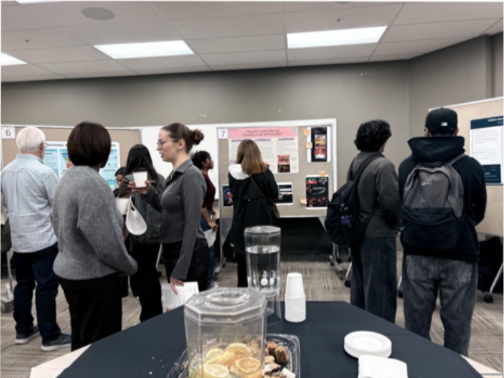
On March 26, the University of Waterloo’s Department of Political Science hosted the “Experiences in Political Science Poster Symposium”, a showcase of undergraduate student research and experiential learning. The event served as the culmination of PSCI 424, a SLICC capstone course designed to bridge the gap between abstract political theory and real-world application. Through academic posters, policy briefs, propaganda posters, and other forms of creative media, students in the course engaged faculty, their peers, and members of the Waterloo community in discussions about their self-directed journeys—demonstrating what is possible when students are empowered to own their education.
Scaffolding student autonomy: the SLICC framework
PSCI 424 uses the SLICC Framework. This self-directed and reflective framework requires students to identify a project of personal interest, conduct an audit of the skills needed to succeed, and determine assessment criteria. While the framework prioritizes self-direction, it also encourages peer engagement and feedback opportunities. Dr. Mariam Mufti recognized that the weight of an individual capstone project requires a unique support structure. She intentionally opted to teach in an active learning classroom (PHY 235) that facilitated the creation of “pods”—collaborative groups of three to five students working on similar themes or deliverables. These pods allowed students to seek feedback and peer support throughout the term, ensuring that while they were working independently, they were never working alone.
Cultivating student capacity for real world impact
By replacing traditional learning models with a more rigorous model of inquiry, the course forced students to move past summarizing political theories and begin pressure-testing them against current global and local trends. This shift from observation to ownership was evident in Miriam Pedrozo’s mapping of "Chinese Lawfare." Rather than just citing textbooks, Miriam synthesized complex legal definitions to argue that while Western law typically acts as a constraint on power, "China has a much more instrumental view... law is a tool for government power." Similarly, Shiza Khokkar applied theories of democratic erosion to the raw aesthetics of populist propaganda, noting that modern populist messaging is often intentionally "ugly" because "the way that a message is packaged doesn't matter anymore; it's just the message itself that matters."
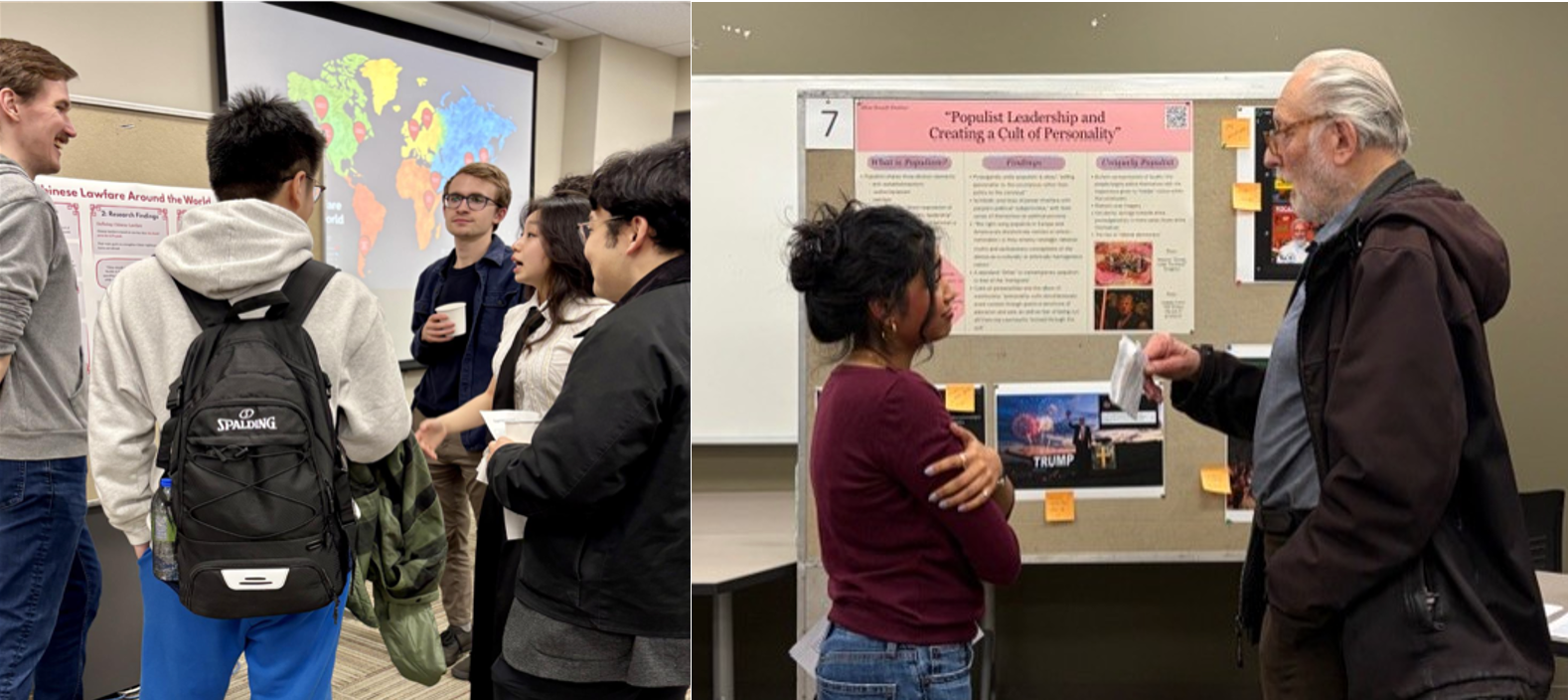
Miriam Pedrozo and Shiza Khokkar discuss their projects with attendees.
These theoretical applications were also grounded in primary research undertaken by some students in the course. For his project on Ontario’s autism services, Brodric Uniac went straight to the source, interviewing leadership at KidsAbility to uncover systemic funding gaps. In turn, he produced a 13-page policy note advocating for increased government funding driven by his conviction that "change is needed, and awareness is the only way to progress."
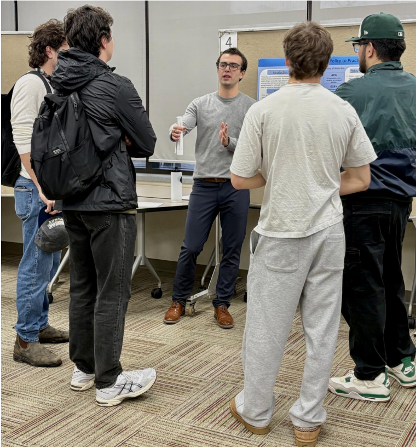
Brodric Uniac.
The case for investment in experiential learning at Waterloo
Overall, the success of the PSCI 424 Symposium offers a powerful case for why there is important pedagogical value in frameworks that provide opportunities for self-directed experiential learning, providing a model that Waterloo instructors should consider when designing for future programs and course offerings. Students reported a level of engagement and deep personal investment that traditional lecture formats rarely achieve.
By working through the SLICC framework’s reflection requirements, students indicated that they learned to navigate the inherent uncertainty of independent research and "record all those changes" in their own thinking—a process that fostered a sense of metacognitive maturity they view as essential for their future academic and professional endeavours.
Student-led initiative improves drinking water access for campus residences
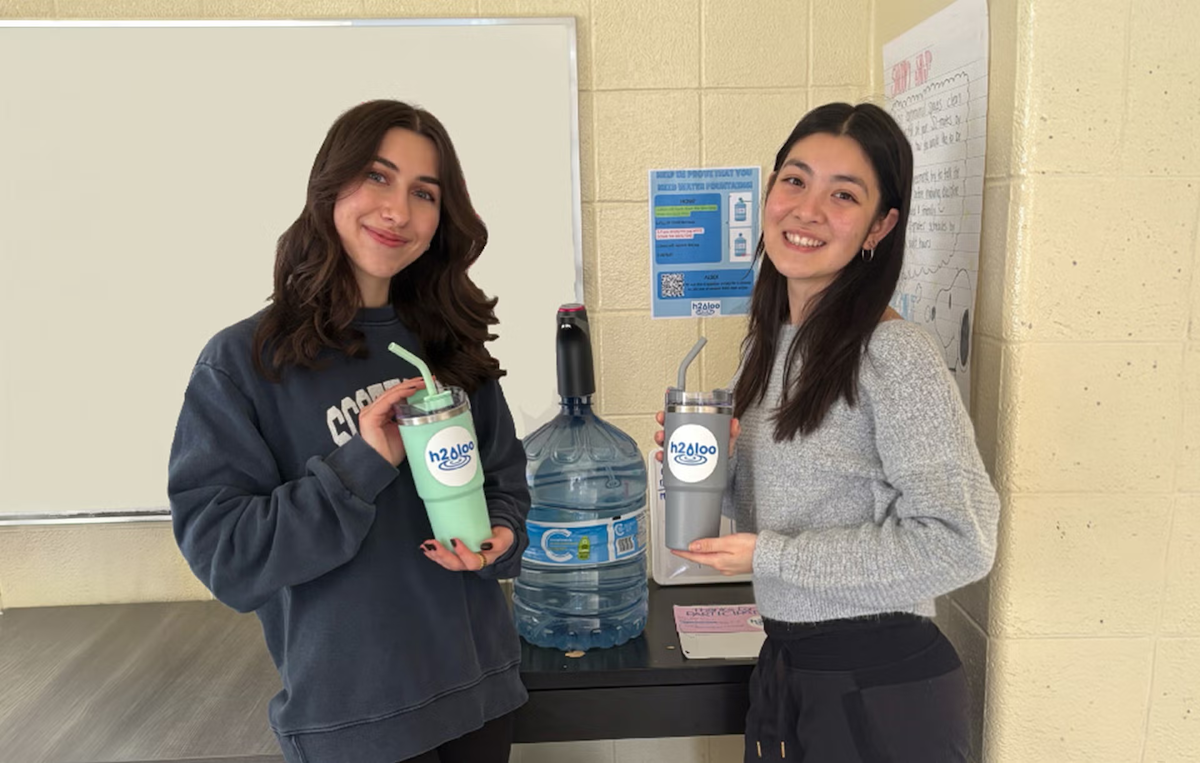
This article was originally published on the School of Public Health Sciences website.
A student-led public health initiative at the University of Waterloo is helping to reshape access to safe, convenient drinking water in campus residences. H2oloo, co-founded by Health Sciences students Isabelle Lee and Giordana Staudohar, has successfully secured a commitment from Campus Housing to install 48 new water fill stations in residence buildings, representing an investment of approximately $138,000.
The initiative grew out of an assignment in HLTH 304 Health Communications, where students were challenged by Dr. Ashley Amson to identify a health issue on campus and hypothetically persuade the University to address it. For Lee and Staudohar, that challenge became more than a classroom exercise.
Staudohar points to her own experience while living in Village 1 (V1) during her first year on campus, where restrictive key access often limited her options to unfiltered water from communal bathroom sinks or purchasing bottled water and sugar drinks. “That practice was both detrimental to the environment and to my well-being,” she says.
She helped create H2oloo to address this challenge faced by many students living in residence: limited access to drinking water refill stations due to building design and key restrictions.
“H2oloo aimed to increase the number of water fountains in Campus Housing residence buildings to foster a healthier, more hydrated lifestyle among students,” Lee shares.
To support their advocacy, the H2oloo duo conducted original research, including a student survey and a pilot test. The survey explored students’ experiences and demand for water fountains in residence. The findings played a central role in Campus Housing’s decision to move forward with the project.
In addition to research, the duo prioritized student engagement. They visited classes, collaborated with professors and hosted pop-up events in residence buildings to highlight the health benefits of hydration and the gaps in existing water infrastructure. Pilot testing involved placing filtered water dispensers in residence lounges to observe whether student would use a conveniently located water source when available.
In just five days, approximately 45 litres of water were consumed by students in Ron Eydt Village (REV) and V1, proving that the fountains would be popular with students upon installation.
Campus Housing plans to install 20 fountains in REV and 28 in V1, ensuring access aligned with the layout and key restrictions of those communities.
“To achieve fair and equitable access to drinking water for all students in V1 and REV, we will install 20 fountains in REV (one per floor) and 28 water fill stations installed in V1 (one per house),” says Raven Urbanowicz, administrative project coordinator in Campus Housing. “Campus Housing will be prioritizing this project in our upcoming planning cycle for 2027.”
H2oloo was developed as part of the WUSA Change Engine competition, which supports student-driven solutions to community challenges. The initiative won the competition in 2025 and received $5,000 in funding to support its research and advocacy work.
While H2oloo does not currently plan to scale beyond residence water access, the initiative demonstrates the impact of applied public health research and student leadership. Through evidence-based advocacy, the project illustrates how student voices can drive institutional change and contribute to healthier campus environments.
State of the City and other summations
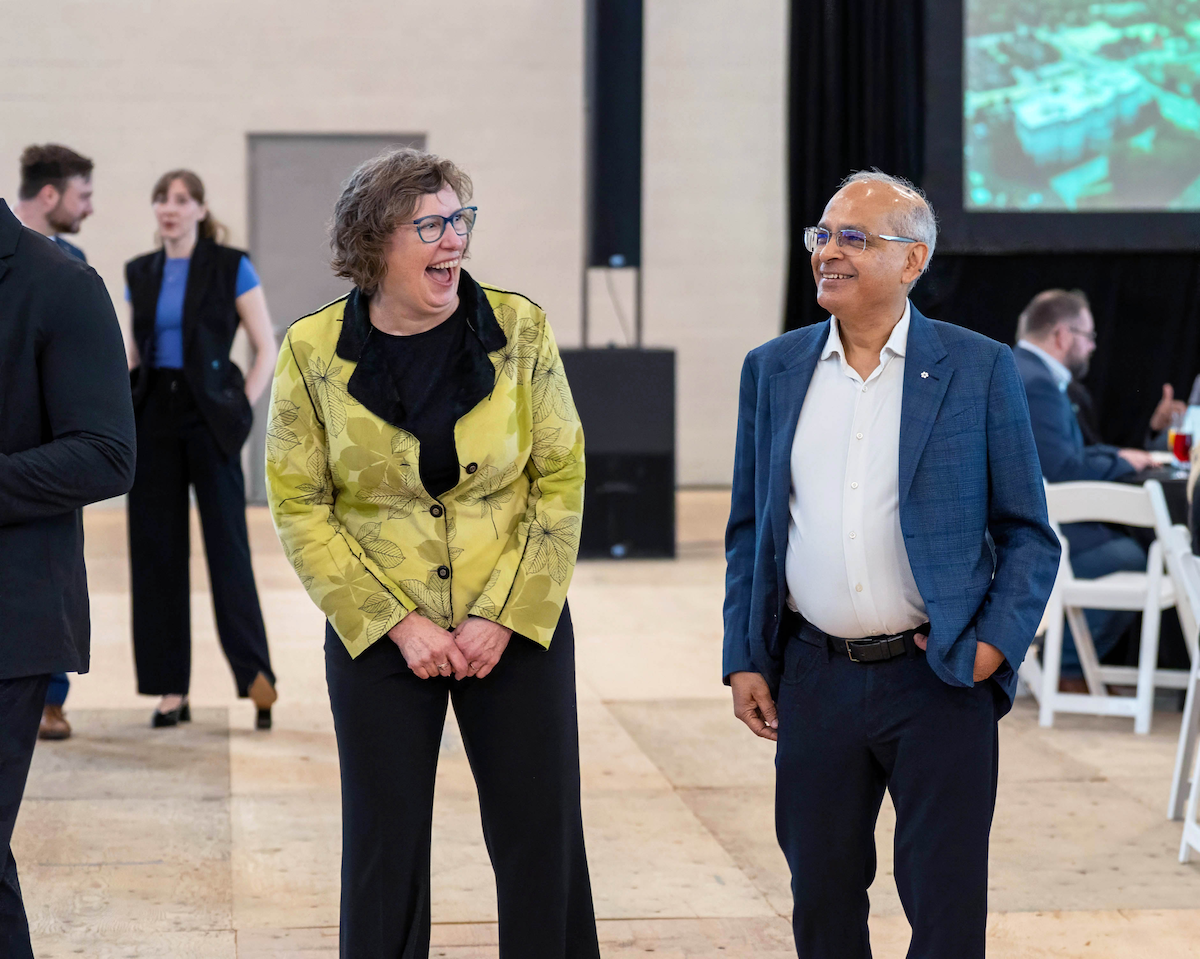
McCabe & Mr. Goel: Waterloo Mayor Dorothy McCabe and President Vivek Goel at the State of the City breakfast. Photograph by Sam Charles.
Yesterday morning, the Feridun Hamdullahpur Field House traded balls for breakfast as the University of Waterloo partnered with the Waterloo Rotary Club to host Waterloo City Council’s 2026 State of the City event on campus.
Mayor Dorothy McCabe, on behalf of city council, delivered the state of the city address, which included a reflection on the past year and a look ahead. “Mayor McCabe noted a rapidly changing global landscape, while highlighting the seeds that have been planted to ensure Waterloo remains future-ready and community-driven,” says a note from the City of Waterloo’s news site.
“The University of Waterloo was built through partnership, with community, industry and government, grounded in a shared belief that education, research and innovation should serve society,” wrote President Vivek Goel in a post on LinkedIn. “That spirit of collaboration continues to set this region apart. It's what has helped Waterloo become a place known for its talent, innovation and quality of life, and it's what will carry us forward. Thank you to Dorothy McCabefor your leadership, and to everyone involved in organizing and supporting this event.”

The Centre for Teaching Excellence will be hosting two half-day Assessment Redesign and Generative Artificial Intelligence (GenAI) workshops next week on Tuesday and Thursday. "This assessment redesign workshop explores the implications of GenAI for assessment design, offering strategies to both harness GenAI as a learning tool and address challenges," says a note from CTE. "Over two half-days, the workshop provides space, time, expertise, and peer feedback to help participants create assessments that are both innovative and resilient in the age of GenAI."
Link of the day
When and where
The Campus Wellness Student Medical Clinic offers healthcare visits with Physicians and Nurse Practitioners to current undergraduate and graduate students. Services include: vaccinations, immunity testing, naturopathic services and more. Counselling Services offers appointments with counsellors in person as well as via phone and video. Students can book appointments for these services by calling Campus Wellness at 519-888-4096.
The privately-run Student Health Pharmacy (located in the lower level of the Student Life Centre) is now offering new COVID booster shots and flu shots. Covid booster shots are available by appointment only – please call ext. 33784 or 519-746-4500. The Student Health Pharmacy’s summer hours are Monday to Friday, 9:30 a.m. to 4:30 p.m. Naloxone kits are still available – pick them up in the pharmacy at no charge.
The Waterloo Eye Institute optometry clinics in Waterloo and downtown Kitchener offer comprehensive eye exams and eyewear, including glasses and contact lenses, with the Waterloo location offering various specialized services including urgent eye care. Discounts apply for University of Waterloo students and employees. The Waterloo Clinic is at a nearby interim location, 419C Phillip St, during construction at the School of Optometry and Vision Science. The Kitchener Clinic remains at the Health Sciences Campus, 10B Victoria St. S. Book online or by phone at 519-888-4062.
Warriors Summer Youth Camps, registration is now open for multi-sport and games, baseball, basketball, eSports, football and hockey camps for boys and girls ages 5 to 18. Register today!
Final examination period, Thursday, April 9 to Thursday, April 23.
Assessment Redesign and Generative Artificial Intelligence (GenAI) - (CTE7556) – Part One, Tuesday, April 21, 9:30 a.m. to 12:30 p.m., MC 2036.
Chemistry Seminar Series: Graeme Howe “Genome mining for NylB-type amidases to facilitate closed-loop nylon recycling,” Tuesday, April 21, 11:00 a.m., C2-361 Reading Room and MS Teams.
UW Administrative Professionals Community of Practice Event, Wednesday, April 22.
W3+Presents Holding It Together, Wednesday, April 22, 12 noon to 1:30 p.m., Grad House (upper floor).
WISE Public Lecture, “Architected Porous Media in Electrochemical Energy Systems” by Dr. Maxime van Der Heijden, Assistant Professor, University of Waterloo, Wednesday, April 22, 1:30 p.m. to 2:30 p.m., DC 1302 and on Zoom. Register today!
Vision Science Graduate Student Conference registration deadline, Thursday, April 23.
Assessment Redesign and Generative Artificial Intelligence (GenAI) - (CTE7556) – Part Two, Thursday, April 23, 9:30 a.m. to 12:30 p.m., MC 2036.
Chemistry Seminar: “Interfaces and Chemo-Mechanics in Solid-State Batteries” featuring Matthew T. McDowell, Georgia Institute of Technology, Thursday, April 23, 11:00 a.m., C20361 Reading Room and MS Teams.
Spring 2026 Joint University of Waterloo–St. Jerome’s University Legal Studies Seminar featuring Dr. Elaine Craig, “Law, Technology and the Platformization of Sex: Sexual Violence in a Data Driven Era,” Thursday, April 23, 1:00 p.m., online Via Zoom. Register now.
WISE Public Lecture, “The Global Energy System in the Cross Hairs of a Geopolitical Storm: The Way Ahead” by Professor Jatin Nathwani, Thursday, April 23, 1:30 p.m. to 2:30 p.m., E2 2350 and online via Zoom. Register today!
CPI Talk: Intimate Images, Deep Fakes and the Law, Thursday, April 23, 2:30 p.m. to 4:00 p.m., EC5-1101/1111.
Lectures in Catholic Experience presents Fr. Matthew Durham, DMin, “The Last Shall Be First: Equity and Mercy in End-of-Life Care for the Forgotten,” Thursday, April 23, 7:30 p.m. to 9:00 p.m., St. Jerome’s University Notre Dame Chapel.
Vision Science Graduate Student Conference 2026, Monday, April 27, 9:30 a.m. to 4:15 p.m., OPT 347.
CareNext Collective presents “AI-empowered patients,” Monday, April 27, 12 noon to 1:00 p.m., online. Register now.
Campus living labs for climate learning and action in all disciplines, Monday, April 27, 2:00 p.m. to 4:00 p.m., Environment 3 (EV3)
PhD oral defences
Physics and Astronomy. José de Jesús Padua Argüelles, “Studying quantum gravity 𝘷𝘪𝘢 simplicial Lorentzian path integrals.” Supervisor, Dr. Bianca Dittrich. Visit the Faculty of Science Thesis Submission Notices website for details on requesting a copy to review. Oral defence Tuesday, May 5, 9:30 a.m., PHY 308 with remote external examiner.
Pure Mathematics. Jennifer Zhu, “Categorical Limits of Quantum Graphs and Possibilities Induced by Quantum Pseudometrics.” Supervisor, Dr. Michael Brannan. Thesis available from MGO – mgo@uwaterloo.ca. Oral defence Tuesday, May 5, 9:30 a.m., MC 2009.
Physics and Astronomy. Zheng Zhou, “Studying Conformal Field Theories in Three Dimensions with the Fuzzy Sphere.” Supervisors, Dr. Roger Melko, Dr. Yin-Chen He. Visit the Faculty of Science Thesis Submission Notices website for details on requesting a copy to review. Oral defence Tuesday, May 5, 10:00 a.m., remote via MS Teams.
Pure Mathematics. Yash Singh, “Vector bundles on toric stacks.” Supervisor, Dr. Matthew Satriano. Thesis available from MGO – mgo@uwaterloo.ca. Oral defence Tuesday, May 5, 11:00 a.m., MC 5403.
Upcoming service interruptions
Stay up to date on service interruptions, campus construction, and other operational changes on the Plant Operations website. Upcoming service interruptions include:
-
School of Architecture fire alarm testing, Friday, April 17, 6:30 a.m. to 8:15 a.m.
-
Warrior Field bleachers temporary pathway closure, Friday, April 17, 7:00 a.m. to 4:00 p.m., pedestrian pathway from the gated entrance to Warrior Field to the edge of the Field House will be temporarily closed to accommodate concrete work at the bleacher ramp, site fencing and signage will be installed to mark the work area and maintain safe pedestrian movement.
-
Aberfoyle - BioRem fire alarm testing, Friday, April 17, 10:00 a.m. to 11:00 a.m.
-
Digital Media Stratford fire alarm testing, Friday, April 17, 12 noon to 1:00 p.m.
-
Fire Research Facility fire alarm testing, Friday, April 17, 1:00 p.m. to 2:00 p.m.
-
Centre for Environment & Information Technology, Earth Sciences & Chemistry, Physics, Chemistry 2 fire alarm testing, Monday, April 20, 6:30 a.m. to 8:15 a.m.
-
Optometry crane operation, Tuesday, April 21 and Wednesday, April 22 from 7:00 a.m. to 6:00 p.m., Rooms 301, 301A, 302, 305, 303, 3001, 3003B, 341, 341A, 342, 344, 4006, 401(men's bathroom), 438, 439, 440, 440A will be inaccessible for two days, chart entrance doors will be closed, please use the alternate building entrance and exit doors.
-
Village 1 fire alarm testing, Monday, April 20, 1:00 p.m. to 2:00 p.m.
-
Bright Starts daycare, Toby Jenkins Building, Optometry, Columbia Ice Field fire alarm testing, Wednesday, April 22, 6:30 a.m. to 8:15 a.m.
-
UWP - Waterloo South, Woolwich South, Beck Hall fire alarm testing, Wednesday, April 22, 1:00 p.m. to 2:00 p.m.
-
East Campus Hall, Engineering 5, 6, Pearl Sullivan Engineering (E7) fire alarm testing, Friday, April 24, 6:30 a.m. to 8:15 a.m.
-
Wilmot South, Wellesley South, Eby Hall, Claudette Millar Hall fire alarm testing, Friday, April 24, 1:00 p.m. to 2:00 p.m.
-
GSC 1st and 2nd floor perimeter heating/cooling shutdown, Friday, April 24, 9:00 a.m. to Saturday, April 25, 4:00 p.m., perimeter heating/cooling will be off from Key Control/Parking to Ring Road, including Custodial, Print Shop, equipment hub spaces, supplemental heating from air handling units will be available.
-
Biology 1 water shutdown, Saturday, April 25, 7:00 a.m. to 4:00 p.m., main water service will be off for the duration, Plant Ops will back feed the majority of the building but the greenhouse and fish lab will be without water during the shutdown.
-
Chemistry 2 water shutdown, Saturday, April 25, 7:00 a.m. to 4:00 p.m., domestic water line serving the building will be off for a 4 to 5 hour window, affecting washrooms and building supply.
-
QNC fan maintenance, Saturday, May 2, 6:00 a.m. to 4:00 p.m. (rain date Sunday, May 3), all exhaust fans and air make-ups will be affected while the semi-annual preventative maintenance on rooftop fans is carried out.