Submit content for the Daily Bulletin through the Daily Bulletin intake form.
For all other requests, please contact communications@uwaterloo.ca.

Update on Waterloo’s financial position and budget initiatives
A message from Jacinda Reitsma, Vice-President, Administration and Finance and Tom Duever, Interim Vice-President, Academic and Provost.
We know the past few years of financial pressures and cost-saving measures have asked a great deal of you and created uncertainty. Our latest forecast for the current fiscal year now shows that our financial position is improving.
New provincial funding has strengthened our revenue outlook, and the budget reductions made across the University have lowered our expenses. We are now closer to a balanced operating budget than we expected when our multi-year plan began.
That progress means we can bring several extraordinary measures to a close. It does not mean an end to the need for careful financial management. We’re sharing this summary email with you now, but we have provided a full update online and we encourage you to read it.
Although our financial outlook is better, financial discipline remains essential. Our continuing responsibility is to ensure that recurring revenues can support recurring expenses while preserving our capacity to invest in teaching, research, the student experience and the infrastructure on which the University depends. Salaries and benefits make up about 77 per cent of operating expenses, and compensation increases and future salary negotiations as well as other cost increases will keep pressure on our budgets.
We also need to invest in deferred capital renewal, learning spaces and IT infrastructure, while international enrolment remains uncertain. Careful expense management and revenue development will stay part of our annual planning, as regular practice rather than extraordinary measures.
Thank you for sustaining Waterloo’s teaching, research and services throughout the last few years. Organizational change will remain part of running a large institution, but our intention is to manage it through steadier, more predictable processes, with engagement and support for the people affected.
What’s changing?
-
The staff hiring freeze has ended. Regular recruitment may resume through established approval and budgeting processes. Hiring decisions must still align with approved staff plans, priorities and available resources, and Human Resources will share further guidance with hiring managers.
-
Large-scale functional reviews are coming to an end. The reviews of finance, marketing and communications, information technology, human resources and student services will continue their implementation work.
-
Continuous improvement becomes part of how we plan. Future changes to our academic programs and wider operations will happen through our regular planning, budgeting and service-improvement processes, including the thoughtful use of data, artificial intelligence and other digital tools.
-
The Waterloo Budget Plan website will close at the end of February 2027. Its content will be archived, and future updates will come through your faculty and unit leaders and the Daily Bulletin.
The full update online explains our most recent audited financial results, this year’s budget outlook and the next steps in more detail. You can read the Annual Financial Report in the Board of Governors meeting package. It will be posted at a later date on the Annual Financial Reports webpage. If you have questions, please talk to your supervisor or email budget@uwaterloo.ca.
Students go weightless to test in-space electronics repair
This is an excerpt from an article that was originally featured on the Engineering News.
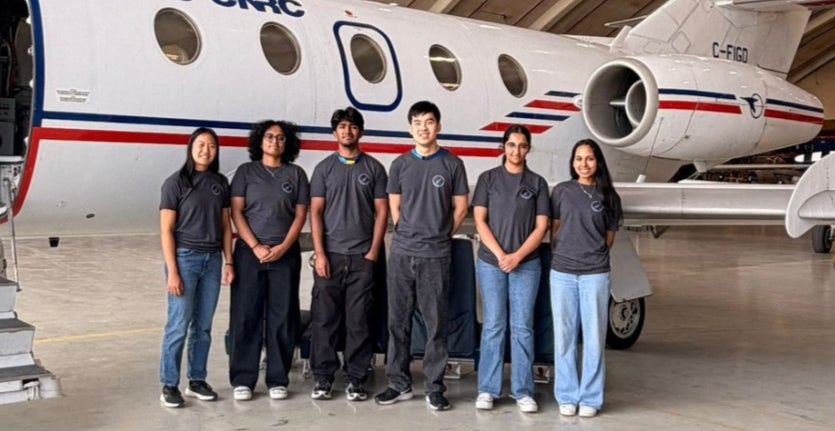
A Waterloo Engineering student design team has taken another step toward repairing electronics in space by designing, building and testing an automated soldering device aboard a microgravity flight. As missions travel farther from Earth, the ability to fix equipment in-space is becoming increasingly important.
The Waterloo Space Soldering Team, made up of 17 students and recent alumni, was one of four teams across Canada selected by Students for the Exploration and Development of Space Canada for this year's Canadian Reduced Gravity Experiment Design Challenge, held August 31 to September 4. Over two flights aboard a reduced-gravity research aircraft in Ottawa, the team operated its experiment through 16 parabolas — steep climbs and dives that each create about 20 seconds of weightlessness — and collected 35 solder samples for analysis.
The challenge is Canada's first microgravity research competition for students and runs in collaboration with the National Research Council of Canada and the Canadian Space Agency. This was the team's second time taking part, after winning the competition’s Overall Excellence Award in 2024.
Putting a spin on soldering
Repairing electronics usually means soldering: melting metal to join components to a circuit board. On Earth, gas bubbles in the melted solder rise and escape before it hardens. In microgravity, they stay trapped, leaving joints riddled with tiny holes that don't hold up as well.
In 2023, the team proposed a fix: solder inside a spinning centrifuge. The spin creates a force that mimics gravity, giving the bubbles a way out. If it works, crews could make repairs on board rather than relying on costly resupply from Earth.
At the 2024 challenge, the team put this idea to the test. Analysis of the samples afterward revealed a flaw in the method. To fit the soldering into each brief window of weightlessness, the team had shortened the heating process. That rushed heating turned out to be a major cause of the holes.
"What we initially thought was a failed attempt back in 2024 ultimately became a source of both motivation and expertise," says Megan Chang, a recent Mechatronics Engineering graduate and founding member of the team. "We had the same mission as before for this year's competition, but a new and improved method, and much more experience."
This year, the team set out to fix that flaw. Its new device solders working electronic components instead of melted samples, and it works like an automated handheld soldering iron. Two miniature irons inside the centrifuge heat the component and circuit board directly, forming a joint in one to three seconds, well within each window of weightlessness. The device can solder at simulated gravity levels from zero to five times Earth's gravity. According to the team, no previous microgravity experiment has demonstrated automated, repeatable soldering of components under controlled centrifuge conditions.
Turning the new design into flight-ready hardware drew on a full range of engineering skills. Mechanical, electrical and software subteams each built their own part of the system: the centrifuge and soldering system, a custom heating board and power system, and the code controlling each moving part. The hardest part, team members say, was making everything work together as one system precise enough for the research. After repeated testing and design reviews with experts from the Canadian Space Agency and the National Research Council of Canada, the device was approved to fly.
Four team members then flew as mission specialists, operating the experiment on board and experiencing microgravity for the first time.
"Being weightless and floating through the aircraft was the most memorable moment of my engineering degree yet," says Shamanthi Rajagopal, a third-year Electrical Engineering student and the team's electrical lead. "Imagine being at the peak of a rollercoaster, right before the drop — that's what it felt like, but continuously for 20 seconds each parabola."
What comes next
Now the team will analyze its samples using CT scanning and microscope imaging. It will compare joints soldered in microgravity, with and without the centrifuge, against joints soldered on Earth. The results will show whether spinning the solder produces joints with measurably fewer holes, the question at the heart of the team's research.
Looking further ahead, the team hopes to improve the system's precision, test a wider range of components and eventually demonstrate the technology in a more realistic spacecraft or space station environment. Its long-term vision is a compact system that astronauts or robotic systems could use to repair or manufacture electronics in space.
The team sees its device as one small step toward spacecraft that can maintain and repair themselves, bringing repair work that is now done almost entirely on Earth into space.
Advancing AI research in honour of former professor
This article was originally featured on Waterloo News.
Decades after graduating from the University of Waterloo, an alum has established an endowed professorship to advance responsible research in artificial intelligence (AI) in honour of his former PhD supervisor.
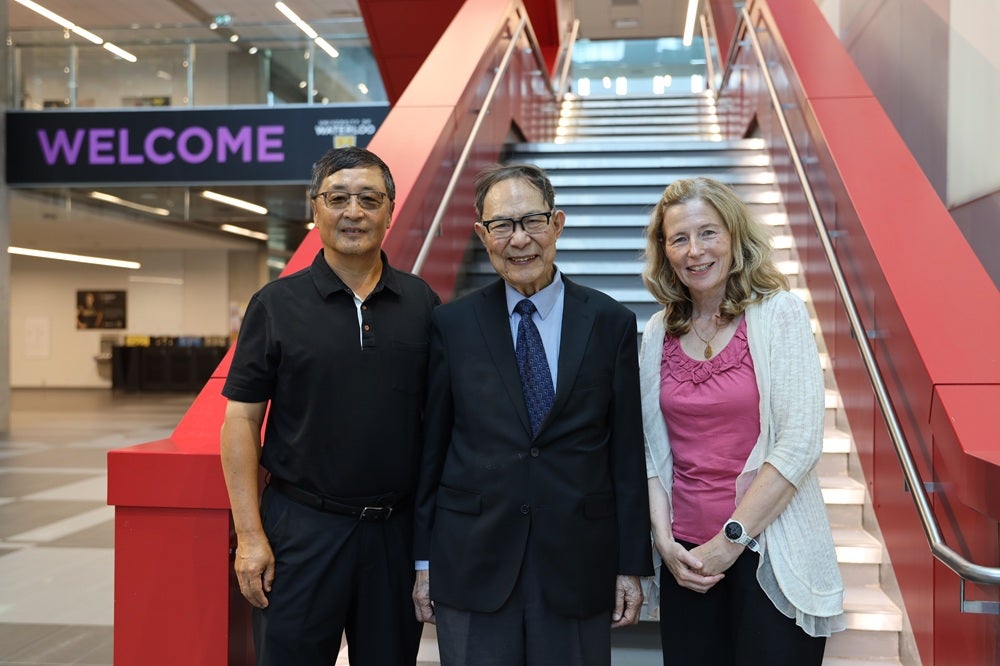
Albert (Feng) Yang (PhD ’95) launched the Yang Family Professorship with a $1 million investment in recognition of Dr. Andrew Wong, Distinguished Professor Emeritus in the Department of Systems Design Engineering.
The professorship supports AI scholarship with an emphasis on responsible innovation and real-world impact. Research can span foundational and applied work across practical domains such as robotics, health care, manufacturing and information systems, with the goal of delivering measurable improvements in performance, safety and user benefit.
Yang, founder of Topaz Labs, an Emmy-award-winning software company that specializes in AI-powered image and video enhancement tools, credits Waterloo’s applied research environment and Wong’s mentorship for instilling in him the value of pursuing ideas that are both technically rigorous and impactful in the real world.
“I have always been grateful to the University of Waterloo,” Yang says. “Especially for the time I spent under Professor Wong’s supervision. His passionate energy for research was infectious and his belief in me never wavered. I feel very fortunate that I have been able to directly apply what I learned at Waterloo throughout my career and honouring Professor Wong felt like the most natural and appropriate way to give back.”
“Albert Yang’s generosity is a powerful testament to the lifelong impact of a Waterloo education,” says Dr. Bill Rosehart, President of the University of Waterloo. By honouring Professor Andrew Wong in an investment that supports responsible AI research, Albert is helping Waterloo advance innovation that not only pushes the boundaries of technology but also serves society in meaningful ways. This gift reflects the very best of Waterloo — mentorship, discovery and impact.”
Untangling patterns in data to improve trust in AI
Wong’s research and career have centred on making sense of complex data, developing methods that don't just identify patterns but make them easier for humans to interpret and assess. He is the founding director of Waterloo’s Pattern Analysis and Machine Intelligence (PAMI) Lab which was established in 1984 to improve how automated machines like robotic arms see and interpret objects through data pattern recognition.
He co-founded Virtek Vision International in 1986 to commercialize the lab’s core pattern recognition and laser technologies, and co-founded the Centre for Pattern Analysis and Machine Intelligence (CPAMI), a University-wide expansion of the lab, in 2011.
One of the most prominent AI technologies developed by Wong and CPAMI is pattern discovery and disentanglement (PDD) which finds the hidden clues in data and untangles messy, overlapping data points to understand how the bits come together to make the whole. A 2024 study published in Bioengineering shows how PDD can improve the reliability of AI in health care. Analysing more than 10,000 intensive-care patient records used in sepsis research, Wong's team flagged 1,150 records as potentially mislabelled or unreliable — highlighting the importance of checking the data that AI system learn from.
As the inaugural holder of the professorship, Wong has funding to continue his investigation of PDD to extract reliable, explainable information from complex datasets.
"The gift came at the right time," Wong says. "The research foundation is set. What this support allows us to do is build on this foundation and evaluate how broadly our work can be applied.”
Yang, whose career has given him a close view of both AI's power and its risks, believes strongly in the transformative potential of AI for humanity.
“AI is truly a revolution, not just an evolution,’ Yang says. “It creates enormous opportunities in almost every field, and I hope students will embrace this historic opportunity. I especially encourage them to be entrepreneurial. Find an important problem. Build a startup or a product to solve that problem. Use AI as your superpower.
"It is one of the most fundamental developments in human history. I hope my gift can support Waterloo's research in pattern discovery and disentanglement and help ensure that AI benefits Canada and society more broadly.”
What does freedom look like across history, health care, the arts, technology and innovation?
A message from the Office of Equity, Diversity, Inclusion & Anti-Racism.
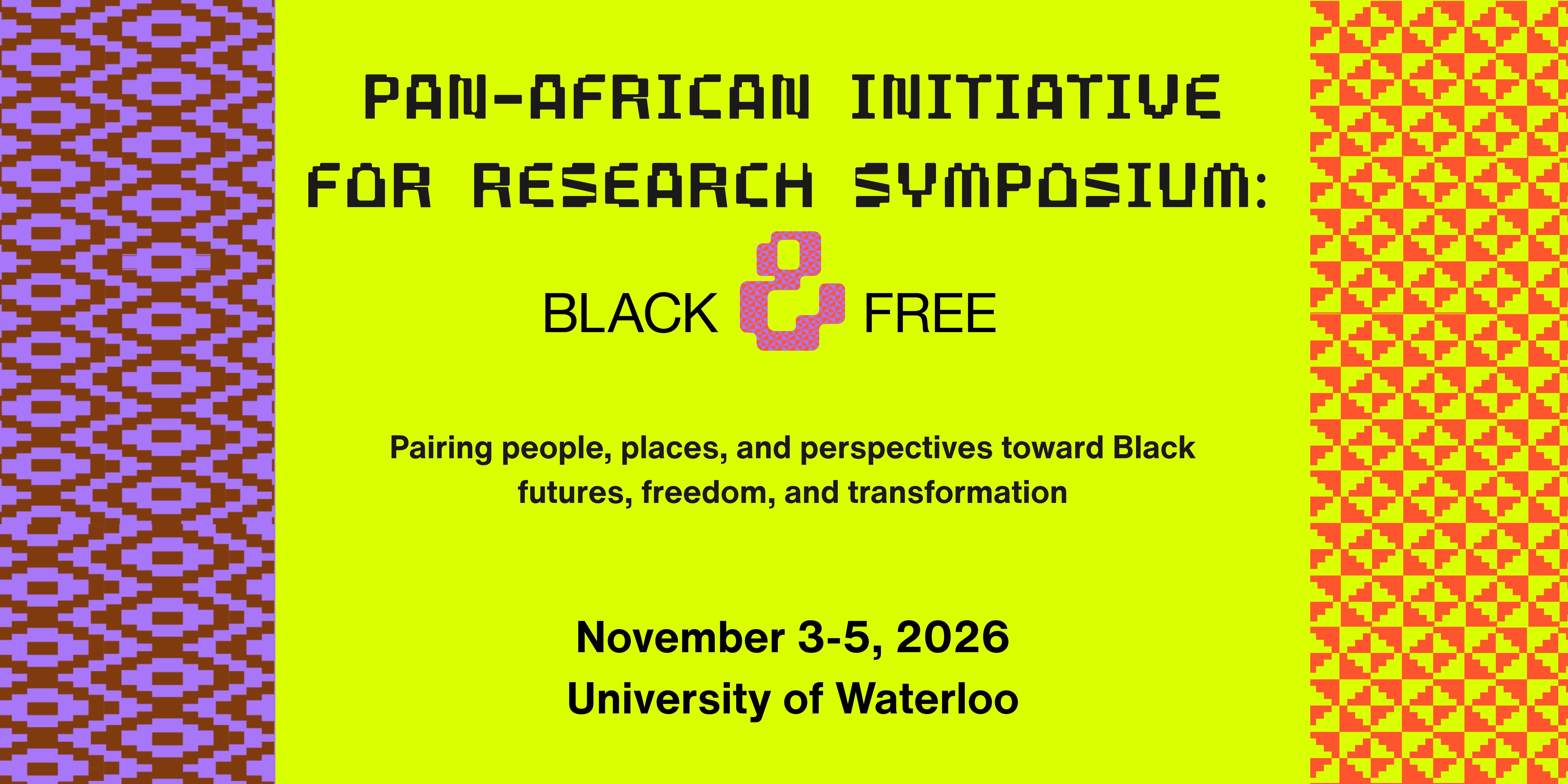
Explore this question at the inaugural PAIR Symposium: Black and Free Edition, presented in partnership with the Black And Free research-creation project.
From November 3 to 5, PAIR members, the University of Waterloo community, partners and guests will come together, in-person, to explore Blackness and freedom, exchange ideas and build connections across disciplines and generations.
The program features keynote presentations by:
-
Chereda Grannum, Reclaiming our Atlantic Destiney (R.O.A.D)
-
Dr. Naila Keleta-Mae, on her research-creation project Black And Free
-
Dr. Richard Norman on his new book, (re)Pebbling: A Story of Blackness and Curling
Together, we’ll explore how centering Black, African and Afro-diasporic knowledge systems, histories and futures can deepen research and open new possibilities for collaboration. Be part of interactive workshops and roundtable discussions that connect Blackness and freedom with the ways we live, learn and create.
Register on the PAIR website.
When and Where
The Campus Wellness Student Medical Clinic offers healthcare visits with Physicians and Nurse Practitioners to current undergraduate and graduate students. Services include: vaccinations, immunity testing, naturopathic services and more. Counselling Services offers appointments with counsellors in person as well as via phone and video. Students can book appointments for these services by calling Campus Wellness at 519-888-4096.
The privately-run Student Health Pharmacy (located in the lower level of the Student Life Centre) is now offering new COVID booster shots and flu shots. Covid booster shots are available by appointment only – please call ext. 33784 or 519-746-4500. The Student Health Pharmacy’s summer hours are Monday to Friday, 9:30 a.m. to 4:30 p.m. Naloxone kits are still available – pick them up in the pharmacy at no charge.
The Waterloo Eye Institute optometry clinics in Waterloo and downtown Kitchener offer comprehensive eye exams and eyewear, including glasses and contact lenses, with the Waterloo location offering various specialized services including urgent eye care. Discounts apply for University of Waterloo students and employees. The Waterloo Clinic is at a nearby interim location, 419C Phillip St, during construction at the School of Optometry and Vision Science. The Kitchener Clinic remains at the Health Sciences Campus, 10B Victoria St. S. Book online or by phone at 519-888-4062.
The Fall 2026 Student Experience Survey (SES) is now open. Please check your @uwaterloo email or visit LEARN to see if you have been invited. Those that submit their responses will receive $5 on their WatCard. The survey is open until Nov. 6.
Introduction to Crochet, Wednesday, October 21, noon to 1:00 p.m. (class is held over two weeks). It will also be held on Monday, November 2, 5 to 7 p.m. Location will be sent at registration. Note: This workshop costs $25.
Center for Nanointegration Duisberg-Essen (CENIDE) and Waterloo Institute for Nanotechnology (WIN) Seminar Series on 2D-MATURE: "A Journey from Fundamental Science to Technological Application", featuring Thomas Szkopek, McGill University, Electrical Engineering, Thursday, October 29, 10 to 11 a.m., QNC 1501
Farvolden Day 2026, Thursday, October 29, 1:30 to 6 p.m., Federation Hall. Register today!
James Vukelich: The Seven Grandfather Teachings and the Seven Generations, Thursday, October 29, 6 to 8 p.m., LHI 1621
AI: Opportunity, Risk and Choices Ahead, Thursday, October 29 from 7 to 9 p.m., Centre for International Governance Innovation
Halloween Haunt: The Canvas breach (Shadow IT), Friday, Oct 30, 9 to 10 a.m., virtual
Warriors Volleyball vs. Nipissing – Friday, October 30, 6 p.m. (Women) / 7:30 p.m. (Men) (Carl Totzke Court, PAC) - Home Opener, Camps and Minor Leagues Day, Employee Night. Email WarriorsTickets@uwaterloo.ca for coupon code. Buy your tickets today!
Risk, Resilience, and Climate Change - from Power Systems to Communities: Seminar with Seth Guikema, Friday, October 30, noon to 1:30 p.m., PSE Faculty Hall
Chinese Student Hangout, Friday, October 30, 5 to 6 p.m., REN 1400 (Dunker Family Lounge)
Waterloo Institute for Nanotechnology (WIN) Industry Seminar Series: "Positive Electrode Materials and Electrode Architecture for Lithium-Ion Batteries" Featuring Yoshinari Makimura, Monday November 2, 11 a.m. to 12 p.m., QNC 1501
Blockchain Innovation Challenge powered by Stellar, Monday, November 2, 4 to 6 p.m., Black & Gold Room, SLC
Generative AI for Research: Finding Literature, Tuesday, November 3, 10 to 11:30 a.m., LIB 329.
WICI Talk: Terry Stewart, Energy Efficient AI, Tuesday, November 3, 2 to 4 p.m., RCH 209
Systematic and Scoping Reviews: Systematic Search Methods, Tuesday, November 3, 1 to 3 p.m., online.
SCA 50th Anniversary Celebration, Tuesday, November 3, 3 to 5 p.m., Dana Porter Library, First Floor.
Take Our Kids to Work Day 2026, Wednesday, November 4, 10 a.m. to 3 p.m., STC
Warriors Men's Hockey vs. Laurier– Wednesday, November 4, 7 p.m. (CIF Arena). Battle of Waterloo. Buy your tickets today!
Anti-Racism Reads: Alt-Right From 4Chan to the White House, Thursday, November 5, noon to 1 p.m., LIB 338
Safeguarding Science Webinar: Module 6 - Travelling Safely: Protecting Your Research While Travelling Abroad (English) - Thursday, November 5, 1 to 2:30 p.m.
Fall 2026 EH Slow Reading Group, Thursday, November 5, Thursday, November 19, and Thursday, December 3 from 1:30 to 2:30 p.m. in Hagey Hall 335
Queer Space and Trans Life: A Book Talk with Dr. Eden Kinkaid, Thursday, November 5, 3 to 4:30 p.m.
2026 National Bank Field Hockey Canada U SPORTS Championship, presented by Farm Mutual Re– Thursday, November 5 to Sunday, November 8 (Warrior Field). Buy your tickets today!
Collaborative Water Program Student Information Session, Friday, November 6, 10 to 11 a.m., STC 2002.
Warriors Basketball vs. Carleton– Friday, November 6, 6 p.m. (Women) / 8 p.m. (Men) (Carl Totzke Court, PAC). Home Opener, Camps and Minor Leagues Day. Buy your tickets today!
Film Screening and Panel Discussion: "A Chip Odyssey", Monday, November 9, 5:30 p.m. to 8:30 p.m., Balsillie School of International Affairs
Virtual Reality in the Classroom: An Introduction for Instructors - In Person (TII5020), Wednesday, November 11, 2:30 to 3:30 p.m., LIB 329 (Tech Sandbox)
Where is the Peace Tech? Enabling Encounters Between Peacebuilders and Technologists, Friday, November 13, 7:30 to 9 p.m., Humanities Theatre
Understanding Policy: Staff Leaves and Vacation, Monday, November 16, noon to 1 p.m.
Crochet 2.0: Introduction to Amigurumi, Monday, November 16, 5 to 7 p.m., Location sent at registration. There is a $15 cost for this workshop.
Upcoming service interruptions
Stay up to date on service interruptions, campus construction, and other operational changes on the Plant Operations website.