Community Gathering and Sharing Project

This project was a community-informed initiative that collected information directly from 2STNBGNC+ students and employees as well as members of the broader 2SLGBTQIA+ communities, allies, and service providers. 

Objectives

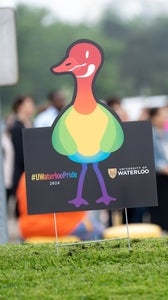
proud goose

The project’s objectives include:

To build on feedback received previously from 2STNBGNC+ students and employees. 

To create intentional spaces for 2STNBGNC+ students and employees to share their needs and concerns.

To identify gaps and prioritize areas of focus for the strategy.

To inform the development of a comprehensive Trans and Non-Binary Equity strategy.

Consultations

Feedback was gathered between June and November 2024 through consultations with various campus communities under the 2SLGTBQIA+ umbrella and an anonymous online Feedback Form.

Twenty-two (22) group consultations and five individual interviews with key service providers were conducted, and 100 valid responses were received through the anonymous feedback from.

The consultations were conducted in-person and online between June and November 2024. The facilitators used a trauma-informed approach in the consultations. Each group was offered in-person and online options to accommodate participants’ needs. The small group sessions were conducted in a semi-structured format with open questions and lasted between 1.5 to 2 hours.  A gender-neutral washroom was available at all in-persons sessions. Sixty-six (66) community members provided their feedback during these consultations. The participants were provided an honorarium of $25 person for their time, though not all participants took these funds. 

The twenty-two community consultations were designed for small groups (up to 10 people) and focused on different types of intersectionality, allowing for learning about niche lived experiences of studying and/or working on campus that may not be heard in more heterogeneous groups. The following sessions were held:

  • Queer & Trans Alliance (formerly Gender& Sexuality Diversity Alliance).
  • GLOW and Grebel's Queer, Allied and Questioning.
  • Gender and Social Justice (GSJ) faculty members.
  • 2SLGBTQIA+ Peer Therapists Consultation and Supervision – Counselling Services.
  • 2STNBGNC+ employees (staff and faculty).
  • 2SLGBTQIA+ employees (staff and faculty).
  • 2STNBGNC+ employees (staff and faculty) with disabilities.
  • 2STNBGNC+ students with disabilities.
  • 2STNBGNC+ employees (staff and faculty) who also identify as Black, Indigenous, or racialized.
  • 2STNBGNC+ students who also identify as Black, Indigenous, or racialized.
  • 2STNBGNC+ undergraduate students.
  • 2STNBGNC+ graduate students.
  • 2SLGBTQIA+ undergraduate students.
  • 2SLGBTQIA+ graduate students.
  • 2STNBGNC+ allies who are employees (staff and faculty).
  • 2STNBGNC+ allies who are students.
  • A separate open session for employees and students who wished to remain anonymous or protect their identities (e.g., cameras off; pseudonyms used) was conducted online.

The feedback form included 17 questions and was open to 2SLGBTQIA+ community members from November 1st to 22nd, 2024.  For those members of the 2STNBGNC+ students and employees who could not attend the community consultations due to scheduling conflicts, or because they did not feel comfortable coming out as 2STNBGNC+ in the meetings, the feedback form provided an opportunity to voice their opinions and experiences. The feedback form was open to a broader 2SLGBTQIA+ community to make the data collection more inclusive and account for sexual identity in addition to gender identity and expression.

There were 109 responses to the Feedback Form in total, which included 100 (91.74%) valid responses. Nine (8.26%) entries were submitted by UW community members who did not identity as 2SLGBTQIA+ and were excluded from analysis. The following groups provided their responses: 

A draft version of the recommendations was presented and discussed in February 2025 in a follow-up consultation with community members who participated in the project.   Twelve community members provided their feedback in the follow-up session.

Limitations of the Study

Community members understood the purpose of this knowledge-gathering project in two different ways:

  • to gather data about personal experiences during and after the June 2023 incident, and
  • to learn about the overall 2SLGBTQIA+ climate at the University of Waterloo.

For many participants, these two lines of thought were intertwined, especially if the participants had been members of the campus community for a long time. The blending of the two narratives brings information that may not seem directly related to the June 2023 incident, but it enriches the context and allows for a broader understanding of the systemic determinants that impact 2STNBGNC+ community members’ sense of inclusion, safety, and belonging.

Some 2STNBGNC+ community members may have chosen not to participate and share their thoughts because of their past experiences with the University, the institutional responses to the events that preceded the June 2023 hate-related incident, and the overall lived experience of being a member of the 2STNBGNC+ community, which includes various types of dismissal, gaslighting, and subtle and direct abusive behaviour related to transphobia and homophobia[25]. This position was cautiously expressed by many consultation participants, who mentioned their friends or colleagues who chose not to come to the consultations because “they knew it won’t change anything” to quote one of the community members.

The 2STNBGNC+ Community Gathering and Sharing Project addressed a highly sensitive issue that required trust not only in the project investigators, but also in the institution. According to various studies, gender-based violence, harassment, verbal abuse and other forms of human rights violations against members of the 2STNBGNC+ persons are often underreported and misreported: “data collection is often incomplete or unreliable when it comes to violent and fatal crimes against the trans community. Some victims’ deaths may go unreported or misreported, while other victims may not initially be identified as trans or gender-expansive.” [26]

This means that even when a trans, non-binary and/or queer person reports an incident, the reported issues could be misinterpreted because existing policies do not acknowledge 2STNBGNC+ risks or the party receiving a complaint did not provide expected support. According to the “Harassment and Violence in Canadian Workplaces” Survey: “Most of the survey respondents were very dissatisfied or somewhat dissatisfied with the responses they received from supervisors or managers, human resources, or other persons […] Respondents indicated higher levels of satisfaction with the responses they received from their union representative (21% very satisfied, 17% somewhat satisfied).”[27]

The response to reporting abuse against trans and non-binary students and employees could be reprisals or a threat of reprisals, and a 2STNBGNC+ community member could be mistreated, wrongfully accused (victim blaming), and face administrative pressure and even accusations against them. According to the consultation participants, such situations happen on campus: trans and non-binary students and employees who call out anti-trans or gender-normative remarks have gotten in trouble for calling attention to this harmful behaviour.[28]

Many 2STNBGNC+ people don't report discrimination against them because they do not fully understand the policy procedures and how to gather and present evidence to support their cases. Many do not know what counts as evidence that can be used in an investigation or arbitration. A large part of the 2STNBGNC+ community experiences financial constraints and cannot afford legal support when needed. For these and other reasons, many trans, non-binary and queer people do not report violations and abuses that they experience.[29] All these issues are relevant to trans and non-binary experiences on campus and influenced community members’ decision to share their knowledge and lived experience.
Community Gathering and Sharing Project references

[25] In this context homophobia stands for negative, dismissive and abusive believes, attitudes and behaviours towards a wider range of 2SLGBTQIA+ identities (not gay, lesbian or queer identities only).
[26] https://reports.hrc.org/an-epidemic-of-violence-2024
[27] Berlingieri, A. et al. P. 20.
[28] https://transgenderlawcenter.org/wp-content/uploads/2023/09/JRS_Guide-for-Reporting-on-Anti-Trans-Violence_Greyscale-1.pdf
[29] See: https://glaad.org/publications/transgendervictimsofcrime/; https://www.ohrc.on.ca/en/book/export/html/11191; https://williamsinstitute.law.ucla.edu/press/ncvs-trans-press-release/.

Existing DataFindings