

Municipal Growth Decision Support Tool
Leveraging Waterloo's strengths in AI, machine learning, applied math, urban engineering and planning, the FCI has assembled an interdisciplinary and cross-sectoral team of municipal, industrial and academic partners to develop a tool that will help municipalities evaluate and communicate the potential impacts of different growth management scenarios. The tool will provide municipalities with insights into how different development choices align with their environmental, social, and economic goals.
Module 1 - Fundamental Infrastructure
This module uses existing databases and novel methods to provide municipalities with critical metrics for assessing potential development sites. This includes evaluating infrastructure availability (water, wastewater, transportation systems) for areas undergoing densification or assessing whether greenfield sites have necessary surrounding infrastructure to support new development.
Module 2 - Revenue Generation
This module provides municipalities with a clear economic lens to evaluate potential land development. By visualizing projected municipal revenue from development charges and annual property taxes, it helps decision-makers assess the return on investment for different growth scenarios. Municipalities can compare how development types and locations affect long-term fiscal sustainability, providing a more complete picture of both costs and revenues associated with growth.
Module 3 - Environmental Attributes
The building sector is Canada's third-largest source of greenhouse gas emissions and one of the most difficult to decarbonize. Policymakers must reduce emissions while addressing Canada's housing affordability crisis. This module develops a customized tool helping policymakers design integrated solutions for both affordable housing and emissions reduction, supporting Clean Prosperity's efforts to grow Canada's low-carbon economy.
Module 4 - Housing Needs Assessment
This module addresses a critical gap in municipal Housing Needs Assessments, which focus on demographics but fail to connect resident profiles to actual housing affordability. The challenge is developing a data-driven solution that helps municipalities understand what housing typologies match income profiles of current and projected residents, visualizing affordability gaps geographically. The solution provides tools for planners to see true demand for attainable housing based on salary mix and market needs.

Ontario Property Tax Monitor
The Ontario Property Tax Monitor project aims to build a standardized, easily accessible database to support data-driven analysis of Property Taxes and Development Charges and their impacts. The project uses two main approaches: (1) extracting data directly from municipal websites and documents, and (2) cleaning and standardizing existing data from Ontario’s Financial Information Return (FIR). A combination of automation, web scraping, AI techniques, and manual verification ensures both scalability and accuracy in data collection. The ultimate goal is to develop a comprehensive archive of Development Charges–related municipal documents—such as rates, bylaws, and case studies—alongside a standardized dataset with clearly defined labels and categories.

Build Now Waterloo Region: A Living Lab focused on affordable housing innovation
The Build Now Waterloo Region Living Lab is a partnership between the Future Cities Institute and a consortium of local businesses (led by Habitat for Humanity) to study and support the construction of 10,000 affordable "missing middle" homes by 2030. The project will integrate interdisciplinary research, hands-on student learning experiences and community partnerships to evaluate the economic, health, environmental, and social impacts of this innovative non-profit housing model. Findings are intended to guide future housing policy and be scaled to other communities globally.

Mental Health and Addictions System Transformation
The Mental Health and Addictions Systems Transformation Team (MHA-STT) is a coalition of over 30 service providers in Waterloo Region, including hospitals, police, paramedics, and mental health organizations, working to transform the regional MHA service system and reduce emergency department visits. The Data Working Group is developing a comprehensive dataset with linked client information across multiple providers to enable data-driven decision making while maintaining privacy protections. The MHA-STT Living Lab will experiment with real-time data sharing models and test system innovations, documenting lessons learned from these experiments.
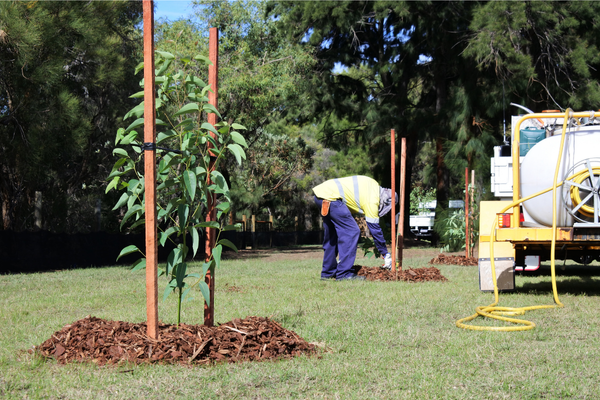
SmartShift: Development of a predictive scheduling system to optimize seasonal staffing in Edmonton, Alberta
The Parks and Roads Services branch at the City of Edmonton faces challenges with its manual seasonal staffing process, which is inefficient and struggles to balance operational needs with collective agreement requirements and employee preferences. The project aims to develop an automated system that captures employee data and operational requirements to generate optimized schedules. Expected outcomes include improved efficiency, guaranteed compliance, enhanced fairness, and increased employee satisfaction.

Vision 1 Million Scorecard: Research-driven validation and data platform development
In partnership with BESTWR, FCI is creating and validating a comprehensive scorecard that tracks Waterloo Region's progress across five key urban development areas required to accommodate its anticipated rapid population growth over the next 25 years: housing, transportation, healthcare, employment, and social infrastructure. The three-phase project involves validating scorecard indicators, establishing data access partnerships, and building a backend platform to automatically analyze data and generate scores for guiding transformative city growth and advocacy efforts.

CivicInquire: Municipal homelessness policy platform
This project, called CivicInquire, aims to address Canada's growing homelessness crisis by creating a digital platform that automatically aggregates and analyzes municipal homelessness policies to evaluate their effectiveness. The research team will develop an online tool to collect and host data, examining how municipal policy features impact homelessness prevalence and forecasting policy outcomes. The University of Waterloo's Professional Practice Centre for Health Systems in the School of Public Health Systems will provide technical services including developing the data collection algorithm, hosting the platform, and providing support to help Canadian communities develop equitable solutions to combat chronic homelessness.

Nunavut Community-Led Economic Development Initiative
The Nunavut Economic Developers Association (NEDA) is upgrading its 2017 Community Economic Development (CED) Toolkit with AI and machine learning capabilities to help communities create CED plans without the need for external consultant support. NEDA is partnering with the Future Cities Institute to provide AI training, building local technical expertise while reducing dependence on outside consultants. The AI-powered tools are expected to increase grant funding success, leading to expanded market access, job creation, and more local economic initiatives. This scalable model can be replicated across other remote and Indigenous communities throughout Canada, offering a streamlined, data-driven approach to community economic development.

Infrastructure Futures: AI-Driven pipeline network planning and predictive maintenance
This research project develops an AI-driven digital twin system for natural gas pipeline networks to support optimized infrastructure planning and predictive maintenance. The University of Waterloo, partnering with the City of Kitchener, will create simulation tools that model future gas demand scenarios and predict pipeline failures while accommodating uncertainties in population growth and energy transitions. The technology will enable municipalities to make data-driven decisions about pipeline upgrades, ultimately improving public safety, reducing costs, and extending infrastructure lifespan.