MFC Students: Turning Campus Waste to Energy
Master of Future Cities (MFC) student Johanna B. recently teamed up with peers Taylor Smith and Leonardo Robles to earn Best Idea honours at the Brookfield Renewable Innovation Challenge. Crossing faculty boundaries to join an engineering cohort at the Pearl Sullivan Engineering IDEAs Clinic, the team applied an environmental planning and systems-thinking framework to address complex campus infrastructure and waste management needs.
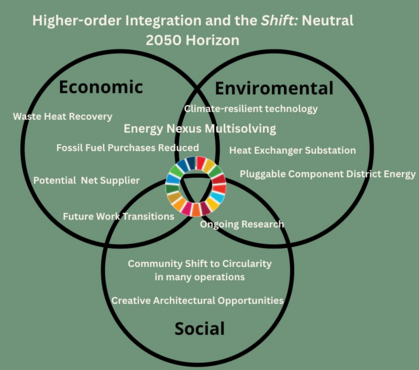
Every year, the University of Waterloo spends over $20,000 to transport their organic waste off site, which is exactly what the team’s winning proposal targets. By designing an on-campus waste-to-energy organics digester and biogas generator, the project captures local organic waste and processes it into methane fuel to supplement central plant heating operations. In a campus energy environment where annual gas utilities reach millions of dollars, even a modest initial fuel offset yields immediate financial and environmental benefits.
Beyond near-term utility savings, the concept reflects a commitment to far-horizon planning. By framing localized waste processing as an active element of a broader district energy strategy, the project illustrates how practical student concepts can help institutional real estate and municipal systems move toward Net Zero 2050 targets.