Weighing the trade-offs of growth: FCI co-op students get expert feedback
On the morning of October 19, Tony Lin and Steven Men presented their work to someone who has been shaping it since day one.
The two FCI co-op students are building the Growth Management Platform (GMP), a tool for cities deciding how to grow. Ben Dachis, Vice President of Research and Outreach at Clean Prosperity and a member of FCI’s advisory board, has advised the project since it began. He listened, asked questions, then reached for a metaphor.
“Picture a balloon,” he said.
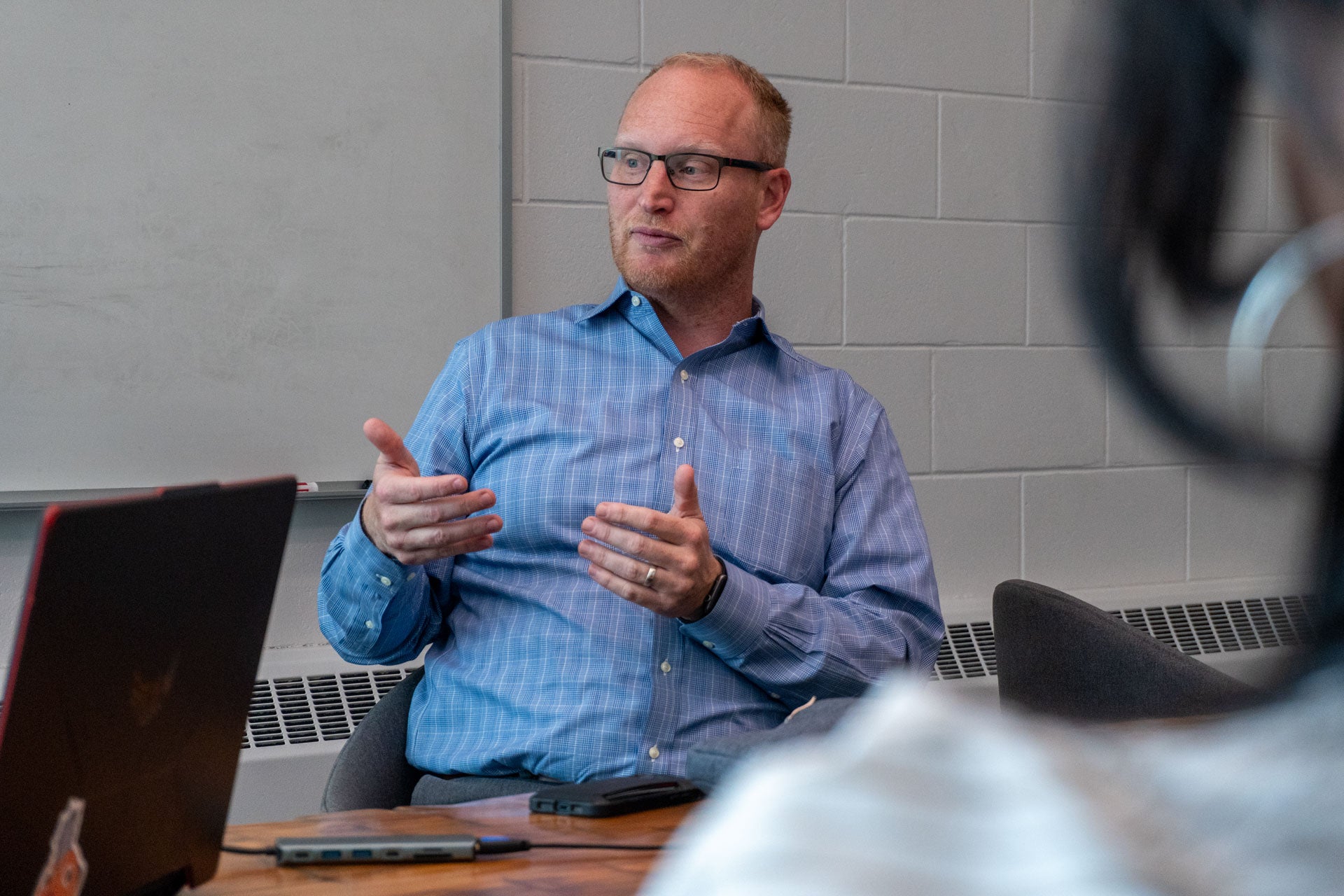
Squeeze one side and the other side bulges. Make single-detached homes harder to build, and people shift into condos while single-detached prices rise. Tighten the building code, and each new home in the city produces fewer emissions but can cost more to build. If that pushes buyers farther out, longer commutes can replace those saved emissions. The air didn’t leave the balloon, it moved.
Dachis was at the Future Cities Institute founded by CAIVAN (FCI) at the University of Waterloo to hear co-op students present the tools they are building and to give them feedback. For a co-op student, that’s a rare audience. Dachis spent 15 years in policy research at the C.D. Howe Institute, then served as Director of Policy, Budget and Fiscal Planning for the Premier of Ontario, where he helped develop the province’s Housing Supply Action Plan.
The GMP tool he was giving feedback on grew out of a two-day sprint in fall 2024. It brought together professionals like Dachis, industry partners and graduate students to work out how cities could better manage growth. Clean Prosperity then partnered with Mitacs to fund student work on the platform, with David Del Rey Fernández, who leads FCI’s modelling cluster, as the project’s academic supervisor.
The tangle they set out to sort through is one every growing city faces. Deciding where new homes go, how many to build and what kind sets off a chain of consequences: property taxes and development charges, emissions from concrete or wood-frame construction, new pressure on roads and transit, the list goes on. Those trade-offs rarely sit in one place, but the GMP tool puts them side by side so a planner can test a decision and see what else moves. And while FCI builds the platform and supplies the data, the decisions always stay with the cities themselves.

You want to understand, as fully as possible, the trade-offs you have to make along the way.
That matters when municipal governments hear from so many different voices. While some groups focus only on affordability and others only on emissions, Dachis said, governments have to weigh cost, emissions and livability at once. “You want to understand, as fully as possible, the trade-offs you have to make along the way.”
When the conversation turned to which details the tool should add next, Dachis steered the team back to the big picture. They had been working from highly granular cost data and asking how to account for upgrades like windows and ventilation. The GMP’s first job is to show the ripple effects of a growth decision: net-zero homes or not, condos downtown or not. After that, it will be time for the finer detail. “Build the building blocks first, then see if it works,” he said. “Get the structure right first, then tweak the numbers.”
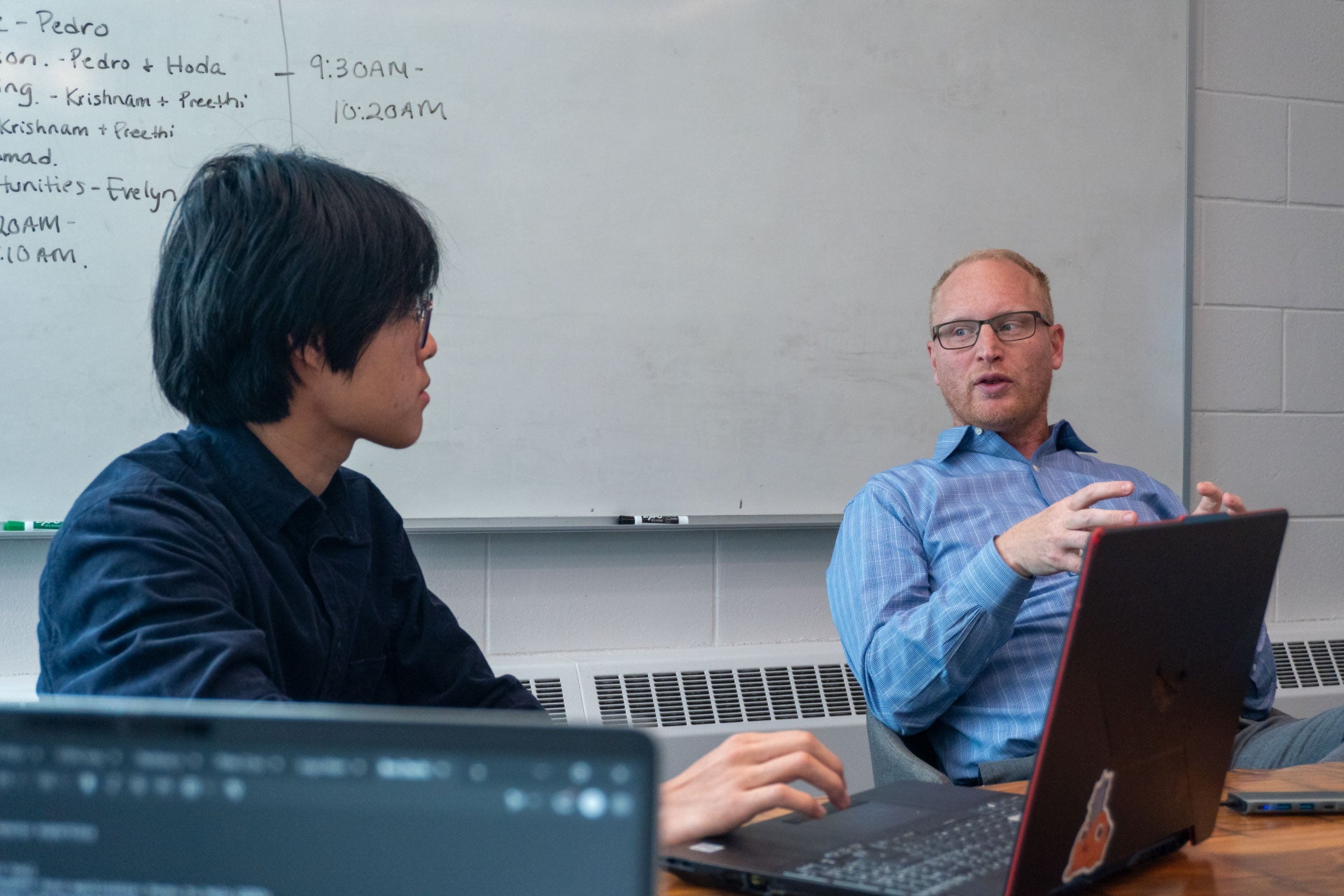
The tool is nearing that point now, but sharing unfinished work can still feel daunting, especially before every dataset is in hand. Dachis’s advice was to share it anyway and flag the assumptions. “Always disclose along the way what your assumptions are,” he said. The people who hold the hard data often don’t know a project needs it until they see the gap. Name it, and “people will say, ‘we can help you with that.’”
“The meeting was super helpful and unblocked a lot for us,” Tony said. “Being able to pick his brain really helped our understanding for how the tool would be used.”
The GMP is close to a minimum viable product, and every scenario it runs will come back to the question Dachis kept asking the room: “Where are we driving those people to go?”