Why 13-Year-Old Girls Stop Biking to School and How MFC Students Plan to Fix It
When a 13-year-old girl stops riding her bike to school, it is rarely just about the bike. It is usually about traffic safety, social pressure, and changing perceptions during early adolescence.
Research shows that this drop-off reflects a wider structural challenge in municipal infrastructure. In cities where cycling accounts for less than 7% of total commutes, women ride significantly less than men. However, once a municipality's cycling mode share climbs past that 7% threshold, gender parity takes off and cycling rates between men and women approach equal levels.
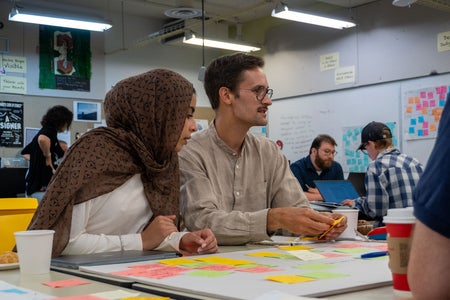

During their initial on-campus residency week for the Master of Future Cities (MFC) program at the University of Waterloo, four student teams tackled this discrepancy head-on. Working with Waterloo as a primary case study, students investigated the physical, social, and infrastructure barriers that keep women and girls off bike lanes, developing targeted municipal strategies to build confidence and expand participation.
One team presented "Bridging the Cycling Gap," focusing on how confidence drops as safety concerns and social norms take over in middle school. To turn these insights into action, the group mapped the journey of a 13-year-old persona named Maya, tracking her safety hesitations and peer influences. The students proposed a gamified social application designed to incentivize riders and reward them for using municipal cycling networks.

FCI Director Dr. Leia Minaker and FCI Co-Director, Academic Dr. Clarence Woudsma joined institute staff for the final student presentations. Woudsma highlighted the creative, practical problem-solving demonstrated across all four student teams as they grounded complex urban policy in real human experiences.
The MFC program brings together professionals across career stages and emerging leaders for an intensive week of in-person collaboration in Waterloo before students transition to remote coursework. Want to build practical solutions for Canada's urban challenges? Explore the Master of Future Cities program to learn more and join a national network of pragmatic city-builders.
