Why more data wasn't the answer for Nunavut
Most places can be reached by road. Iqaluit cannot, and its Road to Nowhere seems to make a point of it. For Preethi Raghuraman and Krishnam Jhalani, flying in for the first time, the sights out the window looked endless: water-laced stretches of land with no trees to interrupt it. On the ground, the wind off the tundra was the first thing to greet them. They had come to listen.
The trip began with an invitation. When Managing Director Eryn Stewart was preparing to travel north, she asked whether they wanted to come along, and they jumped at the chance. Preethi, a junior product manager at the Future Cities Institute founded by CAIVAN (FCI), and Krishnam, an FCI co-op student, had been supporting FCI's work in Nunavut from the University of Waterloo. Standing in one of the communities their tool is meant to serve, the work stopped being abstract. It became a conversation between people, in the place those people call home.
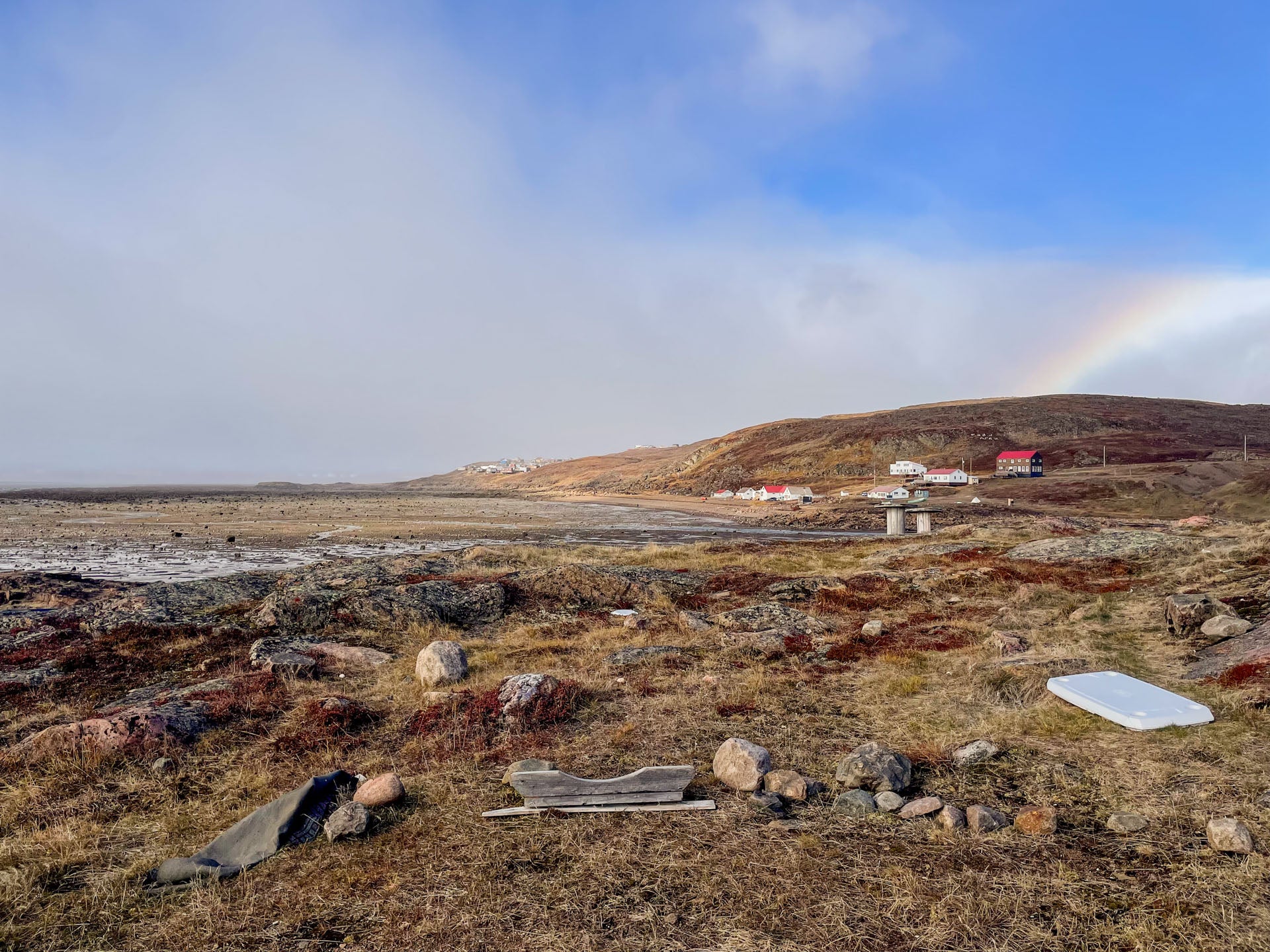
"Once you've been to one Northern, remote, or Indigenous community, you've been to exactly one community," says Eryn. "You don't know that community by stepping onto its ground, but seeing it gives you a better appreciation for it and for the work you're doing. That's why it's important to me that students get that experience."
Eryn was meeting with the Nunavut Economic Development Association (NEDA), a longtime FCI partner. Together, FCI and NEDA are building a tool to help Community Economic Development (CED) officers in Nunavut's hamlet communities create and track their CED plans. There are 25 hamlets in total, including the capital city of Iqaluit, and all of them can be reached only by air.
Once you've been to one Northern, remote, or Indigenous community, you've been to exactly one community. You don't know that community by stepping onto its ground, but seeing it gives you a better appreciation for it.
A CED plan is a roadmap of a community's strengths, its goals for the next five years, and who will carry them out. Communities are no longer strictly required to keep one, but a good plan can still be a valuable tool for a hamlet, guiding council decisions and supporting funding applications. FCI's CED tool set out to make plans less costly for hamlets to produce and to build the capacity of CED officers to plan alongside their own communities. Its first version asked officers a few questions, pulled in public data, and used AI to draft a complete plan of 30 to 40 pages.
Sitting down and listening to NEDA's executive director, the team began to see where that version, and the long plans that came before it, could fall short. Some plans run past 150 pages and spend the next five years on a shelf. Because a new plan only comes around every five years or so, a hamlet that had just finished one would have little reason to open the tool until the next cycle. When new staff step into the role, a plan's progress needs to be tracked and easy to find. And because this information matters so much to each community, privacy is paramount.

The North's conditions shape the design, too.
"Due to the remoteness of northern communities, internet connectivity is limited," says Krishnam. "A tool has to work under those conditions, or it won't be used at all. We're designing with that in mind."
That makes connectivity a core requirement for the CED tool. It will save answers as they are entered, run its heavier work in the background, and recover smoothly when a connection drops.
What it produces is changing too. Instead of a long document, it will generate a two-to-three-page visual summary that a council can read in one sitting, with a fuller report available on demand. Between plans, it becomes a place to track progress, where an update can be as simple as a checkbox and a note. Goals, owners, and past plans live in one place that belongs to the hamlet, so new staff can step in and build on the work already done. The result is a living plan, not a shelf document.
It will also let communities tell their story in their own words. The team plans to use large language models to transcribe spoken answers, so officers can build a plan through spoken word as well as writing.
The AI behind the CED tool has homework of its own. Statistics Canada has little data on small hamlets, and so little has been written about northern communities that a model trained on general data might, for example, suggest building an economy around timber in a place where trees can't grow. Instead, the tool will draw on each hamlet's own documents and engagement records, along with a collection of Nunavut-specific sources. Those documents stay private to the hamlet: no other community can see them, and the hamlet can see plainly who has access. A person stays in the loop at every step. The tool suggests and the community decides, and every goal and task it generates can be edited or rejected.

The ideas ran both ways. NEDA came away with fresh thinking for its own work, and the FCI team came away with a deeper respect for the lived experience behind each plan.
"We don't expect to fully understand that lived experience," says Eryn. "That's why it's so important that those perspectives are taken on by the community and incorporated into our work. That's essential in everything we do, whether it's community-led or organization-led."
"We went up thinking we knew what the tool should be," says Preethi. "Once we sat down with the people it's being built for, it was clear the best version could only come from listening."
We went up thinking we knew what the tool should be. Once we sat down with the people it's being built for, it was clear the best version could only come from listening.
By Friday, Preethi and Krishnam were on a plane home. They had gone north to listen, and the North had plenty to say. At FCI, we hold ourselves to a simple standard: be useful to the communities and organizations working to build healthy, prosperous futures. That means stepping outside of campus and working with partners on whatever will hold up in practice, however long or difficult it gets. Preethi and Krishnam are bringing everything they heard into a CED tool that an officer can open, update, and hand to whoever comes next.