Low-cost, large-capacity, long-duration energy storage is essential for large penetration of the variable renewable energy (VRE) such as solar and wind into the electric grid, as well as for the renewable isolated micro-grids in remote communities.
We aim at optimizing large-scale long-duration energy storage technologies by combining different energy storage technologies (e.g., Li-ion battery, thermochemical, hydrogen and compressed air) to utilize their respective advantages. This will allow more variable renewables into the grid while keeping the grid stable. We are also developing hybrid energy storage for 100% renewable-power isolated grids for remote applications.
A hybrid battery and hydrogen storage system for renewable microgrids is shown below:

1) We study the configuration and operation of the systems. The configuration can support decision-making of infrastructure planning, while the operation using a digital twin can be used to optimize system performance. Here are some examples:
- Modeling an optimal renewable hydrogen infrastructure at airport (Infrastructure planning to reduce cost and emissions)
- Optimizing the operation of fuel cell vehicle-to-grid systems using supervised learning (digital twin operation optimization)
2) Novel materials are being investigated in our group for energy storage and thermal management

This project is sponsored by an NSERC Discovery Grant, "Thermochemical energy storage based on nano-structured oxides."
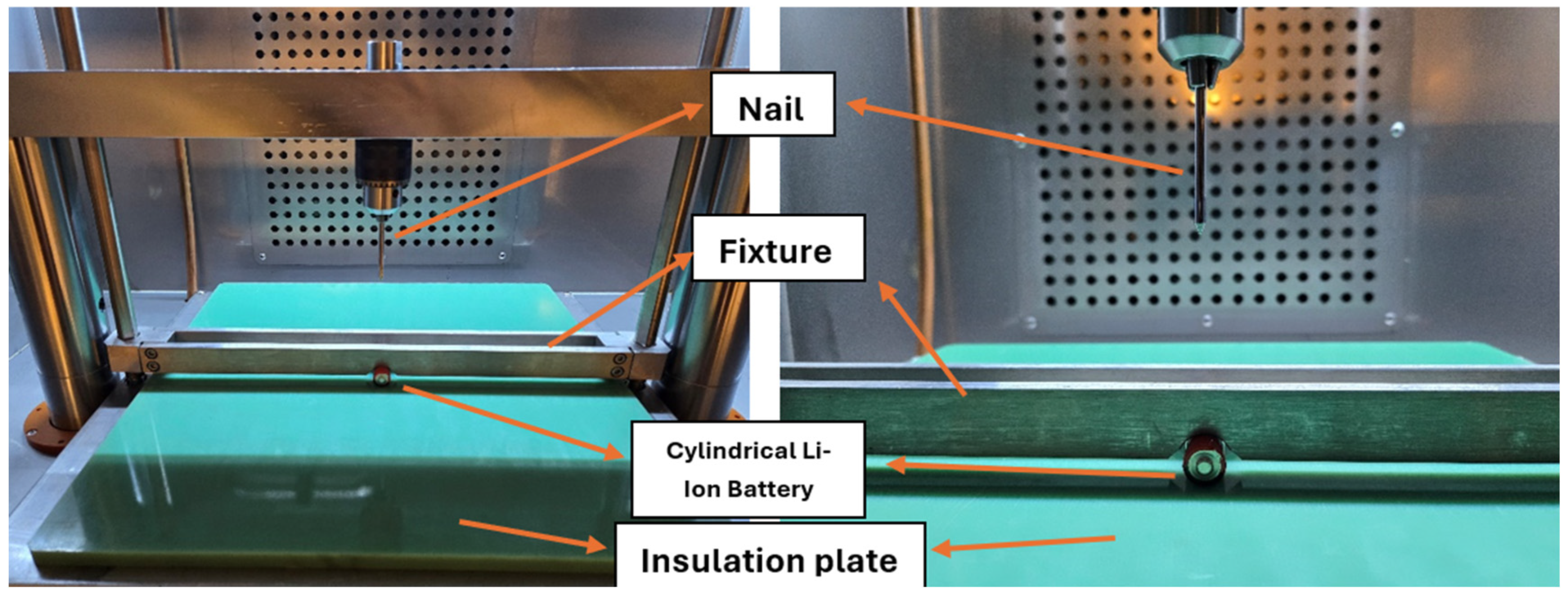
3) Battery safety is critical for large-scale energy storage systems in either vehicles or stationary storage (e.g., data centre). In our lab, we have a NSERC-RTI sponsored nail penetration tester to study how the battery behaves under thermal runaway, which is shown below.