


Turbulent times like ours call for people who understand systems of violence and conflict, and who are prepared to build peace with justice. This involves identifying and transforming systems of violence, marginalization and oppression, including racist, gendered and colonial violence at home as well as around the world. Whether working locally or globally, Peace and Conflict Studies is committed to imagining, educating and ongoing learning that equips our graduates to pursue justice and peace.
PACS as a department is located on territory that is governed by the Dish with One Spoon Wampum and land promised to the Six Nations Confederacy in 1784 as part of the Haldimand Declaration. For more information, see Conrad Grebel University College's land acknowledgement and read about decolonization at the University of Waterloo's Office of Indigenous Relations.


A Vibrant, Interdisciplinary Graduate Program
The Master of Peace and Conflict Studies (MPACS) program is a coursework-based, professional degree that empowers students with knowledge and skills to contribute to nonviolent peacebuilding. Combining rigorous interdisciplinary scholarship with experiential learning opportunities, the program provides graduates with tools to understand sources of conflict, polarization, and systems of violence, as well as to imagine and initiate transformative peacebuilding. Our distinctive focus is on civil society and community-led change.
The master's degree is typically completed in 16 months (four terms), consisting of coursework, an optional internship placement, and practical skill development courses, with options for independent research. Part-time studies are also possible.
Understanding conflict
Recognizing conflict as an inescapable part of the human experience, and a potential vehicle for positive change at local, national, and international levels, this master’s degree offers a cutting-edge approach in which dynamic, sustainable, and creative solutions to conflict can be imagined, tested, and applied. Students learn with field-experienced faculty, developing their critical, analytical, and reflective thinking skills, and preparing to plan and implement effective programming, principled advocacy, and innovative peace initiatives.
Agents of peacebuilding
Equipped with interdisciplinary knowledge and practical skills of peacebuilding, MPACS graduates are ready for careers in the non-profit, public, or private sectors, as agents of peaceful change at community, institutional, and systematic levels. Common careers paths include: conflict management, community development, mediation and restorative justice, education, human rights work, research and advocacy, and social change entrepreneurs.
News
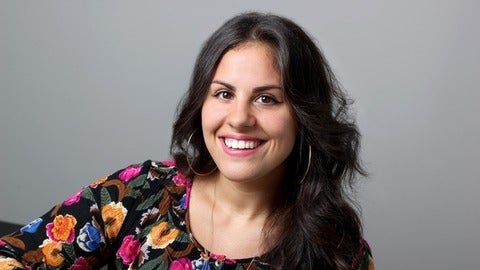
Alumni Profile: Kaylee Perez (MPACS 2014) - A Civil Society Movement
Her grandfather was forced to flee from Palestine. Religious persecution chased her father out of Cuba. Growing up in a refugee and immigrant faith community in Kitchener, discussion and tales of hardship became a recurring sound for MPACS graduate, Kaylee Perez. “Surrounded by these conversations growing up, I grew to love the aspects of cross-cultural communication,” she said of her upbringing, which led her down a path of peace work that spanned not only cultures, but continents.
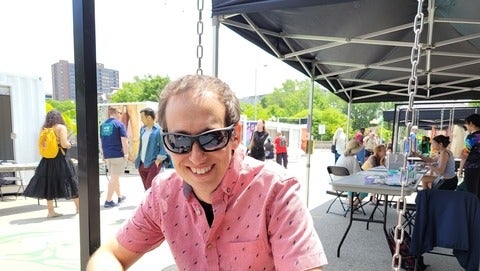
Alumni Profile: Darren Kropf (MPACS 2014) - Roads to Equity
For Darren Kropf, the foundation for equity starts from the ground up, quite literally. As the City of Kitchener's Manager of Active Transportation and Development, he explained that “A transportation network that’s predominantly functional for motor vehicles privileges a certain demographic.” While this may be a foreign idea to some, Darren’s mantra is simple, “we must not privilege one group over the other in our transportation planning.”
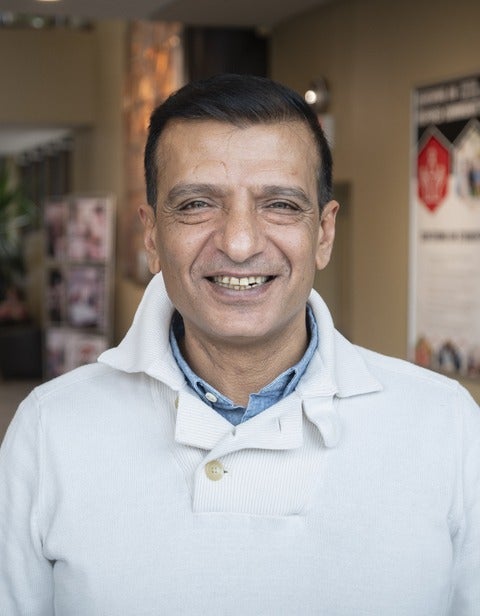
Alumni Profile: Wali Muhammad (MPACS 2014) - Advancing Diversity with Smart Performance Management
“The world of work today is defined by disruptive business models, flattened hierarchies, integrated networks of teams, and global hiring practices. As a result, the workplace is more diverse than ever before,” explained Grebel alumni Wali Muhammad, who studied in the Master of Peace and Conflict Studies program at University of Waterloo, based at Conrad Grebel University College. "When people from diverse backgrounds try to work together as teams, it creates a huge potential for conflict. Simple misunderstandings often result in wasted potential and depleted team performance.” For more than 10 years, Wali has worked to fix this persistent problem of cultural incompatibility.