


Turbulent times like ours call for people who understand systems of violence and conflict, and who are prepared to build peace with justice. This involves identifying and transforming systems of violence, marginalization and oppression, including racist, gendered and colonial violence at home as well as around the world. Whether working locally or globally, Peace and Conflict Studies is committed to imagining, educating and ongoing learning that equips our graduates to pursue justice and peace.
PACS as a department is located on territory that is governed by the Dish with One Spoon Wampum and land promised to the Six Nations Confederacy in 1784 as part of the Haldimand Declaration. For more information, see Conrad Grebel University College's land acknowledgement and read about decolonization at the University of Waterloo's Office of Indigenous Relations.


A Vibrant, Interdisciplinary Graduate Program
The Master of Peace and Conflict Studies (MPACS) program is a coursework-based, professional degree that empowers students with knowledge and skills to contribute to nonviolent peacebuilding. Combining rigorous interdisciplinary scholarship with experiential learning opportunities, the program provides graduates with tools to understand sources of conflict, polarization, and systems of violence, as well as to imagine and initiate transformative peacebuilding. Our distinctive focus is on civil society and community-led change.
The master's degree is typically completed in 16 months (four terms), consisting of coursework, an optional internship placement, and practical skill development courses, with options for independent research. Part-time studies are also possible.
Understanding conflict
Recognizing conflict as an inescapable part of the human experience, and a potential vehicle for positive change at local, national, and international levels, this master’s degree offers a cutting-edge approach in which dynamic, sustainable, and creative solutions to conflict can be imagined, tested, and applied. Students learn with field-experienced faculty, developing their critical, analytical, and reflective thinking skills, and preparing to plan and implement effective programming, principled advocacy, and innovative peace initiatives.
Agents of peacebuilding
Equipped with interdisciplinary knowledge and practical skills of peacebuilding, MPACS graduates are ready for careers in the non-profit, public, or private sectors, as agents of peaceful change at community, institutional, and systematic levels. Common careers paths include: conflict management, community development, mediation and restorative justice, education, human rights work, research and advocacy, and social change entrepreneurs.
News
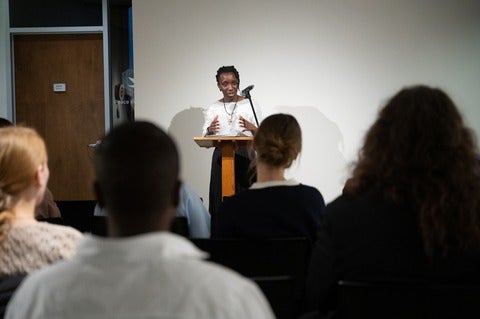
"Passionate people with a message to share": The C. Henry Smith Oratorical Contest
On Wednesday, March 25th the C. Henry Smith Peace Oratorical Contest took place at Conrad Grebel University College. The event was organized by the Peace and Conflict Studies Department and the Grebel Chaplaincy office. Of the submissions, four contestants each took the podium to present their speeches relating to the application of the Christian peace position to contemporary concerns.
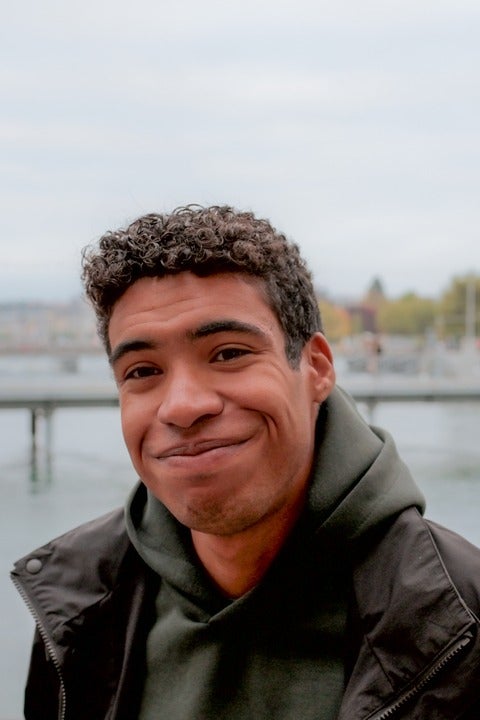
Making the Most of Your Opportunities with Jaden McGregor
While Jaden completed his undergraduate degree in Geography and Aviation with a minor in PACS, he also became a pilot and photographer. He was drawn to Peace and Conflict Studies while exploring potential options for a minor during his bachelor’s degree.
“Different perspectives on peacework gave me an opportunity to look at forms of community building that are not traditional, specifically art as a form of peacebuilding.” Jaden expressed. As a photographer, he understood the power of art as self-expression but had not considered its value for building communities.
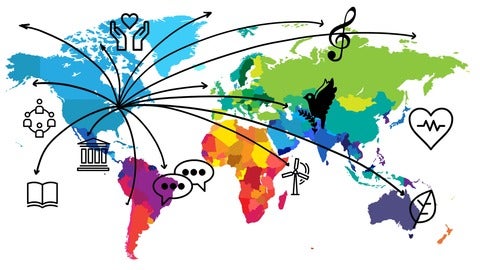
The Honourable V. Peter Harder International Experience Fund
Imagine the dreams that become possible when financial barriers are removed for students: a term abroad, an immersive language program, a globally focused internship, or research grounded in another culture. Students might find themselves volunteering in a refugee settlement, researching an issue they care about, immersing themselves in global music, taking a field course in environmental justice, working with a governmental think tank, or collaborating with an NGO overseas. Experiences like these broaden a person’s perspective, change career paths, and contribute to the kind of leadership that Canada will need in the future.