From the ground up
First-year biochemistry student gains hands-on experience in climate research through soil restoration project with the Toronto and Region Conservation Authority
The University of Waterloo’s Wetland Laboratory is working with the Toronto and Region Conservation Authority (TRCA) to transform the Meadoway, a 16-kilometre-long underutilized hydro corridor in Scarborough, Ontario into one of Canada’s largest linear parks in an urban space.
At the heart of this work are its volunteers, including biochemistry student Mia Hepburn, who is already contributing to environmental research in her first year as a student at the University of Waterloo.
Since June, Hepburn has been volunteering with the lab to restore the Meadoway. Working under the guidance of biology researcher Dr. Rebecca Rooney and master’s student Hayden Epp, she is learning how native plants can help store more carbon in the soil, which could help combat climate change.
“Turfgrass to meadow restoration has the potential to increase the carbon storage of an ecosystem,” Epp says. “If effective, this could become a nature-based solution to the climate and biodiversity crisis.”
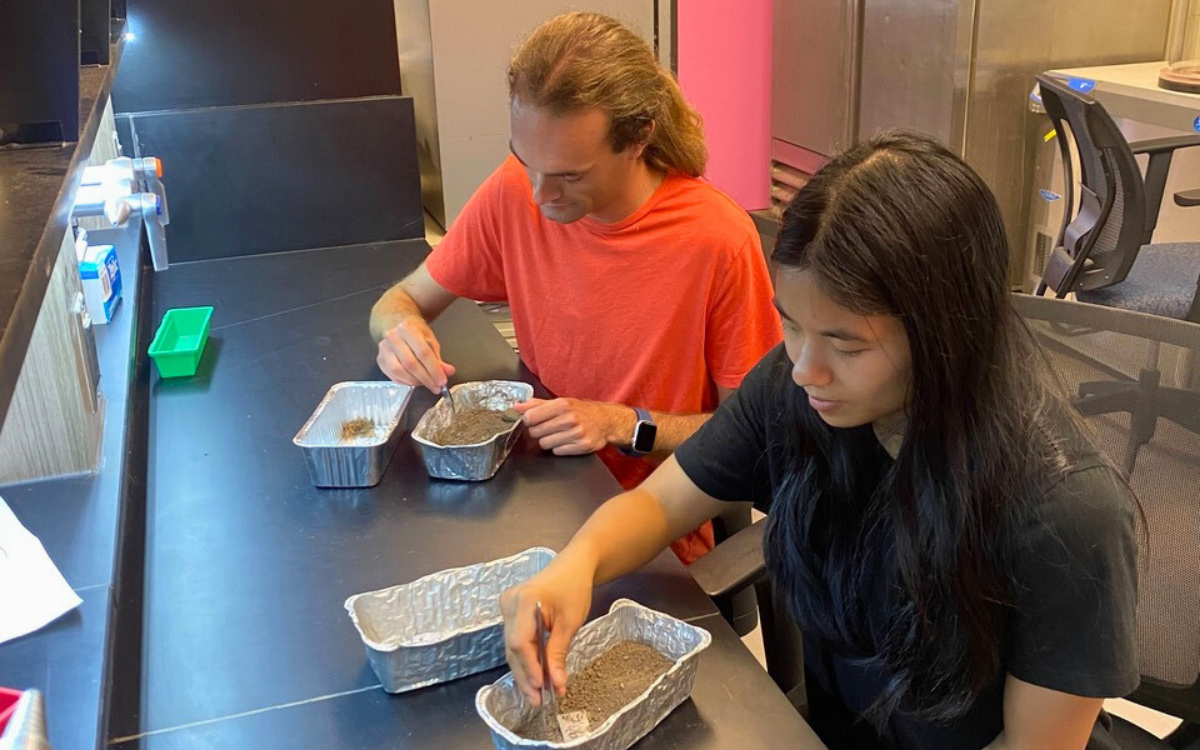
Hayden Epp and Mia Hepburn analyzing soil samples collected from the Meadoway in Dr. Rooney's research lab at the University of Waterloo.
Hepburn analyzes soil cores collected along The Meadoway, including areas restored with native plants at different times over the last 12 years. By comparing the carbon stored in each, the team aims to understand how restoration with native vegetation impacts carbon sequestration over time.
Projects like this are made possible through mutually beneficial partnerships, like the one with the TRCA. These collaborations turn research expertise and insights into real-world impacts that allow people and planet to thrive together.
“Waterloo researchers are experts in ecosystem restoration,” says Lyndsay Cartwright, a research scientist at the TRCA. “Their knowledge helps us restore the land while also advancing scientific research that we lack the resources to do on our own.”
Hepburn is grateful for the partnership that gave her the opportunity to contribute to meaningful fieldwork early on in her undergraduate degree. The experience has deepened her interest in health and the environment, and it’s only just the beginning.
“I have gained hands-on experience in soil sampling and carbon analysis while contributing to meaningful work,” Hepburn says. “I never imagined I’d be part of real research this early in my undergraduate degree, but I’m so glad I took the leap. It’s been incredibly rewarding.”
To learn more about the lab or to express your interest in volunteering, visit the Waterloo Wetland Laboratory website.