June 15, 2026
10 unforgettable moments that make Waterloo convocations memorable
From the red carpet to ceremonial symbols, discover the sights and sounds that define Waterloo’s convocation experience
From the red carpet to ceremonial symbols, discover the sights and sounds that define Waterloo’s convocation experience
Convocation at the University of Waterloo is a vibrant blend of tradition, community and celebration. Whether you’re crossing the stage or cheering from the audience, here are 10 signature sights, sounds and traditions that make the day unforgettable.

Before crossing the stage, graduands make one final walk as students, in fine style, down the red carpet. It’s a moment to pause, smile and take it all in. Beneath the convocation arch, the carpet marks the transition from years of study to bold steps into their next chapter as proud alumni. The red carpet is also where thousands of glamorous selfies and family photos are snapped, and marks a ceremonial entrance into a lifelong connection with the University of Waterloo.
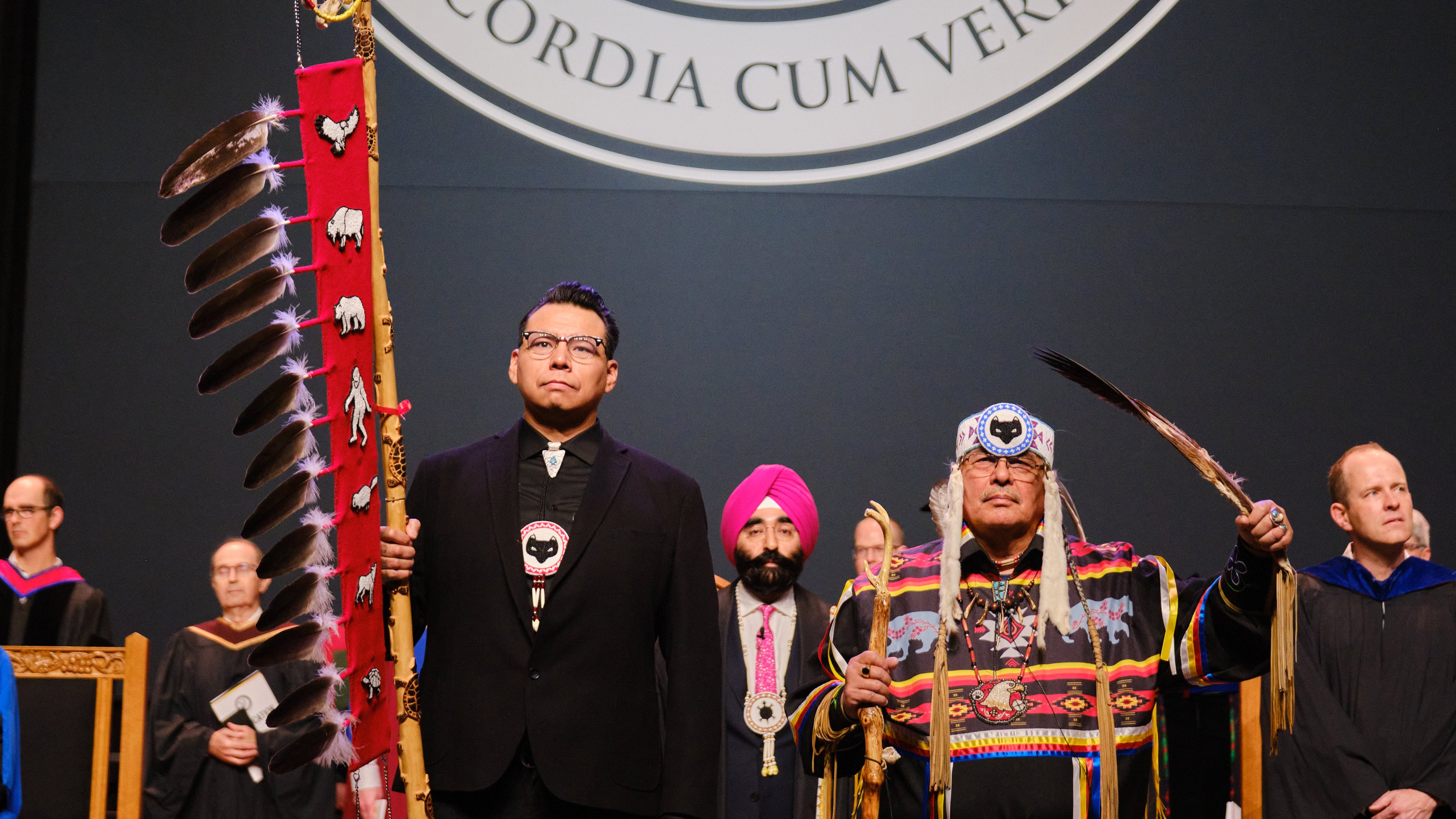
Each convocation ceremony begins with the entrance of the Eagle Staff, which leads the academic procession. The Eagle Staff symbolizes wisdom, strength and the University’s commitment to reconciliation. It was formally welcomed to campus in 2023 with a special Pipe Ceremony and a four-directional presentation honouring Indigenous traditions. Today, it opens every convocation as an acknowledgment of the responsibility to recognize, accept and incorporate Indigenous perspectives in how we teach, govern and behave as an institution.
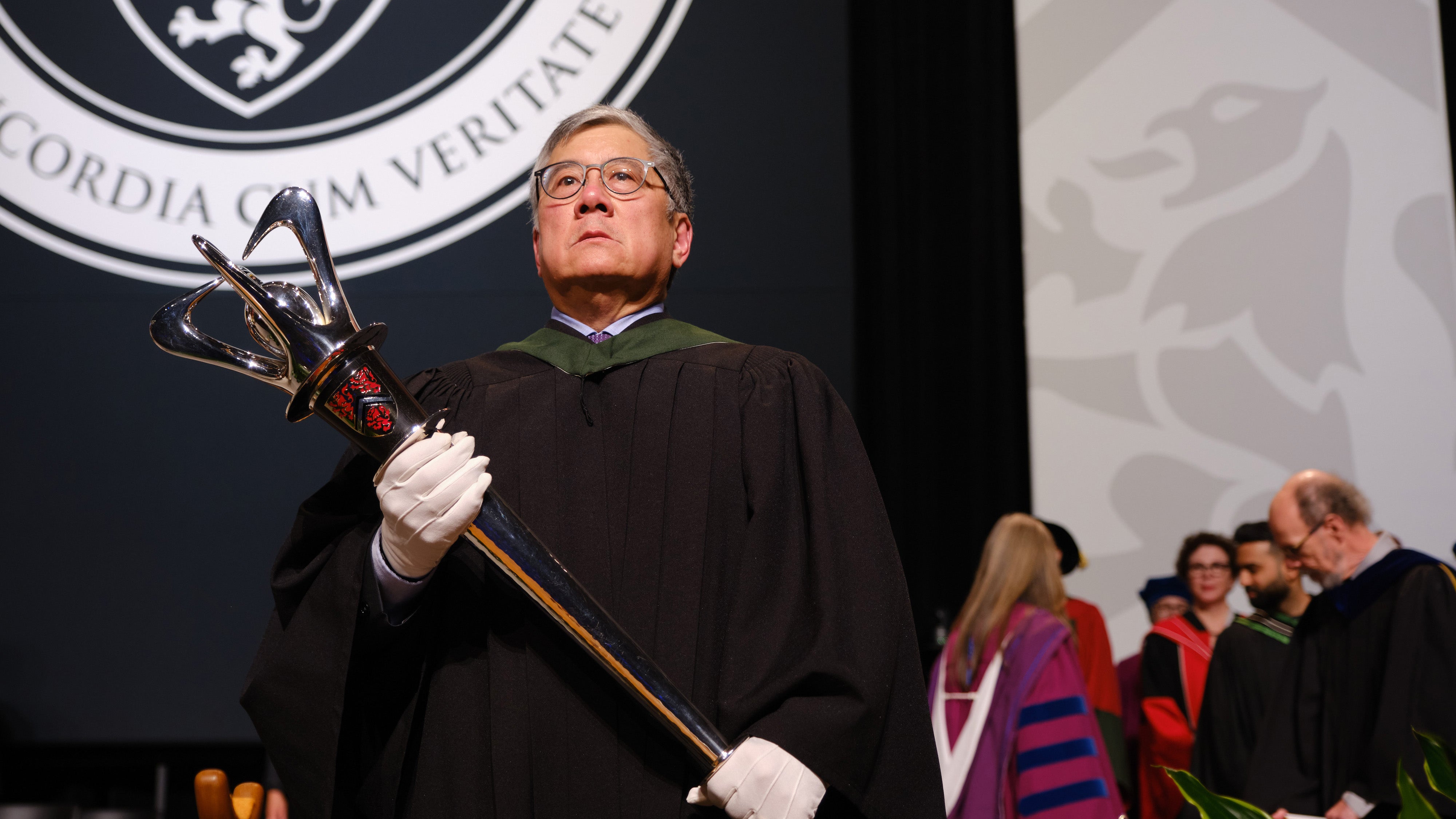
The University’s solid silver and ebony wand follow the Eagle Staff and carries deep historical meaning. The mace — designed by Toronto artist Eric Aldwinckle and given to the University in 1965 by the family of the late Stanley F. Leavine — features lions, chevrons and the shield of the province of Ontario. Topped with an egg-shaped ovum representing creativity and new beginning, the mace reflects Waterloo’s sprit of innovation and unity of diverse ideas coming together.
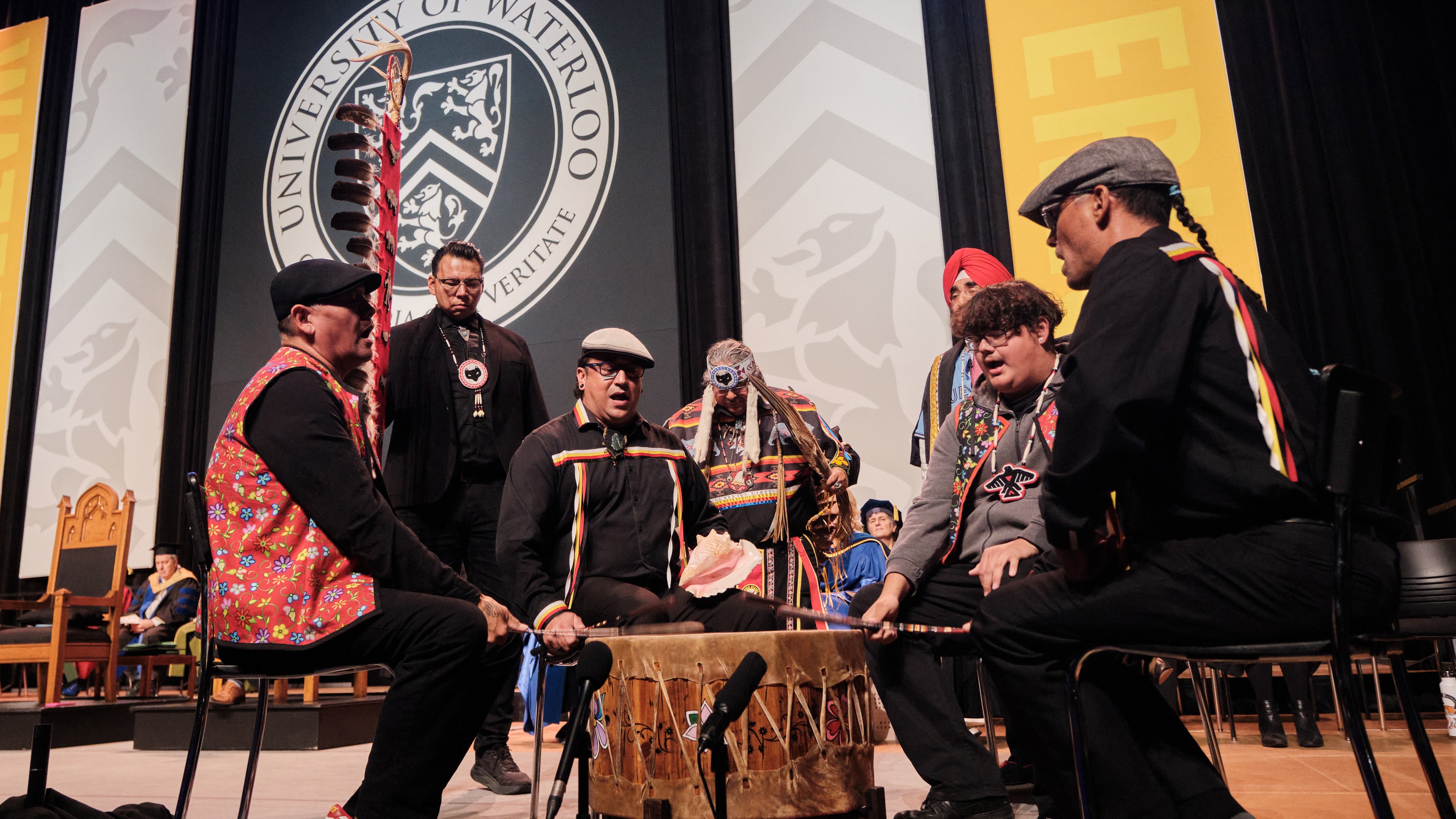
Before speeches and degree presentations, convocation opens with traditional drumming and an Indigenous welcome, often led by Indigenous Elder Myeengun Henry. This moment grounds the community, acknowledges the land and honours the Indigenous peoples whose histories and stewardship shape the University’s ceremony and commitments.
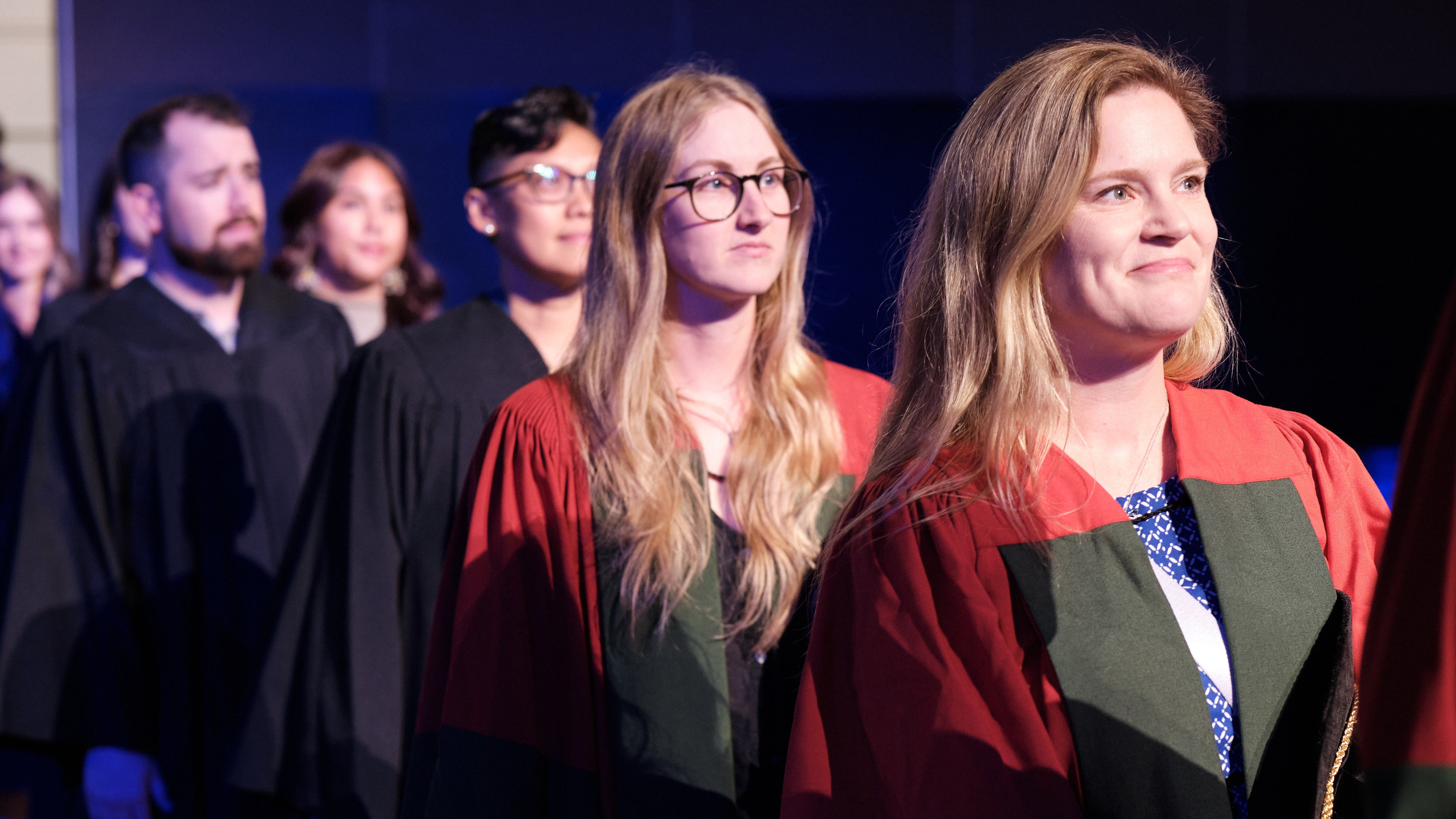
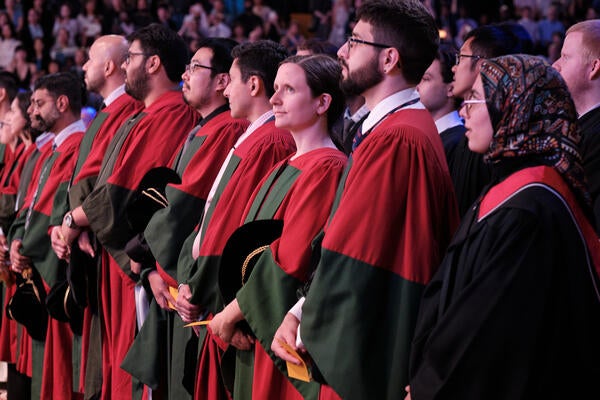
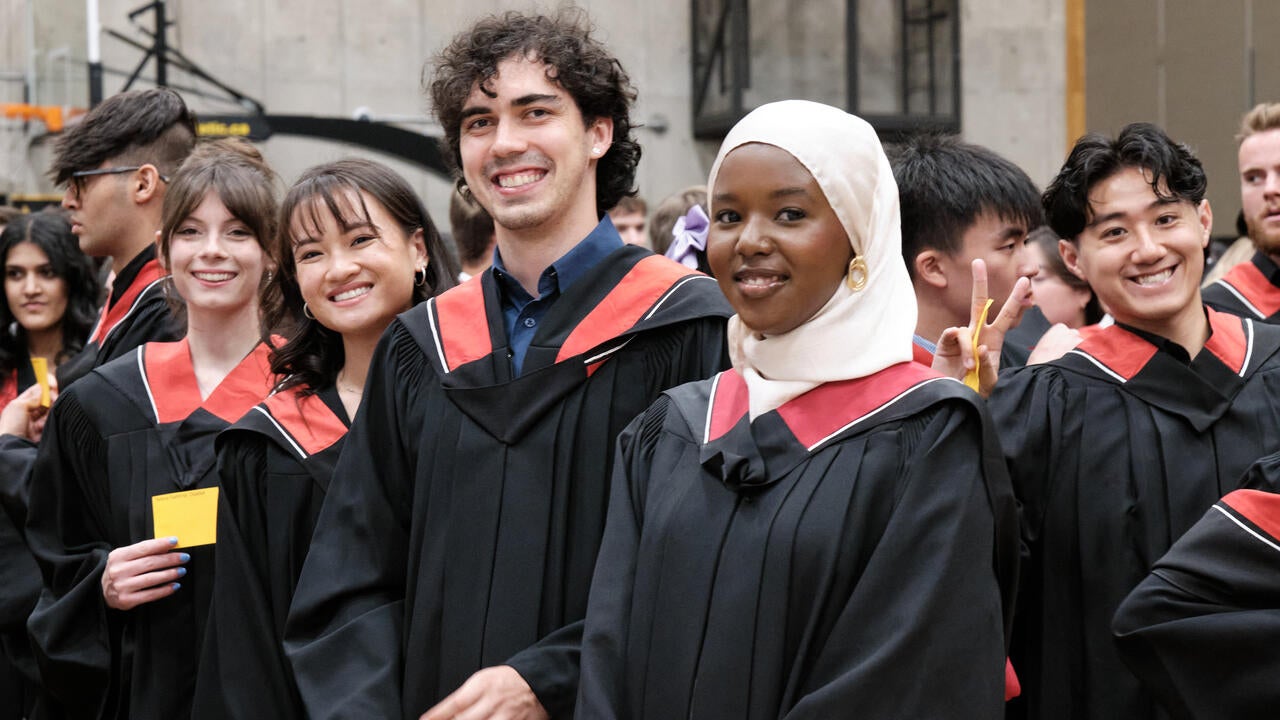
Convocation is a spectacular array of academic gowns, robes, hats and hoods — each with distinct meanings and symbolism. The academic dress worn at Waterloo is patterned after that of Oxford, the world’s oldest English-speaking university. The chief officers on the convocation stage — the Chancellor and the President — wear gowns of the Oxford cut and trim, each with its own distinctive colour. These gowns share a common design with those worn by honorary degree recipients, as do the black gowns worn by candidates for bachelor’s and master’s degrees, and the red-and-green gowns, which are Waterloo’s regalia for Doctor of Philosophy degrees.
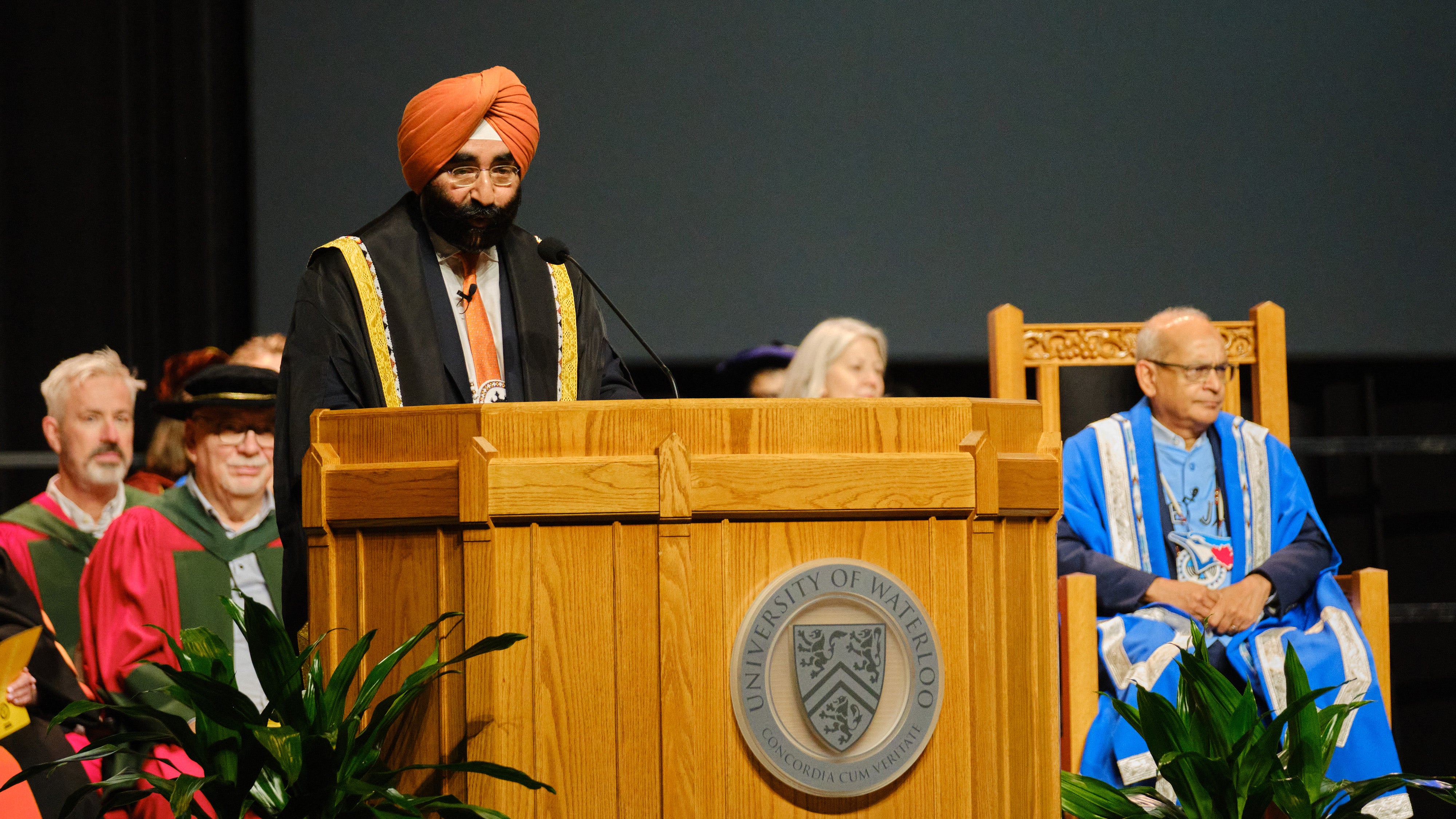
Convocation is presided over by Waterloo’s 12th Chancellor, Dr. Jagdeep Singh Bachher (BASc ’93, MASc ’94, PhD ’00), a proud three-time Waterloo graduate. As ceremonial head, he confers degrees, welcomes graduates into the alumni community and represents the University at public events. His leadership reflects the global impact and values of Waterloo’s alumni network. Since assuming the role of Chancellor, Bachher is often seen wearing different colour turbans and ties that match the respective Faculty ceremony he’s presiding over — a detail many notice and enjoy.

The stage crossing is the heart of convocation. It is the moment where years of study become a single, unforgettable step forward. As each graduand walks across the convocation stage, it marks both an ending and a beginning. It’s a brief moment, but one filled with pride, relief and possibility, shared with family, friends and the wider Waterloo community.

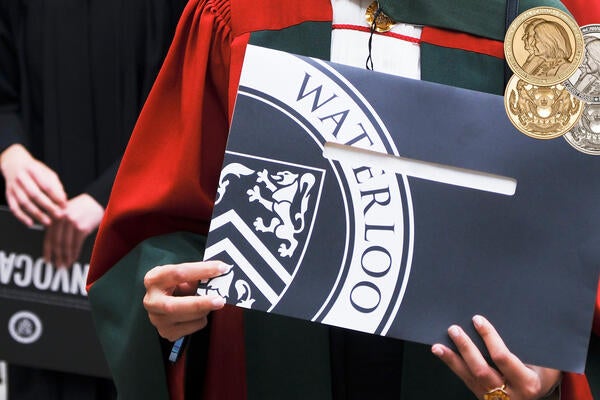
After years of hard work, the payoff is finally holding the diploma. It’s the moment where newly minted graduates get to see their names printed and the achievement is made tangible. The diploma is a legal document that includes the graduates name, program, date, and University seal, along with signatures of University officials. More than paper and ink, it’s a permanent marker of perseverance, growth and everything it took to reach this milestone.

Crossing the stage marks the milestone, but the exit brings its own tradition. Graduates (and their supporters) should keep their ears open for the recession and soak in the final send-off designed to make the moment unforgettable. Some traditions are best experienced, not explained.

After each ceremony, graduates and their supporters make their way to BMH Green, the lively outdoor gathering space that has become a convocation tradition. The BMH Green is where:
For more information about dates, times and frequently asked questions around Spring 2026 Convocation, visit our convocation website.