MCC UN Student Seminar: Reflections from Peace and Conflict Studies students
Each year in November, Peace and Conflict Studies (PACS) students are invited to apply to attend the Mennonite Central Committee (MCC) United Nations (UN) Student Seminar. Six students attended the seminar this year, held in the United Nations Plaza in New York City. The three-day seminar explored themes regarding the UN’s role in peacebuilding and advocacy initiatives. After the students returned home, inspired and invigorated, they expressed their takeaways from the trip.
Students heard from various speakers who made a deep impact on their understanding of global, on-the-ground peacebuilding initiatives. Speaker Leidy Aguirre is the co-founder of El Nido, a pregnancy center in Colombia devoted to supporting young mothers and families. Aguirre moved students as she explained her faith-based advocacy. “I found it really interesting to see something from such a large scale like the United Nations General Assembly to the small scale of Armenia, Colombia, which is where El Nido is located," mentioned Liliane Houde, a Master of Peace and Conflict Studies student.
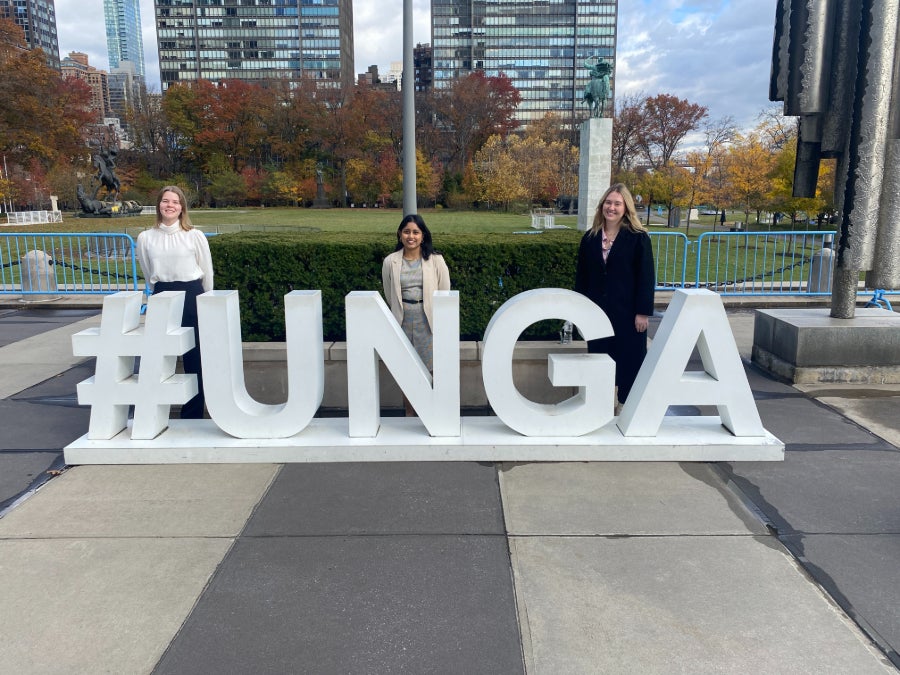
The seminar was educational in its approach. Students were also intrigued by speaker Faith Kroeker-Maus, who provided perspective on her role as a Foreign Services Officer, her relations with the UN, and how conversation drives decision-making. “It was interesting hearing the process of creating a decision- outlining it, and then having these low, medium, and high points on which they're flexible on,” explained undergraduate Nicole Callero.
PACS students were particularly fascinated by Ambassador Carolyn Rodrigues-Birkett, the Permanent Representative of Guyana to the United Nations. Amazed by her role as a woman in leadership and her passion for change, students listened to her insights on the UN’s role in representing smaller countries on the world stage.
“When I attended the seminar, I realized there are a lot of conversations happening in different rooms and different parts of the world that really affect the outcomes and decisions that are ultimately made. I would say it's not as black and white as it may look,” explained undergraduate Hajra Afzal.
As Liliane, Nicole, and Hajra reflected on their experience, they noted the diversity of opinions in students and speakers alike. “Students had a variety of different questions about things that relate to their own personal background and their culture,” said Nicole. Frequent round-table discussions with students from across the United States, Canada, and with speakers led to meaningful dialogue. “Hearing their perspectives was honestly eye opening - there are so many different versions of how people approach peacemaking,” Hajra reflected.
A key peace issue that stood out to the PACS students was Africa’s lack of representation in the United Nations Security Council. As one of the only continents without veto power, questions of power imbalances and inequity in decision making within the UN arose. “It made me think about how we approach issues and situations that affect more than one nation or one entity in the UN, and how it's going to take a group to make these changes,” Liliane expressed. Through tough dialogue, PACS students left with a more open-ended, balanced view of peace.
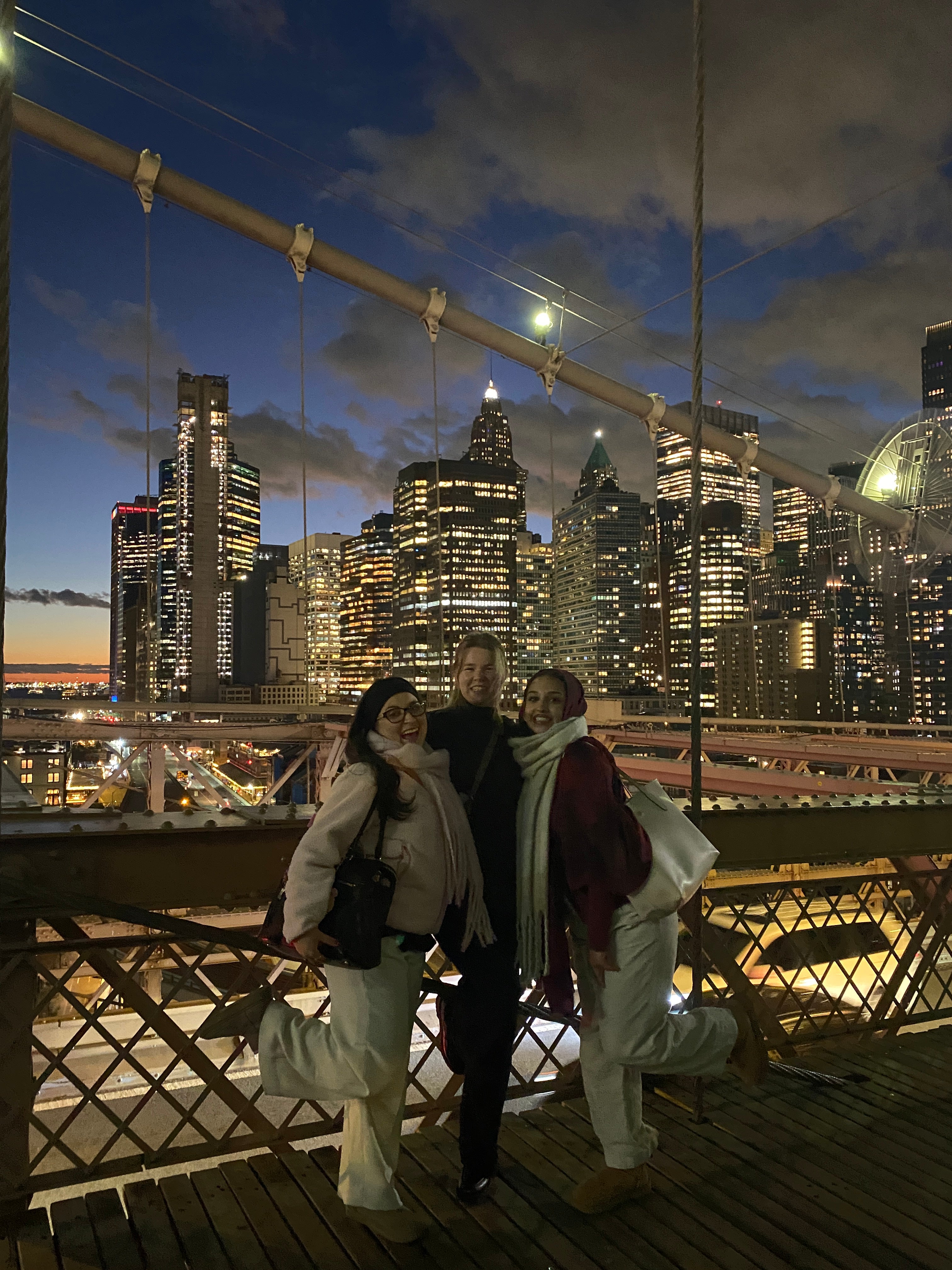
Upon their return to Waterloo, students contemplated their future in peacebuilding. For Liliane, her approach to peacemaking was influenced by the trip. The on-the-ground, collaborative work being done by organizations like El Nido motivated her to consider the importance of policy as an additional changemaking tool. “It'll be hard to undo things, but you can build upon them to create a better situation and stance for others,” she said.
Hajra’s main goal is to attend law school. After the seminar, her aspirations felt even more in reach. She also found herself enamored by the idea of working at the United Nations. “I felt like I was on top of the world learning in the course of those three days,” Hajra exclaimed.
For Nicole, who is interested in faith-based peacemaking, the seminar offered lessons on how to approach her career. A piece of advice that stood out to her was to not “get caught up in what's the most strategic move. It's hard but lead with your heart and what you're passionate about and that will carry you forward,” she said.
While the seminar’s primary question was “does the UN really matter?”, students not only learned about the UN and global peacebuilding initiatives, but they also learned about themselves. The MCC UN Student Seminar is one opportunity available for students to ponder global issues with new faces, and with one another.
By: Samira Abdillahi