Art for Well-being
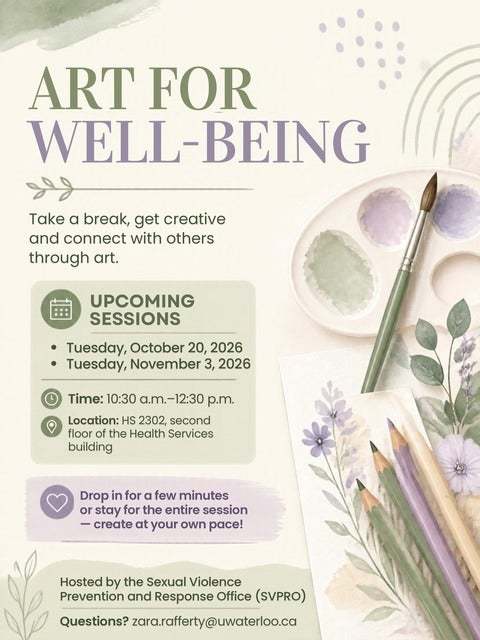
Join these open sessions to do crafts, creative projects, utilize art supplies, and share what's on your mind - no registration required, please feel free to drop in!
GRIEVE AND WEAVE WITH ZARA RAFFERTY
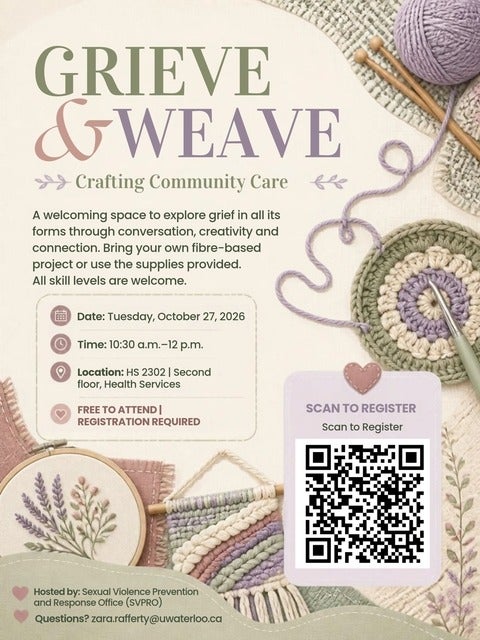
Grief takes many forms, grieving relationships, people, parts of ourselves, or eras of life we’ve outgrown or had to leave behind. Grieve & Weave is a welcoming space for students to come together, share conversations about grief in all its forms, and find connection through creativity. As we talk, we’ll keep our hands busy knitting, crocheting, weaving, or working on another fibre-based project. Bring your own fibre-based project or use the supplies provided., and join us in creating room for reflection, connection, and care.
October 27
10:30 AM - 12 PM
Register here
Date: October 28-29 2026
Time: 11AM-7PM
Location: SLC MPR (Student Life Centre Multi-Purpose Room)
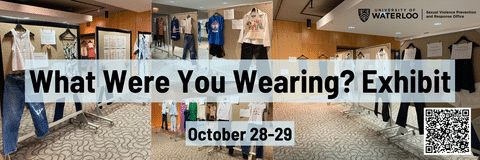
The Sexual Violence Prevention & Response Office (SVPRO) brings the What Were You Wearing? Exhibit to the University of Waterloo every academic year.
The installation recreates outfits worn by university students when they experienced sexual violence. Sexual violence survivors are often asked, “what were you wearing?”, implying that what someone wears is the cause of sexual violence.
The SVPRO recreates the installation to highlight the pervasiveness of victim-blaming and the harm and trauma it causes survivors.
This myth about sexual violence is used to blame survivors and justify the actions of those who cause harm. Survivors are never to blame for their experience(s) of sexual violence. We all have the right to wear what we want.
Sexual violence myths, also known as rape myths, want us to believe that survivors ‘ask for it’ through their behaviour and manner of dress. But the fact is that no behaviour or manner of dress justify sexual violence - the onus is on the person causing harm not to do so.
If only we could end sexual violence by simply changing our clothes.
Instead, it requires from all of us a commitment to end victim blaming, build consent culture, and as a society reflect on why we ask:, “what were you wearing?”
The “What Were You Wearing?” Art Installation was inspired by Dr. Mary Simmerling’s poem,
What I was wearing, and was created at the University of Arkansas in 2013 by Jen Brockman and Dr. Mary Wyandt-Hiebert.
Everyone is welcome and can engage with the exhibit at your own pace.
Questions can be directed to: Stacey Jacobs, s3jacobs@uwaterloo.ca
Date: October 28-29 2026
Time: 11AM-7PM
Location: SLC MPR (Student Life Centre Multi-Purpose Room)
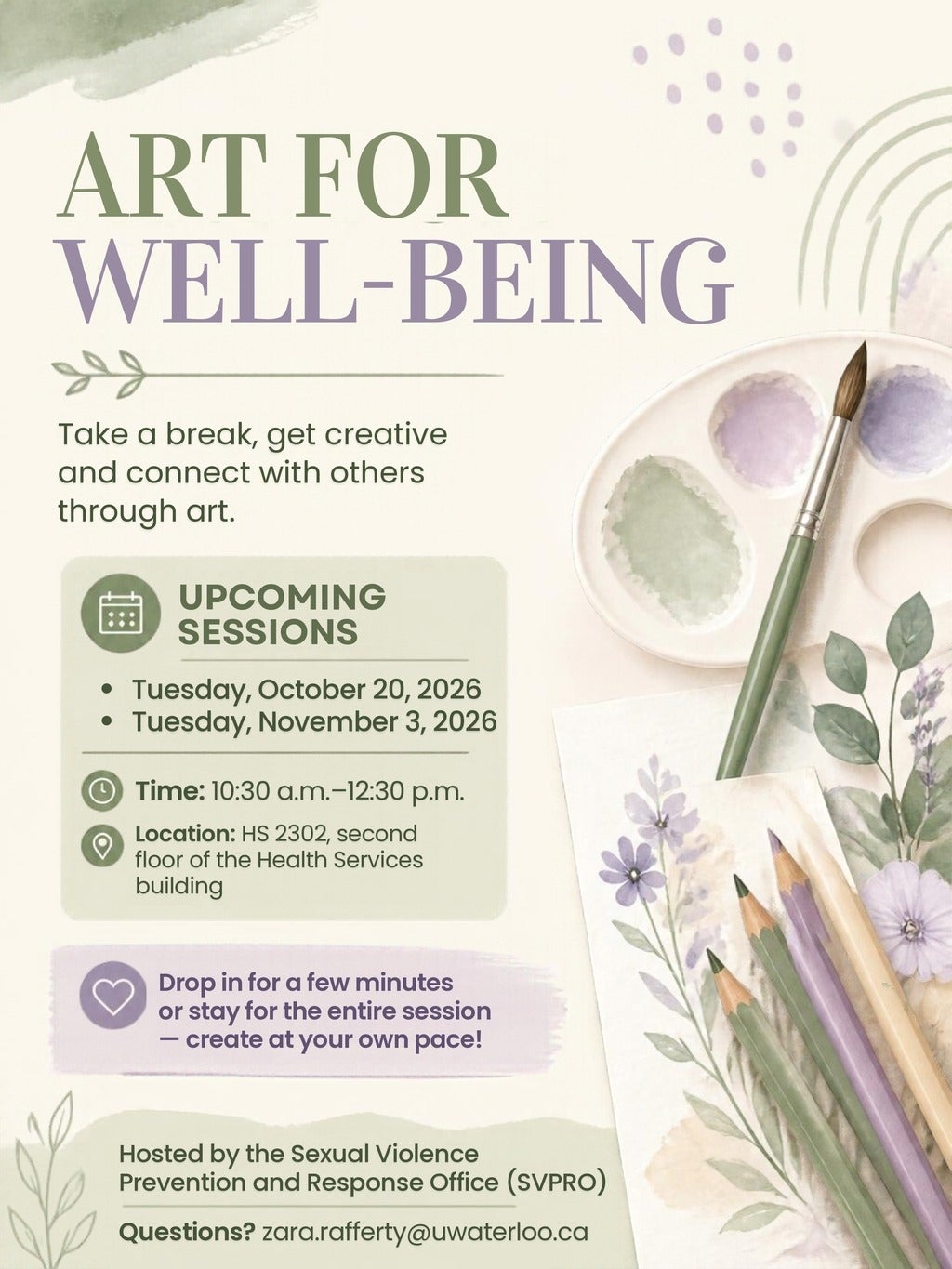
The Sexual Violence Prevention & Response Office (SVPRO) brings the What Were You Wearing? Exhibit to the University of Waterloo every academic year.
The installation recreates outfits worn by university students when they experienced sexual violence. Sexual violence survivors are often asked, “what were you wearing?”, implying that what someone wears is the cause of sexual violence.
The SVPRO recreates the installation to highlight the pervasiveness of victim-blaming and the harm and trauma it causes survivors.
This myth about sexual violence is used to blame survivors and justify the actions of those who cause harm. Survivors are never to blame for their experience(s) of sexual violence. We all have the right to wear what we want.
Sexual violence myths, also known as rape myths, want us to believe that survivors ‘ask for it’ through their behaviour and manner of dress. But the fact is that no behaviour or manner of dress justify sexual violence - the onus is on the person causing harm not to do so.
If only we could end sexual violence by simply changing our clothes.
Instead, it requires from all of us a commitment to end victim blaming, build consent culture, and as a society reflect on why we ask:, “what were you wearing?”
The “What Were You Wearing?” Art Installation was inspired by Dr. Mary Simmerling’s poem,
What I was wearing, and was created at the University of Arkansas in 2013 by Jen Brockman and Dr. Mary Wyandt-Hiebert.
Everyone is welcome and can engage with the exhibit at your own pace.
Questions can be directed to: Stacey Jacobs, s3jacobs@uwaterloo.ca
Join these open sessions to do crafts, creative projects, utilize art supplies, and share what's on your mind - no registration required, please feel free to drop in!