Current students

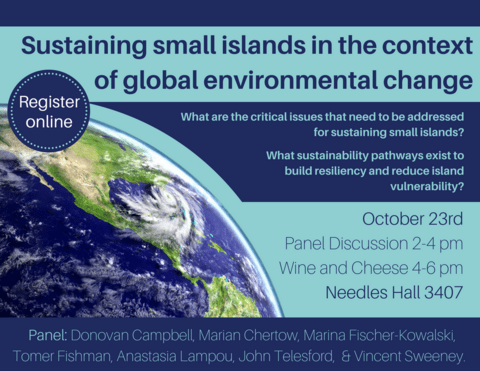
Monday, October 23, 2017 2:00 pm - 6:00 pm EDT (GMT -04:00)

Panel discussion: Sustaining small islands in the context of global environmental change

Water Institute member Simron Singh, associate professor in Waterloo's School of Environment, Enterprise and Development, and his colleagues, are hosting a public panel on sustaining small islands in the context of global environmental change. The panel discussion will be followed by wine and cheese for participants.   

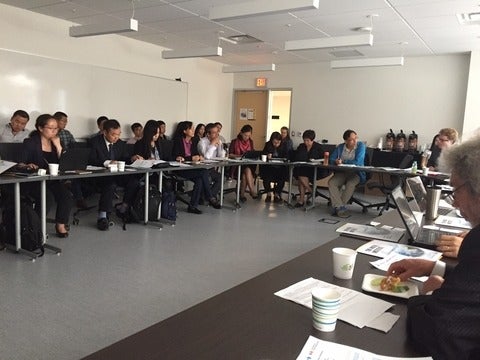
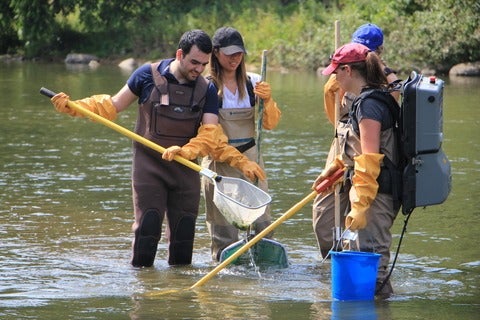
For one week in September, graduate students in the Collaborative Water Program (CWP) step outside of the classroom and gain hands-on learning experience from local water experts and community members in the Grand River Watershed. Bringing together graduate students from all six University of Waterloo faculties, the CWP provides a unique interdisciplinary learning environment for future water leaders.

Friday, October 20, 2017 9:30 am - 6:00 pm EDT (GMT -04:00)

Farvolden Lecture Series and Symposium

The Farvolden Lecture Series, hosted by Waterloo's Department of Earth and Environmental Sciences, was initiated in 1996 as an annual celebration in honour of Dr. Robert Farvolden. The Lecture Series fosters interaction and communication between the Department of Earth and Environmental Sciences, the alumni of the hydrogeology program and the groundwater community at large.

Thursday, October 12, 2017 2:00 pm - 2:00 pm EDT (GMT -04:00)

2017 Birdsall-Dreiss Distinguished Lecture: Dr. Ed Harvey

Waterloo's Department of Earth and Environmental Sciences will host Dr. Ed Harvey, supervisory hydrologist and chief of the U.S National Park Service Water Resources Division in Colorado, who will present the 2017 Birdsall-Dreiss Distinguished Lecture, "Water Resource Stewardship in the U.S. National Park Service."

Learn more.

Two Water Institute members recently attended, and participated in, the 8th IWA Membrane Technology Conference and Exhibition (IWA-MTC) for Water and Wastewater Treatment and Reuse in Singapore. The 8th IWA-MTC brought together scientists and application engineers, providing a unique platform for professionals in the membrane community to connect and exchange knowledge.

As part of the Water Institute's WaterTalks lecture series, Diane Orihel, National Scholar in Aquatic Ecotoxicology and assistant professor in Biology and Environmental Studies at Queen’s University, and Alana Greaves, environmental toxicologist and a postdoctoral researcher with Queen’s University present, "The importance of ecosystem-based ecotoxicology for advancing environmental policy, with special reference to Canadian Oil Sands development."

Efforts by farmers to reduce the amount of fertilizer that reaches drinking water sources can take years to have a positive impact, according to a recent study from the University of Waterloo.

runoff of soil fertilzer

The study found that that, depending on the type of terrain, efforts to reduce algae-causing nutrients such as nitrogen from reaching water sources such as the Great Lakes and can take decades to bear fruit.