Future students

The Microplastics Fingerprinting research project has released their latest impact report. This report showcases the remarkable scientific advancements and societal contributions our researchers have made since the microplastics fingerprinting research group's launch.

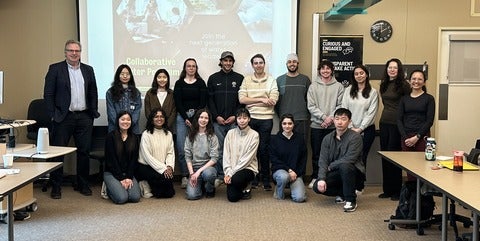
As part of the Collaborative Water Program’s WATER 601 course, student teams delivered final presentations featuring integrated water management solutions to complex water challenges, sharing their ideas with a panel of experts from the University of Waterloo and the Canada Water Agency (CWA). The exercise goes beyond a typical class assignment. It asks students to think across disciplines, weigh ecological, social and economic trade-offs and deliver practical recommendations that could inform real policy and practice.

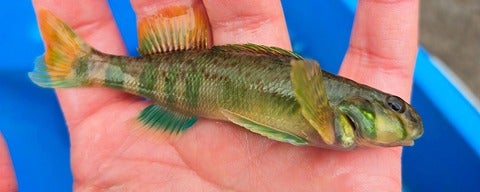
A new study led by Water Institute researcher Mark Servos and colleagues in the Servos Group has detected antidepressants, opioids and other drugs of abuse accumulating in freshwater fish living downstream of urban wastewater treatment plants. Using a newly developed analytical method, the team found compounds such as fentanyl, methadone and venlafaxine in multiple wild fish species, marking the first documentation of these substances in wild fish in Canada.

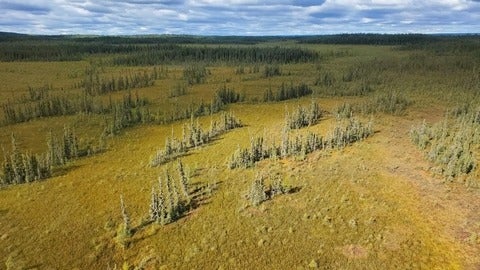
Peatlands cover upwards of 12 per cent of Canada’s landscape and store more carbon than all other ecosystems in the country combined, making them one of Canada’s most powerful natural climate allies. Yet until now, information on these critical ecosystems has been difficult to find. To address this gap, the Can-Peat Network at the University of Waterloo launched the Canadian Peatland Data Portal in early January, the country’s first national platform dedicated to centralizing peatland carbon metadata.

Thursday, April 30, 2026 2:00 pm - 3:30 pm EDT (GMT -04:00)

Inside Academia Workshop with David Sedlak

The Water Institute and the Department of Civil Engineering are pleased to present the Inside Academia Workshop with David Sedlak, PhD, Plato Malozemoff Distinguished Professor of Civil and Environmental Engineering at the University of California, Berkeley.

This event will be held in person in E2 2350, University of Waterloo.

Friday, May 1, 2026 2:00 pm - 3:00 pm EDT (GMT -04:00)

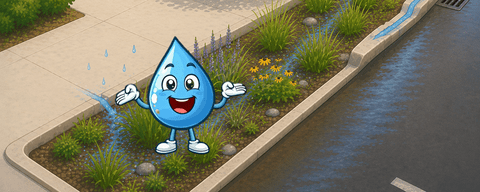
Using Nature-Based Treatment to Solve Some of the World’s Water Crises

The Water Institute and the Faculty of Engineering are pleased to present the 2025–26 AEESP Distinguished Lecture, Using Nature-Based Treatment to Solve Some of the World’s Water Crises, presented by David Sedlak, PhD, Plato Malozemoff Distinguished Professor of Civil and Environmental Engineering at the University of California, Berkeley.

This event will be held in person at Federation Hall, University of Waterloo.

On March 20, the Water Institute brought together researchers, students and industry leaders to mark World Water Day 2026, highlighting the United Nations global theme of Water and Gender. The event explored water inequality, infrastructure challenges and shared responsibility, emphasizing the importance of interdisciplinary research and collaboration in addressing complex water challenges and ensuring safe, reliable water for all.

As part of the Water Institute's WaterTalks lecture series, Ali Ameli, Professor & Director of HydroGeoScience for Watershed Management (HGS-WM) Research Group, UBC, will present The functional reality of watersheds: Complexity, time-variance, and the limits of current deep learning models.

This event is in person in DC 1302.

Friday, April 3, 2026

Listening to farmers, learning from nature

by Fridah Silas, PhD student in the School of Environment, Resources and Sustainability and Collaborative Water Program

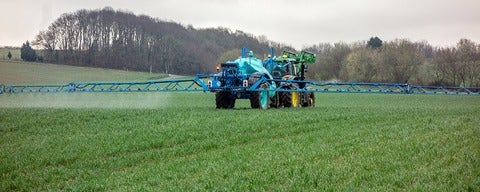
New research by Fridah Silas, a PhD student in the School of Environment, Resources and Sustainability and Collaborative Water Program student working with Dr. Dustin Garrick is exploring how farmers and actors across food, water, and energy sectors can work with nature, and with each other, to support more sustainable agriculture in Ontario.

This year, World Water Day highlights the need for water equity, ensuring safe water and sanitation for everyone. As part of the celebration at the University of Waterloo, Dr. Elliott is hosting a panel discussion titled “Water Equity and Shared Responsibility: Intersectional Perspectives from Research and Practice.”