News

Filter by:

Limit to news where the title matches:
Limit to items where the date of the news item:
Date range
Limit to news items tagged with one or more of:
Limit to news items where the audience is one or more of:

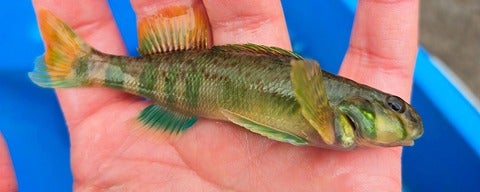
A new study led by Water Institute researcher Mark Servos and colleagues in the Servos Group has detected antidepressants, opioids and other drugs of abuse accumulating in freshwater fish living downstream of urban wastewater treatment plants. Using a newly developed analytical method, the team found compounds such as fentanyl, methadone and venlafaxine in multiple wild fish species, marking the first documentation of these substances in wild fish in Canada.

Peatlands cover upwards of 12 per cent of Canada’s landscape and store more carbon than all other ecosystems in the country combined, making them one of Canada’s most powerful natural climate allies. Yet until now, information on these critical ecosystems has been difficult to find. To address this gap, the Can-Peat Network at the University of Waterloo launched the Canadian Peatland Data Portal in early January, the country’s first national platform dedicated to centralizing peatland carbon metadata.

On Thursday, September 25, 2025, Water Institute member Dr. Nandita Basu, Canada Research Chair in Global Water Sustainability and Ecohydrology, joined leading experts speaking at the FLOW x Massey Freshwater Symposium, Ensuring the FLOW: Water Security in Canada and the World. Hosted by the Forum for Leadership on Water (FLOW) and Massey College, the invite-only gathering brought together fewer than 80 high-level participants, including scientists, policymakers, and leaders from national and international water organizations. Water Institute member Dr. Dustin Garrick, University Research Chair in Water and Development Policy and Director of the Collaborative Water Program, also attended alongside Dr. Basu.

Dr. Bryan Grimwood, Professor in the Department of Recreation and Leisure Studies (RLS) in the Faculty of Health, has been awarded approximately $380,000 in funding from the Social Sciences and Humanities Research Council of Canada (SSHRC) to lead a new research initiative entitled Tourism, ruination, and regenerative futures that rethinks tourism’s role in landscapes marked by environmental and cultural ruination.

The University of Waterloo has claimed the No. 1 position in Canada for water resources and climbed to 24th globally in the 2024 ShanghaiRanking’s Global Rankings of Academic Subjects—its highest position to date. Rising from 25th last year, the ranking underscores the university’s performance and reputation in water resources, a field critical to addressing escalating climate change and water security challenges worldwide.

Partners for Action director Shawna Peddle spoke to the CBC on the flood survey Windsor residents are being asked to take part in. In partnership with University of Waterloo researchers and the Red Cross, residents who have suffered the onslaught of floods in the area in recent years will be surveyed. The results will inform a national FloodSmart Canada campaign and provide insight into how to protect other Canadian communities from incurring similar damage.

Interdisciplinary approaches are key when investigating potential impacts from climate change on human, economic and environmental systems. Unexpected changes to the quantity and quality of water available to local communities and environments can have wide-ranging effects, including impacting public health, environmental resilience, and agricultural and food security. Four Water Institute researchers were recently awarded funding from the Canadian Queen Elizabeth II Diamond Jubilee Advanced Scholars Program to build institutional capacity in select Commonwealth countries to address linkage