News

Filter by:

Limit to news where the title matches:
Limit to items where the date of the news item:
Date range
Limit to news items tagged with one or more of:
Limit to news items where the audience is one or more of:

This article was originally posted on the School of Public Health Sciences website.

Craig JanesCraig Janes, Water Institute member and director of the School of Public Health Sciences, received the 2021 George Foster Practicing Medical Anthropology Award from the Society for Medical Anthropology this week. The career award “recognizes those who have made significant contributions to applying theory and methods in medical anthropology, particularly in diverse contexts, to multidisciplinary audiences, and with some impact on policy.”

Optimize Conservation Practices

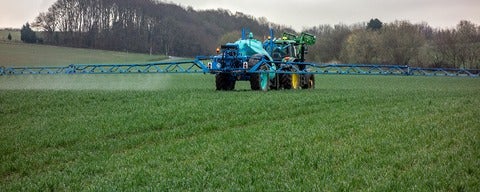
Sometimes figuring out which conservation practices are most effective at reducing agricultural phosphorus losses to surface water bodies seems impossibly complex, and it is hard to know which solutions will work best where. Water Institute member, professor Merrin Macrae, is offering two upcoming pubic presentations that synthesize research from over a decade of on-farm, edge-of-field trials within the Lake Erie watershed to highlight how the efficiencies and trade-offs of different practices vary by region and site.<--break->

The Water Institute is pleased to share our newly-released 2020-21 Impact Report, a reflection on how our members have made an impact in the past year addressing some of the world's most pressing water challenges.

This year’s publication, available in an interactive digital format, provides a sample of our innovative, interdisciplinary and international accomplishments.

Tuesday, November 2, 2021

Great Lakes DataStream goes live

A new open-access website for sharing water quality data from the Great Lakes and Saint Lawrence Basin has been released.

Great Lakes DataStream advances collaborative freshwater protection by bringing people and data together. The site already contains seven million data points and includes dozens of parameters—ranging from temperature to metals and nutrients. Data on Great Lakes DataStream has been shared by a wide range of water monitors from across Ontario and Quebec, including community groups and Conservation Authorities, as well as federal and provincial governments.   

Are you conducting research in sub-snow and cold regions’ subsurface environments?

If so, please consider submitting your manuscripts to the new Frontiers special issue exploring the topic “The Cold Regions in Transition: Impacts on Soil and Groundwater Biogeochemistry” co-edited by professors and Water Institute members Fereidoun Rezanezhad, and Philippe Van Cappellen from the Department of Earth and Environmental Sciences and the Ecohydrology Research Group.

Kevin White
Kevin B. White, a PhD student in Waterloo’s Department of Earth & Environmental Sciences, has been announced as one of the 2020-2021 recipients of a prestigious three-year Natural Sciences and Engineering Research Council of Canada (NSERC) Alexander Graham Bell Canada Graduate Scholarship for scholarly achievement. He was also the top-ranked applicant in Canada in the field of Earth Sciences.

The benefits of consuming traditional foods tend to outweigh the risks of possible mercury contamination, according to a recent study.

The research, which was part of a larger biomonitoring project to address community concerns about environmental contaminants in traditional foods, such as fish, also found that mercury exposure in people may be low even when it is sometimes present in elevated levels. Additionally, the researchers discovered that mercury levels in people in northern regions vary by season and region. 

Logo
logo

Waterloo International and the Water Institute were delighted this week to participate in the Chile 2021 Conference of the Americas on International Education (CAEI), which took place from October 19 - 22. 

Held virtually by this year’s host country Chile with the theme “Charting the Future: Strengthening the Global Knowledge Community,” this major conference is held every two years.