Katya Motyl. Embodied Histories. New Womanhood in Vienna, 1894-1934 (University of Chicago Press)
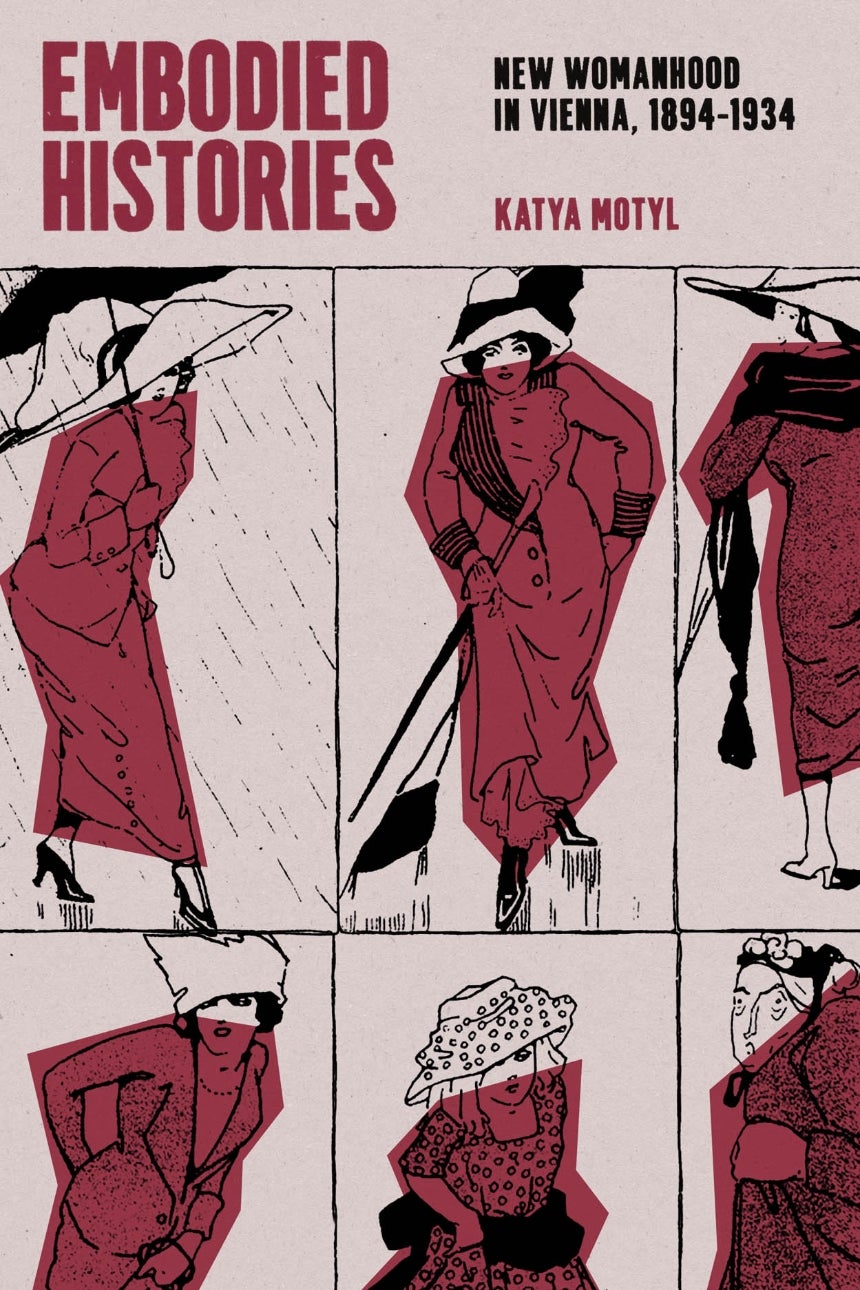
Explores the emergence of a new womanhood in turn-of-the-century Vienna.
In Embodied Histories, historian Katya Motyl explores the everyday acts of defiance that formed the basis for new, unconventional forms of womanhood in early twentieth-century Vienna. The figures Motyl brings back to life defied gender conformity, dressed in new ways, behaved brashly, and expressed themselves freely, overturning assumptions about what it meant to exist as a woman.
Motyl delves into how these women inhabited and reshaped the urban landscape of Vienna, an increasingly modern, cosmopolitan city. Specifically, she focuses on the ways that easily overlooked quotidian practices such as loitering outside cafés and wandering through city streets helped create novel conceptions of gender. Exploring the emergence of a new womanhood, Embodied Histories presents a new account of how gender, the body, and the city merge with and transform each other, showing how our modes of being are radically intertwined with the spaces we inhabit. (Description from the University of Chicago Press)
Katya Motyl is an associate professor at Temple University.
Some comments from the jury
Katja Motyl’s history of “new womanhood” in Vienna traces how everyday embodied practices in the city produced unconventional forms of womanhood around 1900–1934. Blending gender and urban history, this study’s innovative focus on everyday embodied practices and urban space is backed up by a rich breadth of sources (police files, press articles, diaries, and photos), and the microhistories brought to light go a long way in helping the reader understand the reality of new womanhood. This is a well written and evocatively illustrated volume that will be influential for future studies.