Stephanie Galasso. Genre, Race, and the Production of Subjectivity in German Romanticism (Northwestern University Press)
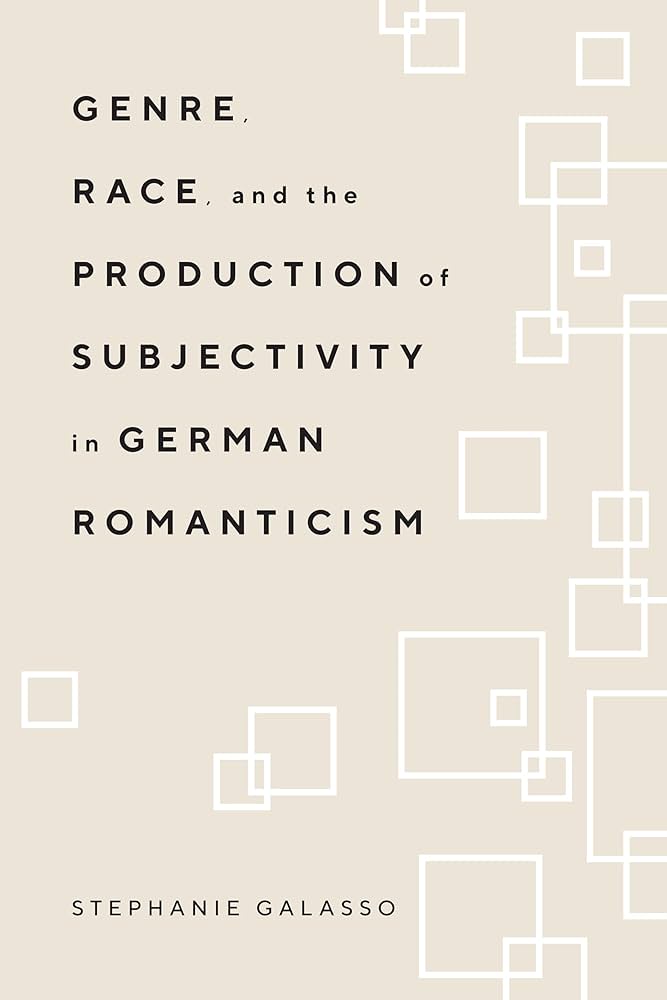
Exposes German Romanticism’s entanglements of aesthetic philosophy with racialized models of humanity
Late Enlightenment philosophers and writers like Herder, Goethe, and Schiller broke with conventions of form and genre to prioritize an idealized, and racially coded, universality. Newly translated literatures from colonial contexts served as the basis for their evaluations of how to contribute to a distinctly “German” national literary tradition, one that valorized modernity and freedom and thus fortified crucial determinants of modern concepts of whiteness. Through close readings of both canonical and less-studied Romantic texts, Stephanie Galasso examines the intimately entwined histories of racialized subjectivity and aesthetic theory and shows how literary genre is both symptomatic and generative of the cultural violence that underpinned the colonial project.
Poetic expression and its generic conventions continue to exert pressure on the framing and reception of the stories that can be told about interpersonal and structural experiences of oppression. Genre, Race, and the Production of Subjectivity in German Romanticism explores how white subjectivity is guarded by symbolic and material forms of violence. (Description from Northwestern University Press)
Learn more about Stephanie Galasso on her website.
Some comments from the jury
This book offers readers a bold, conceptually sophisticated re‑reading of Romanticism through race and genre by demonstrating how Romantic genre theory and literary form are entangled with racialized notions of humanity and the construction of white subjectivity. Dr. Galasso’s original and powerful close readings are matched by her elegant and assured prose, and the demanding nature of the subject matter will resonate with anyone familiar with current debates on race, canon formation, and structural violence, making this book a potential contributor to critical public conversations and curricular debates.