Submit content for the Daily Bulletin through the Daily Bulletin article or When and Where intake forms.
For all other requests, please contact communications@uwaterloo.ca.
Building resilience in Arts through interdisciplinary collaborations

By Alexie Tcheuyap. This article was originally published by University Affairs.
In a technology-enabled future, Arts faculties have an opportunity to demonstrate their relevance by making collaboration across disciplines easier and more visible.
In our time of rapid technological change, Arts disciplines must get out of their own way and address the structural barriers that keep our disciplines apart.
The fast rise of artificial intelligence illustrates the challenge. The most important questions surrounding AI are not only technical, but questions of ethics, governance, society and human behaviour. They require understanding of complexity and putting people at the forefront. Yet Arts scholars are often asked for our critical perspectives only after concerns that the latest and greatest technology might bring irreparable harms to humanity and systems.
At the same time, Arts faculties face growing pressure from students, parents and governments to demonstrate the employability of Arts graduates. Rather than diminishing the importance of Arts disciplines, AI and the technology-enabled future it asserts offer university leaders an extraordinary opportunity to demonstrate the critical need and applicability of an education in areas such as ethics, public policy, economics, psychology and data analysis. If it feels as though we are living in a grand experiment right now, it is because the critical perspectives as checks and balances that arts disciplines supply do not appear to be a serious consideration in tech development. We can address this by making the linkages between arts and STEM fields easier to see and navigate.
We have been trapped in siloes of our own design. Today’s challenges demand collaboration across sectors and areas of expertise. The challenge for university leaders then is to break down the current structures that keep our disciplines apart and create the conditions for this collaboration. If we want to be part of the global disruption, we must first disrupt ourselves. At the University of Waterloo, we altered the way we think about and deliver Arts education and research. We reorganized the Faculty of Arts, transforming 17 academic units into a total of six schools. Our academic programs remain intact. The new model is intended to create stronger connections across the humanities, social sciences and creative arts while making collaboration easier both within Arts and across the university.
Our experience offers an important lesson for other institutions: meaningful structural change cannot simply be imposed from the top down. Faculty, staff and students must help shape it.
Our journey to get to this new structure involved extensive consultation with stakeholders led by a working group made up of an interdisciplinary mix of leaders, faculty and staff. Over nearly two years, we held 101 meetings, consultations, townhalls and informal discussions with students and colleagues across Arts, with institutional leadership, and with the other five Faculties at Waterloo. Universities are typically change-averse. But in an overwhelming show of support for the proposed new approach, 84 per cent of Arts faculty and 95 per cent of staff endorsed the reorganization. It was clearly time for change.
We are already seeing examples of what this new structure can enable. For example, a new minor in AI in data analytics for society is indicative of the open pathways we have created for student learning and research collaboration across disciplines, including between Arts and STEM fields. All six schools are contributing. A new interdisciplinary research fund is supporting five cross-school projects. Facilitating more strategic and interdisciplinary research and teaching collaborations positions our Faculty for success.
Importantly, our reorganization was not driven by short-term financial challenges. While the post-secondary sector in Canada is experiencing major reductions in government funding and a cap on international students, planning for this reorganization predated the current financial strain. There were no layoffs. Our new structure will also help us navigate faculty retirements –- a challenge across the post-secondary sector.
Recent reorganizations within U.S. universities drew protest from students and employees who saw them as corporate tactics to exercise more administrative control. But doing the work of intensive consultation, developing interdisciplinary programming and creating more opportunities for research collaboration will lead to a more positive outcome.
Some Arts faculties could stay as they are forever, not only risking irrelevance, but contributing to uncertainty and squandering the opportunity to help solve some of the most important problems we face. The University of Waterloo’s approach may not be the right solution for every institution, but every Arts leader should be asking the same question: do our traditional structures make it easier or harder for scholars and students to address the complex social, cultural and technological challenges that increasingly define our world?
This is a watershed moment for Arts education. Its future does not depend on abandoning disciplines, but on creating conditions where disciplinary excellence and interdisciplinary collaboration reinforce one another.
A reorganization that tears down silos actually embraces the original spirit of the academy. Leonardo Da Vinci, Isaac Newton, Blaise Pascal, René Descartes, Cheikh Anta Diop, Fabien Eboussi Boulaga and V. Y. Mudimbe for instance, all moved among various disciplines. Their breakthroughs remind us that disciplinary excellence and interdisciplinary dialogue are not competing values. They reinforce one another. More collaborative and interdisciplinary innovations in teaching and research in Arts will contribute to a safer world and a more resilient university system within it.
Maura R. Grossman receives two recognitions for work at intersection of law, data governance, and AI
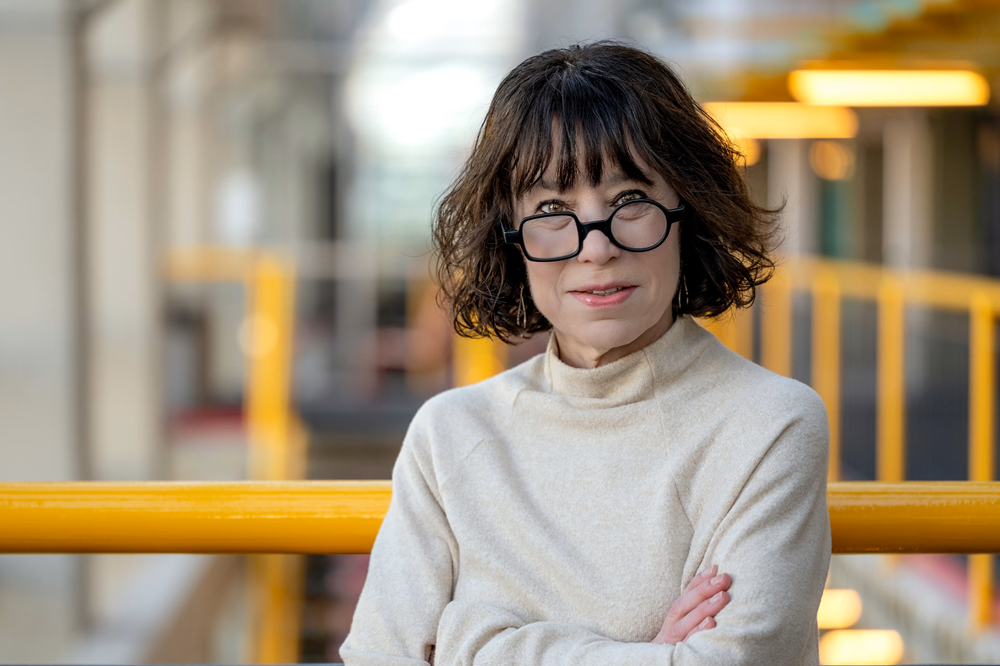
This article was originally published on the Cheriton School of Computer Science website.
Research Professor Maura R. Grossman has received two recognitions highlighting her scholarly contributions at the intersection of law, data governance, and artificial intelligence.
She has been named one of the 50 Top Legal Innovators in Academia for 2026. Conferred by The National Law Review and Wickard, an education and advisory firm, the award recognizes Professor Grossman’s influence on how the legal profession understands, evaluates and adopts artificial intelligence. She has also established the empirical foundation for technology-assisted review, demonstrating that well-designed supervised machine-learning workflows outperform traditional manual review while remaining transparent, defensible and measurable.
Professor Grossman has also received an IEEE Standards Association Working Group Award in recognition of her contributions to developing the IEEE P2863 Recommended Practice on organizational governance of artificial intelligence.
The IEEE P2863 Recommended Practice provides organizations with a framework to govern the development, deployment and ethical use of artificial intelligence within their operations. It outlines a set of governance principles for organizations to consider and prioritize, along with processes to help governing bodies implement those principles. The Recommended Practice also includes case studies of specific AI applications that demonstrate how organizations can apply the governance processes in practice.
As a member of the IEEE P2863 Working Group, Research Professor Grossman contributed to drafting and refining the standard, drawing on her expertise in artificial intelligence, law, and ethics.
Know thyself: Making better health decisions in the age of AI
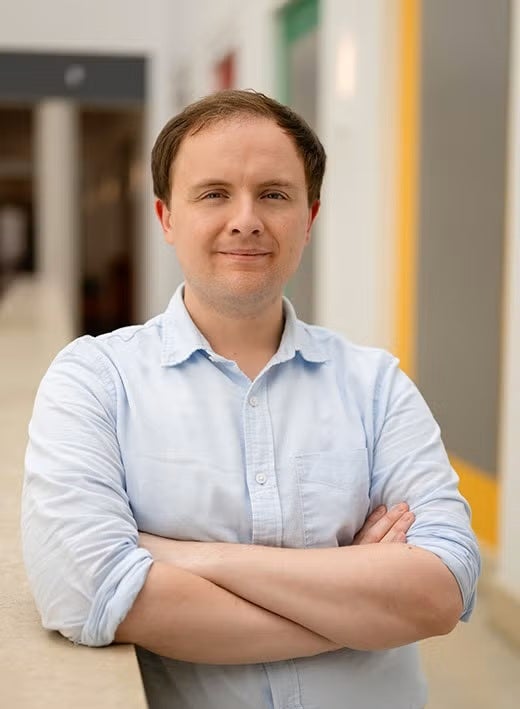
This article was originally published in the Arts and Letters News.
We have access to more health information than ever before - so why can it be so difficult to make decisions about our health, such as which medication to take or which procedure to undergo? Information overload aside, our biases and habits can influence our decisions in ways we don’t realize.
Dr. Trent Cash, a Lupina Foundation Postdoctoral Research Scholar based in the School of Psychology, is investigating how self-awareness of our decision-making processes (known as metacognitive knowledge) can lead to better decisions about our health and beyond. And yes, that can include using AI chatbots. Dr. Cash explains:
Why is it important to understand our decision-making processes better when it comes to our health?
Medical decision-making is hard. When we make these decisions, we have lots of information and options to consider. To make decisions that align with our priorities, we need to have a good understanding of who we are, what we value, and – sometimes – what we’re willing to tolerate. For example, imagine you’re picking between two procedures. One is painful and has a short recovery time, while the other is less painful, but has a longer recovery time. To pick the option that will make you happiest, you need to know whether the recovery time or the degree of pain is more important to you.
This kind of self-insight is also important because it allows you to communicate with healthcare professionals. If you can’t tell the doctor what is important to you, then it will make it difficult for them to guide you in the right direction.
How can AI help us better understand how we’re making decisions?
AI chatbots – such as ChatGPT and Claude – are incredibly powerful tools, and they’re getting smarter every day. I believe that there are two essential ways that AI chatbots can help us make decisions. First, they can fill in gaps in our factual knowledge. For example, imagine that you are deciding which medication to take for a newly diagnosed condition. The chatbot can easily identify information about each medication, such as what drug class it comes from, what other medications interact with it, and how much it costs. In this sense, AI chatbots can function like a more-powerful version of Google search.
Second, AI chatbots can be highly effective as sounding boards. You can tell the chatbot about your feelings, ask it to challenge your beliefs with counterfactuals, or simply tell it what your priorities are and ask it what it would do. While I would never encourage someone to take the chatbot’s opinions as definitive truth – they can definitely be wrong – they are often quite skilled at summarizing information and engaging in reflective conversation. In this sense, I like to think of the chatbots as journals that can respond to you and help you work through your thoughts.
What should we watch out for if using an AI chatbot to help make health decisions?
Despite their many strengths, AI chatbots are still just tools with a very friendly and confident voice. They are not experts, and they do not have human-like experiences. While they can help you think through a decision, they should not be considered a replacement for consulting a medical professional – and they definitely should not be allowed to make a decision on your behalf.
Think of an AI chatbot as a very smart stranger that you met on the street who knows a lot of facts. Would you let that stranger choose what medication you took? If not, then I wouldn’t let a chatbot make that decision either.
Waterloo municipal elections: What students need to know

A message from the Waterloo Undergraduate Student Association.
The municipal election process in Waterloo is underway. The candidate list has been officially announced and voting is set to take place on October 26. This marks the beginning of the election process, and an important moment for students to start paying attention.
If you live or study in Waterloo, municipal elections directly shape your day-to-day life, and you have the opportunity to be part of it.
Why municipal elections matter to students
Local decisions shape many of the things you deal with every day, including:
- Housing: This is one of the most pressing. Rental conditions, zoning, and housing availability are all influenced at the local level. The councillors elected this October will have direct influence over the availability and quality of rental housing near campus.
- Transit: If you rely on the bus or the LRT to get to class, your commute is shaped by local funding decisions. Routes, service hours, and fare prices are all tied to choices made by the people on your ballot.
- Safety: Street lighting, pedestrian pathways, and neighbourhood investment all fall under municipal jurisdiction. So do the community programs and services that make the areas around campus feel liveable and welcoming.
- Local services: Parks, public spaces, road maintenance, snow removal, waste collection, and community programs shape the quality, accessibility, and livability of the city you experience as a student.
Can students vote?
If you live or study in Waterloo, you’re eligible to vote in the municipal election, even if your permanent home is in another city. Many students assume they can only vote where they’re originally from, but eligibility is based on where you live during the school year.
To make voting more accessible, the city also offers Super Vote locations on-campus, where you can vote regardless of your assigned polling station. This allows students to conveniently vote without needing to search for a specific location.
What’s happening right now?
We’re currently in the nomination period, when candidates officially declare their intention to run for positions such as Mayor, City Councillor, Regional Councillor, and School Board Trustee.
Starting to pay attention now gives you time to understand the issues and make informed decisions. A full election guide, including candidate breakdowns and key issues to watch, will be shared closer to voting day.
How to register to vote
Getting on the voters’ list is quick, straightforward, and something every eligible student can do today.
To vote in the October 26 municipal election in Ontario, you must be a Canadian citizen, at least 18 years old on election day, and a resident of the municipality. If you’re a student living off-campus, you can register to vote using your Waterloo address.
Here’s how to get registered:
Check if you’re already on the list. You may already be registered if you’ve voted in past elections or your information appears in provincial or federal records. Your municipality’s election website will have a lookup tool to confirm.
Register or update your address online. If you’re not on the list, or if your address has changed since the last election, you can register through your municipality’s online election portal in just a few minutes.
Register in person or on election day. If online registration isn’t an option, you can visit the municipal clerk’s office before October 26, or register at your polling station on election day.
Know what to bring on October 26. You’ll need two pieces of identification, at least one showing your current address. A student card paired with a bank statement, lease, or utility bill works well. Your voter notification card, once you’re registered, is also helpful to bring along.
Make sure you’re prepared by checking, registering, or updating your voter information through the City of Waterloo Municipal Elections. It only takes a few minutes, but it ensures you’re ready to have your say and not miss the opportunity to make an impact on October 26.
Voting is even easier for students this election. A Super Poll will be available on campus, giving eligible students a convenient way to cast their ballot without having to travel to their regular voting location. If you’re eligible to vote in Waterloo, take advantage of the on-campus option and make your voice heard in the October 26 municipal election.
Building closure
The Douglas Wright Engineering Building (DWE) remains closed to general occupancy until further notice. Limited access has been restored for select research and undergraduate laboratory activities under specific restrictions. Please avoid DWE unless you have been authorized to access the building. Instructors, supervisors and unit leads will communicate directly with affected students, faculty and staff regarding classes, labs and research activities.
Employee Recognition Awards nominations
Recognize a colleague or team who brings Waterloo’s values to life through their actions and contributions. Nominations are open until Friday, October 9.
When and Where
The Campus Wellness Student Medical Clinic offers healthcare visits with Physicians and Nurse Practitioners to current undergraduate and graduate students. Services include: vaccinations, immunity testing, naturopathic services and more.Counselling Services offers appointments with counsellors in person as well as via phone and video. Students can book appointments for these services by calling Campus Wellness at 519-888-4096.
The privately-run Student Health Pharmacy(located in the lower level of the Student Life Centre) is now offering new COVID booster shots and flu shots. Covid booster shots are available by appointment only – please call ext. 33784 or 519-746-4500. The Student Health Pharmacy’s summer hours are Monday to Friday, 9:30 a.m. to 4:30 p.m. Naloxone kits are still available – pick them up in the pharmacy at no charge.
The Waterloo Eye Institute optometry clinics in Waterloo and downtown Kitchener offer comprehensive eye exams and eyewear, including glasses and contact lenses, with the Waterloo location offering various specialized services including urgent eye care. Discounts apply for University of Waterloo students and employees. The Waterloo Clinic is at a nearby interim location, 419C Phillip St, during construction at the School of Optometry and Vision Science. The Kitchener Clinic remains at the Health Sciences Campus, 10B Victoria St. S. Book online or by phone at 519-888-4062.
Project 529 Bike Registry Registration Rallies, (weather dependent), Thursday October 8, 12:30 to 1:30 p.m. at School of Architecture, back patio (Cambridge campus). Let's end bike theft. Bring your bike to register and get a free 529 Shield.
Anti-Racism Reads: Alt-Right From 4Chan to the White House, Thursday, October 8, noon 1 p.m., LIB 338
IEEE Lunch and Learn: How AI is Reshaping the Future of Publishing, Thursday, October 8, noon to 1 p.m., DC LIB 1568.
From Idea to Impact: Investigating Industries and Companies, Thursday, October 8, 12:30 to 1:30 p.m., online.
Warriors Men's Hockey, Friday, October 9, 7 p.m., CIF Arena
Instructional Innovations Week, Tuesday, October 13 to Friday, October 16. Featuring a range of sessions exploring innovative approaches to teaching and learning, with a particular focus on generative AI and emerging technologies.
Introduction to Crochet, Wednesday, October 14 and 21, noon to 1:00 p.m. (class is held over two weeks). It will also be held on Monday, November 2, 5 to 7 p.m. Location will be sent at registration. Note: This workshop costs $25
Social Acceptance and the Energy Transition: German and European Perspectives(presentations by three visiting Germany-based researchers), Tuesday, October 13, 11 a.m. to 1 p.m., EV3-3412. Please register in advance.
Launching the AI and Teaching Instructor Resources Site - (CTE7568), Tuesday, October 13, 12:30 to 1 p.m., Online
Introduction to Assessment Redesign and GenAI - (CTE7567), Tuesday, October 13, 1:30 to 3:30 p.m., MC 2036
From First Contact to Lasting Impact: Building International Research Collaborations Between Canada and Germany/Europe, an informal and open discussion facilitated by Ian Rowlands (ENV) with three visiting Germany-based researchers, Wednesday, October 14, 10 to 11 a.m., EV3-3406.
Teaching Critical Thinking in a Time of AI (CTE7563), Thursday, October 15, 1:30 to 3 p.m., MC 2036
GenAI Assessment Showcase (with faculty examples) (CTE7564), Thursday, October 15, 10:30 a.m. to noon, MC 2036
Identity offboarding, Friday, October 16, 9 to 10 a.m., virtual
Augmented Reality Video for Online / Hybrid Teaching and Tutoring (CTE7566), Friday, October 16, 1:30 to 3 p.m., Tech Sandbox (LIB 329)
AI Before the Ruins: Industry and Inquiry Before and After the Bubble, keynote lecture by Dr. Anne Pasek, Environmental Humanities Symposium, October 17, 9 to 10 p.m. EV3 1408
Bodies, Bones, and Burials: What Human Remains Reveal About the 1845 Franklin Northwest Passage Expedition, Wednesday, October 21, 7 to 8:30 p.m., Humanities Theatre, Hagey Hall
Safeguarding Science Webinar: Module 7 - Conducting Open-Source Due-Diligence (English), Thursday, October 22, 1 to 2:30 p.m.
Upcoming service interruptions
Stay up to date on service interruptions, campus construction, and other operational changes on the Plant Operations website.