Submit content for the Daily Bulletin through the Daily Bulletin article or When and Where intake forms.
For all other requests, please contact communications@uwaterloo.ca.
Call for nominations for Honorary Member of the University
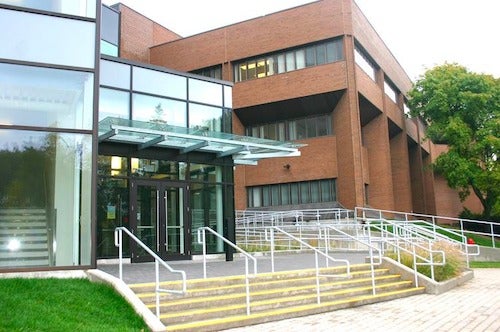
A message from Bill Rosehart, President and Vice-Chancellor; and Lynn Judge, Chair, Honorary Member of the University Committee.
We invite you to nominate a worthy candidate for Honorary Member of the University for 2027.
The Honorary Member of the University designation recognizes employees for outstanding service to the University of Waterloo. Staff and faculty members are eligible for nomination upon retirement for their distinctive administrative service or other significant contributions to the University. For faculty members, this award is different than the Distinguished Professor Emeritus award, which recognizes academic excellence.
Complete the nomination package and submit it by 19 October 2026 to the secretary of the Honorary Member of the University Committee meeting, c/o Secretariat, NH 3060 or secretariat@uwaterloo.ca.
Guidelines for the awarding of Honorary Member of the University, including selection criteria, procedures, and requirements of the nomination package, can be found on the website for the Honorary Member of the University Committee. You are also welcome to contact the committee secretary for information and assistance.
With the community’s input we can continue to recognize deserving individuals whose achievements the University would be delighted to celebrate and honour.
Thank you in advance for your contribution to this important tradition.
Lessons from an economist
This article was originally published in Waterloo News.
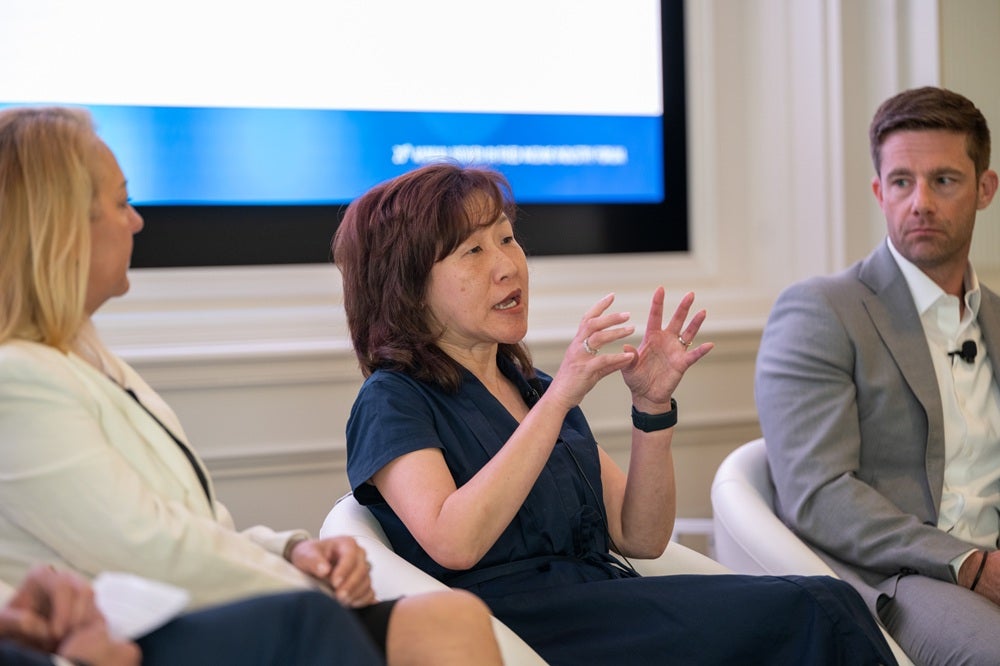
For Jennifer Lee (BA ’91), understanding the economy has always started with curiosity. As a child, she remembers peering over the kitchen table as her father studied stock market tables in the daily newspaper. His explanations of how markets worked sparked an early interest in finance that eventually led Lee to study economics at the University of Waterloo.
More than three decades later, curiosity remains central to her work as Senior Economist and Managing Director at Bank of Montreal (BMO) Capital Markets. Amid trade tensions, shifting markets and constant headlines, she has learned that making sense of uncertainty means asking fundamental questions: What is happening, why does it matter and what might come next?
From challenging assumptions to preparing for the unexpected, Lee shares six lessons for navigating change and making informed decisions when the path ahead isn’t always clear.
1. Don’t let the headline tell the whole story
Headlines are constantly changing, and even Lee admits it can be difficult not to get caught up in the dailynoise. But one headline or economic indicator rarely tells the whole story.
Lee points to Canada-U.S. trade tensions as an example. While tariffs initially raised fears that Canada’s trade-dependent economy could fall into recession, businesses have had time to adapt and develop alternative plans to navigate changing conditions.
From an economist’s perspective, the lesson is to look beyond the immediate reaction and consider how businesses, governments and consumers are responding before drawing conclusions about what comes next. For individuals, that means keeping the latest headlines in perspective and focus on the factors you can control, including your own financial circumstances.
2. Prepare for the unexpected, don’t try to predict it
While headlines can change quickly, Lee’s next lesson is to be prepared when circumstances do too. She recommends planning early and considering scenarios that could affect your finances. What happens if someone in your household loses their job? What if an unexpected expense arises?
Lee compares the approach to “stress testing” in banking by considering how changing circumstances could affect financial plans. As her mother used to remind her, “not every day is a sunny day.” The goal isn’t to predict exactly when the rain will come, but to be prepared when it does.
3. Never assume today’s reality is permanent
Being prepared also means recognizing that the assumptions behind our plans can change. Before COVID-19, for example, cross-border workers had little reason to imagine the Canada-U.S. border could suddenly close. Today, shifting trade relations are once again challenging expectations.
For businesses, Lee says flexibility and diversification of customers and suppliers can help them withstand economic shocks. Individuals can apply a similar principle by planning for different scenarios and seeking professional financial advice, particularly when making long-term decisions.
“Everyone is going to struggle, unfortunately,” Lee explains. “But the ones that will emerge stronger are the ones that have flexibility built into their strategies.”
4. Look for patterns, not just numbers
Economists examine countless indicators to understand the bigger picture, but employment is one Lee watches closely because jobs influence consumers’ ability and confidence to spend. By comparing multiple employment indicators, a bigger sample size, Lee looks for patterns to better understand what is really happening in the economy.
“At the end of the day, it’s consumers that are driving the Canadian economy,” Lee says, noting consumer spending accounts for roughly two-thirds of economic growth. That makes the health of the job market an important window into consumer confidence and the overall health of the broader economy.
5. Keep asking questions, and get uncomfortable
One of Lee’s most enduring lessons came from her first mentor, Dr. Sherry Cooper, one of the first female chief economists on Bay Street: never be afraid to ask questions.
Watching Cooper openly ask questions when she didn’t know the answer taught Lee that curiosity isn’t a weakness or a sign that you don’t belong in the conversation. If you’re wondering something, chances are someone else is too. Asking questions can challenge assumptions, uncover what you might be missing and ultimately lead to a better understanding.
It is also very important to get out of one’s comfort zone. She credits BMO’s current Chief Economist, Douglas Porter, with pushing her to get out and be uncomfortable, which helped build her confidence in public speaking.
6. Look outside your own perspective
Curiosity also means being willing to consider viewpoints beyond your own. Whether assessing economic conditions or understanding how people are experiencing them, Lee values seeking different perspectivesand remaining open to ideas that challenge her thinking.
For her, looking at an issue from multiple angles can reveal something that might otherwise be missed. Just as economists consider more than one indicator to understand the economy, broadening your perspective can lead to a fuller understanding of the world around you.
Lee has carried that curiosity throughout her three-decade career at BMO Capital Markets, becoming knownfor her expert analysis on the U.S. economy and commentary on global financial markets and economic activity. Recently, Focus Economics named Lee among the top 73 economists worth following in 2026 from itsglobal network of more than 1,200 analysts. She also regularly shares her insights through media appearances, including as a frequent guest on Bloomberg.
Beyond her professional work, Lee is passionate about making complex financial and economic topics more accessible. Through financial literacy and economic education, she helps audiences better understand the forces shaping the economy and what they can mean for everyday life.
Celebrating 50 years of Special Collections & Archives
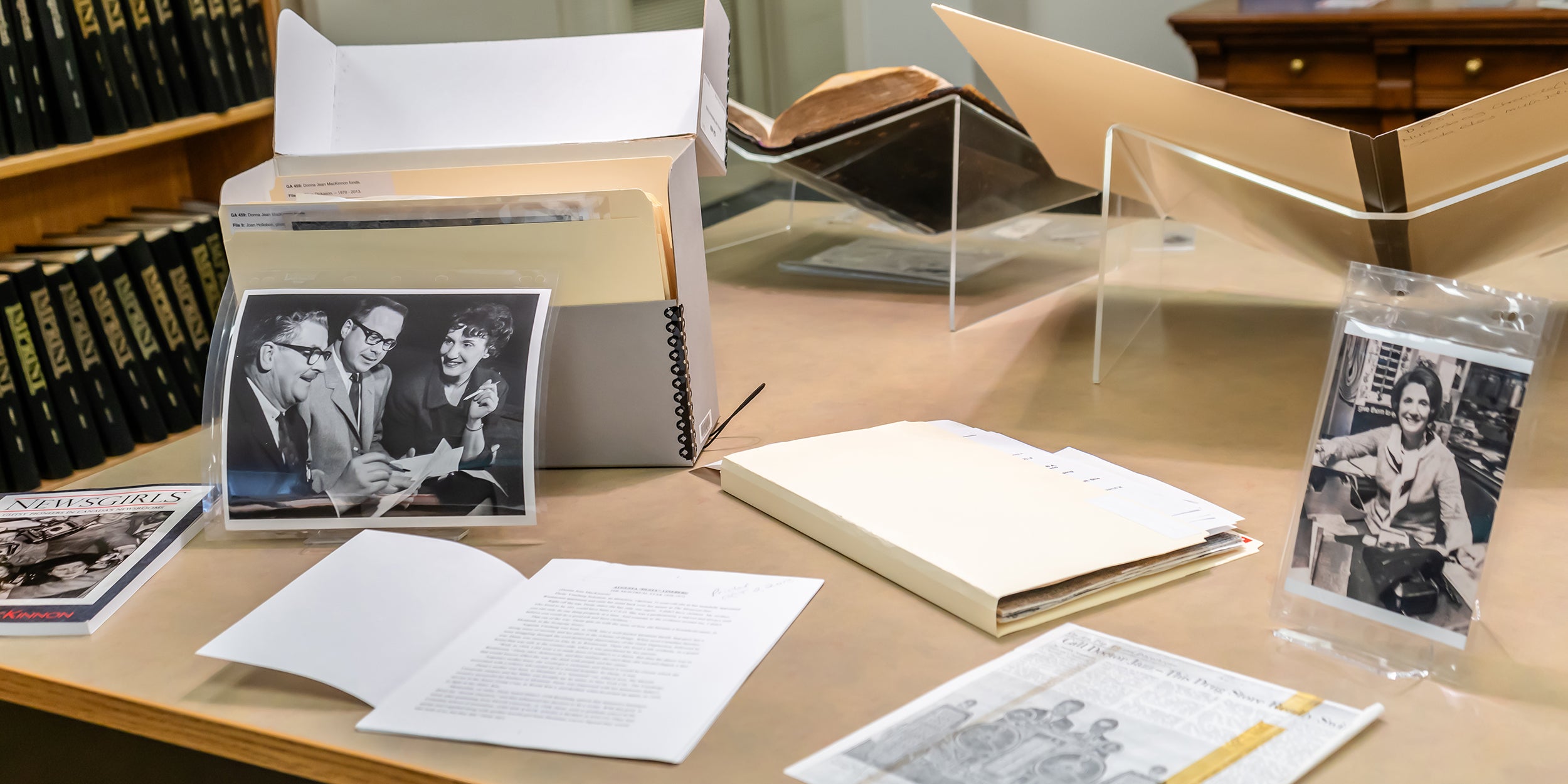
University of Waterloo Libraries is celebrating the 50th anniversary of Special Collections & Archives (SCA), a cornerstone of research, teaching and learning at Waterloo since 1976.
Over the past five decades, SCA has grown into a valuable resource for students, faculty and researchers, providing access to unique primary sources that support scholarship, experiential learning and discovery across disciplines. To mark the milestone, the Libraries has released a special 50th Anniversary Impact Report highlighting some of the people, collections and achievements that have shaped SCA's history and continue to guide its future.
The University community is also invited to attend the Special Collections & Archives 50th Anniversary Celebration on Tuesday, November 3, 2026, from 3 to 5 p.m. The event will feature remarks from University Librarian Beth Namachchivaya and faculty members, followed by an open house and tours of the department.
Read the impact report and register for the celebration on the Libraries website.
AI chatbots hesitant to recommend change
This article was originally published on Waterloo News.
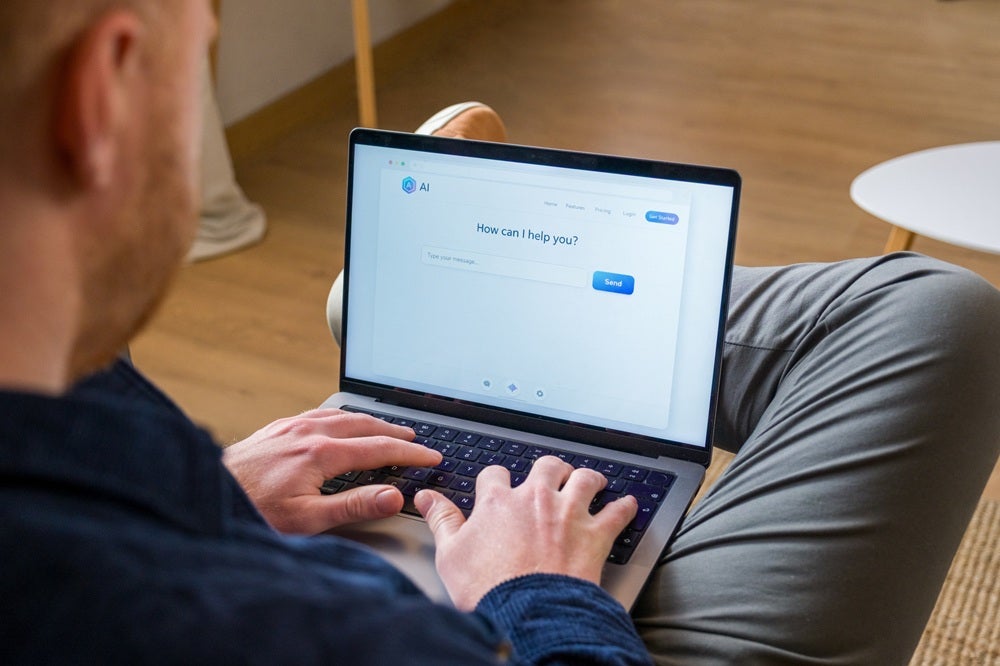
A new study of multiple large language models (LLMs) found that when users asked chatbots for advice, they were more likely to make suggestions that favour the status quo over alternatives. The tendency of artificial intelligence to default to more common advice could be bad news for the climate.
Researchers from the University of Waterloo assessed 11 LLMs for their tendency to prefer existing conditions over change, known as status quo bias. Well-known in psychology research, this is the first paper to apply the concept to climate advice from LLMs. The team evaluated more than 7,500 queries spanning multiple domains, including vehicle purchases, recipes, home heating, and climate-relevant policy trade-offs. Each of these queries was tested on at least six different LLMs for a total of nearly 55,000 prompts. Where climate trade-offs are possible in policy, platforms reinforced decisions the user already made with double the frequency.
LLMs commonly provide advice that runs counter to changes needed from households and decision makers for climate action. Given the proliferation of AI, progress on climate change is at risk if the status quo favours high emissions.
“I think it's worth being aware that these models, even the new ones, have blind spots,” said Dr. Seth Wynes, professor in the Faculty of Environment. “It's good for consumers to be aware of this bias and if you're asking for advice on a topic, you could ask it to make the case for doing something new.”
While different models responded similarly during the study, the findings were most obvious in policymaking. When models were asked whether to proceed with a plan, they said "yes" 70 per cent of the time for plans that were already in place but only agreed 34 per cent of the time when the plan or policy was new.
While researchers noted that models do take regional patterns into consideration, they still showed a surprising bias here as well. For instance, if you claim to be a user from Norway, where sales of new electric vehicles are very high, the chatbot is more likely to recommend an EV than if you are from Canada. But in both cases, the bot will recommend an EV less often than the pace at which EVs are already being sold in their respective country.
“In almost every jurisdiction, the LLMs are working at at slower pace of change than is needed, so they recommend fewer EV models than what are actually being sold today,” Wynes said. “It might be very good for AI to favour the status quo for lots of other things, such as proven medical advice, but climate is where we really do need change.”
In the future, the researchers will keep tabs on advances in LLMs and if and whether humans are relying on AI to make purchases within the AI platform, amplifying the effect of any status quo bias.
The study, Large language models exhibit status quo bias in climate-relevant advice, appears in Environmental Research Communications.
What's open and closed this long weekend and Reading Week
Monday, October 12 marks a statutory holiday for Thanksgiving, and next week is Reading Week. Here are some highlights of the operational changes to note:
The Dana Porter Library and the Davis Centre Library will both be closed on Monday but will be open during Reading Week. Check the Libraries' Locations and Hours page for more details.
Food Services locations will mostly be closed on holiday Monday and during the Reading Week break with a few exceptions:
- Subway in the SLC will be closed Monday, like most other restaurants in SLC but will reopen from 11 a.m. to 4:30 p.m. on Tuesday to Friday.
- Tim Hortons in the SLC will be closed Monday but will be open Tuesday to Friday from 7:30 a.m. to 5 p.m.
- The Market at UWP will be open Monday from 9 a.m. to 9 p.m. and will remain open during Reading Week from 9 a.m. to 10:30 p.m. Tuesday to Friday.
- Mudie's in Village 1 will be open Monday from 9 a.m. to 9 p.m. and will remain open during Reading Week from 9 a.m. to 10:30 p.m. Tuesday to Friday.
Check the Food Services locations and hours page for more details.
The SLC and SLC Turnkey are open 24/7 throughout the holiday, but the Turnkey@DC will be closed. Flock Stop is open Saturday until 9 p.m., Sunday and Monday from 9 a.m. to 9 p.m. The Bomber is closed Monday and open 11 a.m. to 3 p.m. Tuesday through Friday
W Store in South Campus Hall and W Print in the General Services Complex will be closed on Monday. W Store Essentials in Mathematics & Computer will be closed from Monday to Friday for Reading Week. Check the Locations and Hours page for more details.
The Physical Activities Complex and the Columbia Icefield Arena will be open on Saturday, October 10 regular hours but closed Sunday, October 11 and Monday, October 12. Check the facility hours page for more details.
Counselling Services and Health Services will be closed on Monday.
Building closure
The Douglas Wright Engineering Building (DWE) remains closed to general occupancy until further notice. Limited access has been restored for select research and undergraduate laboratory activities under specific restrictions. Please avoid DWE unless you have been authorized to access the building. Instructors, supervisors and unit leads will communicate directly with affected students, faculty and staff regarding classes, labs and research activities.
Employee Recognition Awards nominations
Recognize a colleague or team who brings Waterloo’s values to life through their actions and contributions. Nominations are open until Friday, October 9.
When and Where
The Campus Wellness Student Medical Clinic offers healthcare visits with Physicians and Nurse Practitioners to current undergraduate and graduate students. Services include: vaccinations, immunity testing, naturopathic services and more.Counselling Services offers appointments with counsellors in person as well as via phone and video. Students can book appointments for these services by calling Campus Wellness at 519-888-4096.
The privately-run Student Health Pharmacy(located in the lower level of the Student Life Centre) is now offering new COVID booster shots and flu shots. Covid booster shots are available by appointment only – please call ext. 33784 or 519-746-4500. The Student Health Pharmacy’s summer hours are Monday to Friday, 9:30 a.m. to 4:30 p.m. Naloxone kits are still available – pick them up in the pharmacy at no charge.
The Waterloo Eye Institute optometry clinics in Waterloo and downtown Kitchener offer comprehensive eye exams and eyewear, including glasses and contact lenses, with the Waterloo location offering various specialized services including urgent eye care. Discounts apply for University of Waterloo students and employees. The Waterloo Clinic is at a nearby interim location, 419C Phillip St, during construction at the School of Optometry and Vision Science. The Kitchener Clinic remains at the Health Sciences Campus, 10B Victoria St. S. Book online or by phone at 519-888-4062.
Warriors Men's Hockey, Friday, October 9, 7 p.m., CIF Arena
Instructional Innovations Week, Tuesday, October 13 to Friday, October 16. Featuring a range of sessions exploring innovative approaches to teaching and learning, with a particular focus on generative AI and emerging technologies.
Introduction to Crochet, Wednesday, October 14 and 21, noon to 1:00 p.m. (class is held over two weeks). It will also be held on Monday, November 2, 5 to 7 p.m. Location will be sent at registration. Note: This workshop costs $25.
Launching the AI and Teaching Instructor Resources Site - (CTE7568), Tuesday, October 13, 12:30 to 1 p.m., Online
Introduction to Assessment Redesign and GenAI - (CTE7567), Tuesday, October 13, 1:30 to 3:30 p.m., MC 2036
From First Contact to Lasting Impact: Building International Research Collaborations Between Canada and Germany/Europe, an informal and open discussion facilitated by Ian Rowlands (ENV) with three visiting Germany-based researchers, Wednesday, October 14, 10 to 11 a.m., EV3-3406.
Teaching Critical Thinking in a Time of AI (CTE7563), Thursday, October 15, 1:30 to 3 p.m., MC 2036
GenAI Assessment Showcase (with faculty examples) (CTE7564), Thursday, October 15, 10:30 a.m. to noon, MC 2036
Identity offboarding, Friday, October 16, 9 to 10 a.m., virtual
Augmented Reality Video for Online / Hybrid Teaching and Tutoring (CTE7566), Friday, October 16, 1:30 to 3 p.m., Tech Sandbox (LIB 329)
AI Before the Ruins: Industry and Inquiry Before and After the Bubble, keynote lecture by Dr. Anne Pasek, Environmental Humanities Symposium, October 17, 9 to 10 p.m. EV3 1408
Bodies, Bones, and Burials: What Human Remains Reveal About the 1845 Franklin Northwest Passage Expedition, Wednesday, October 21, 7 to 8:30 p.m., Humanities Theatre, Hagey Hall
Safeguarding Science Webinar: Module 7 - Conducting Open-Source Due-Diligence (English), Thursday, October 22, 1 to 2:30 p.m.
Upcoming service interruptions
Stay up to date on service interruptions, campus construction, and other operational changes on the Plant Operations website.