


Two Row Path outside of QNC building.


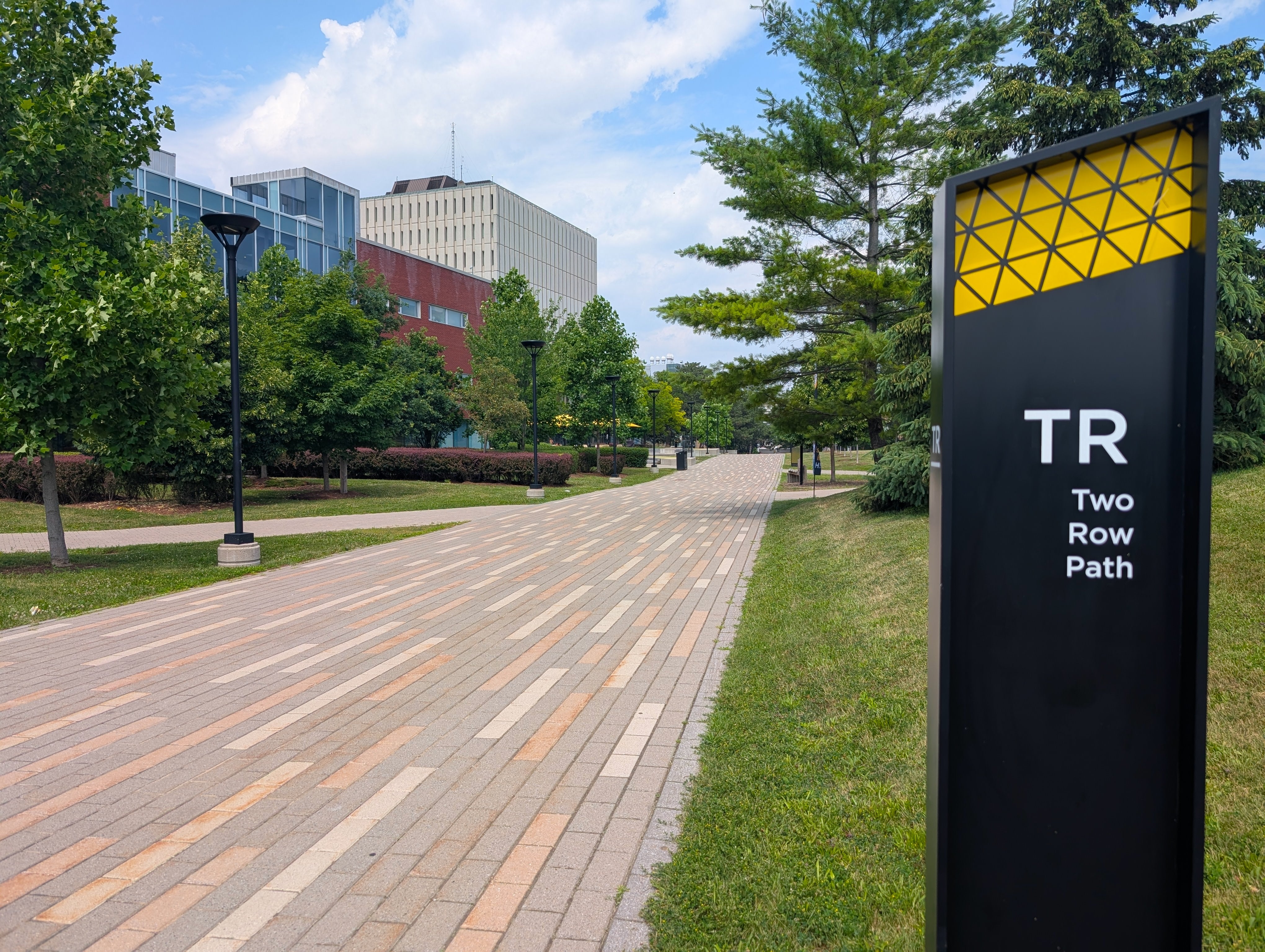
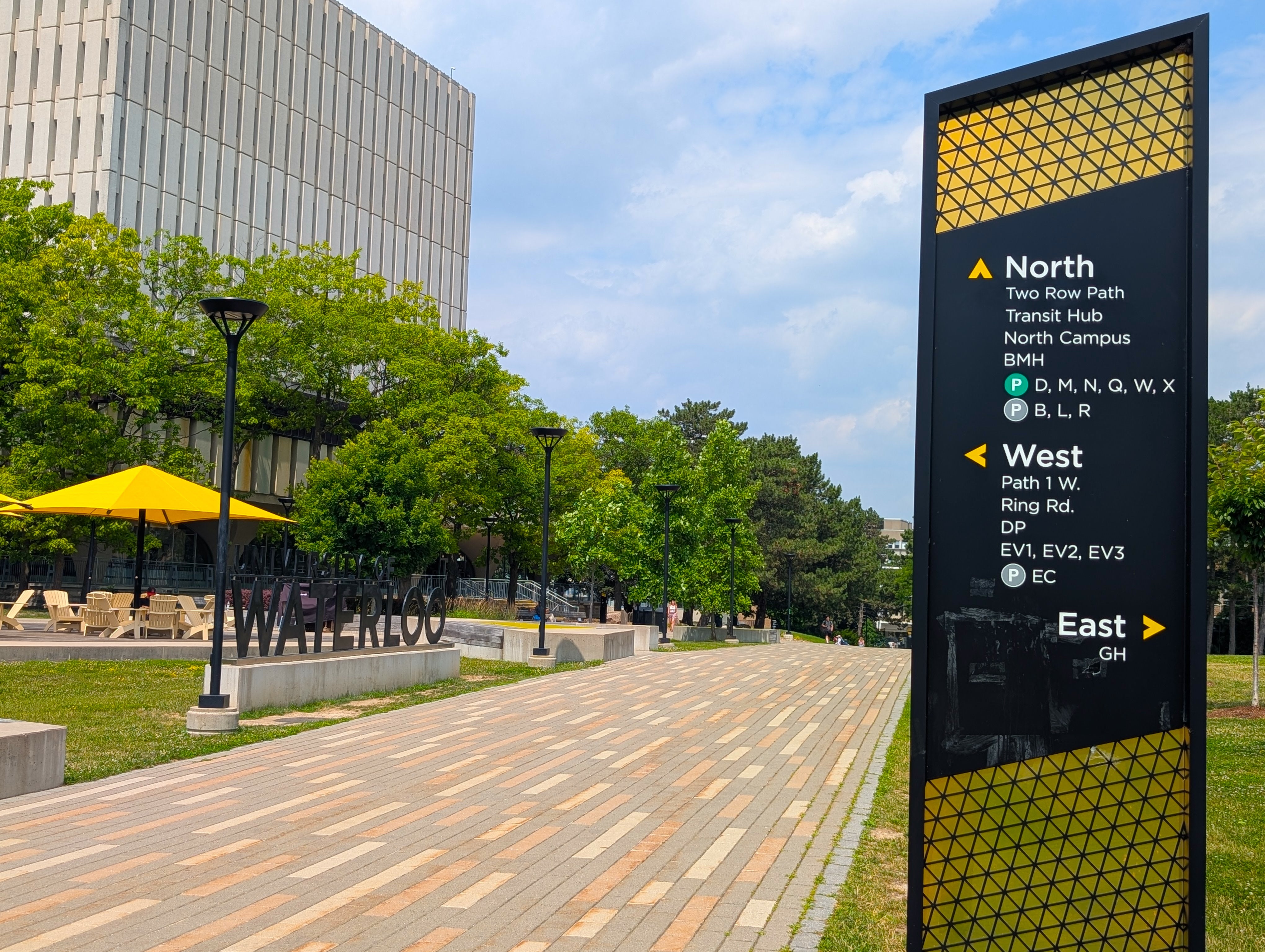
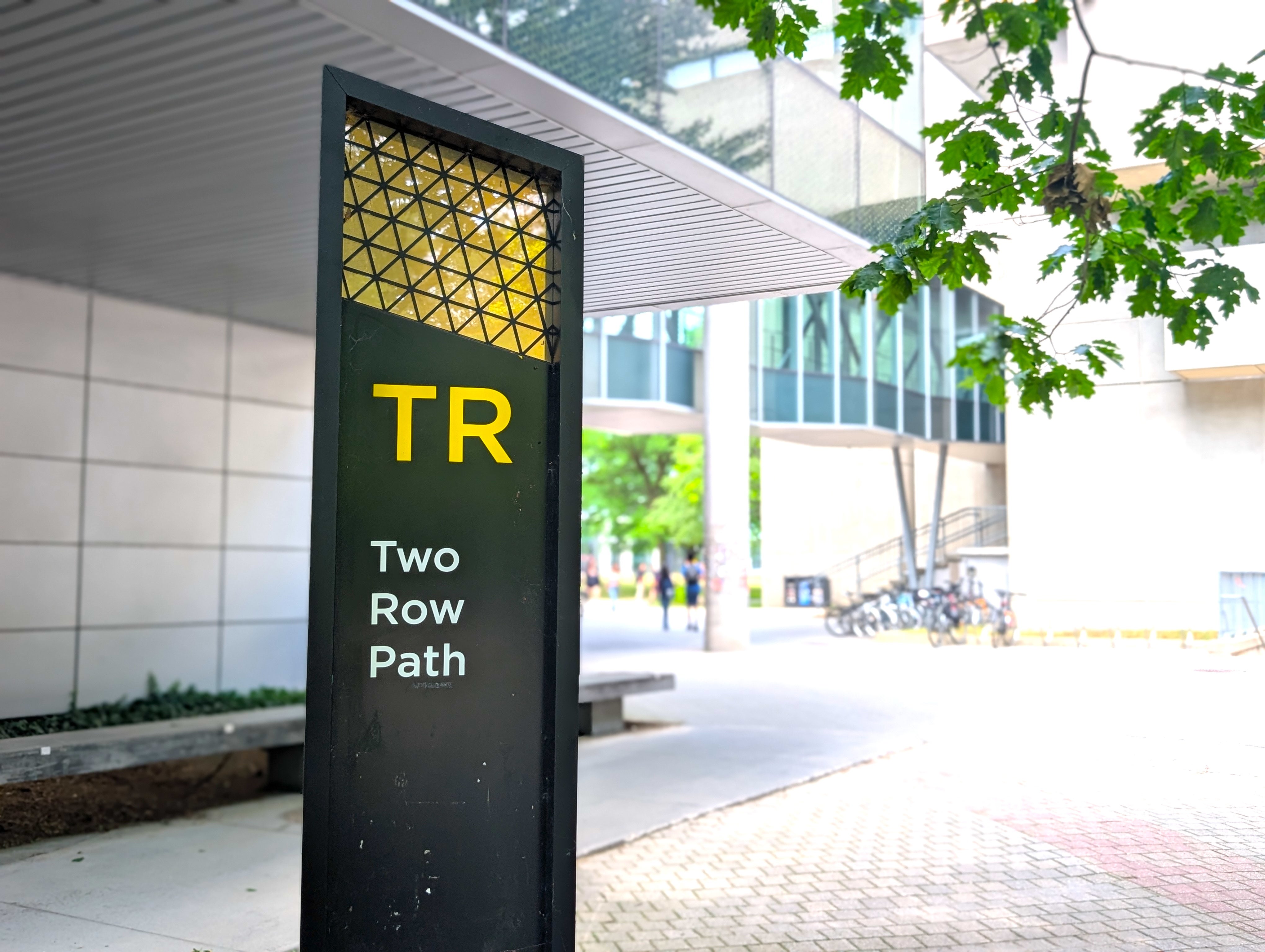
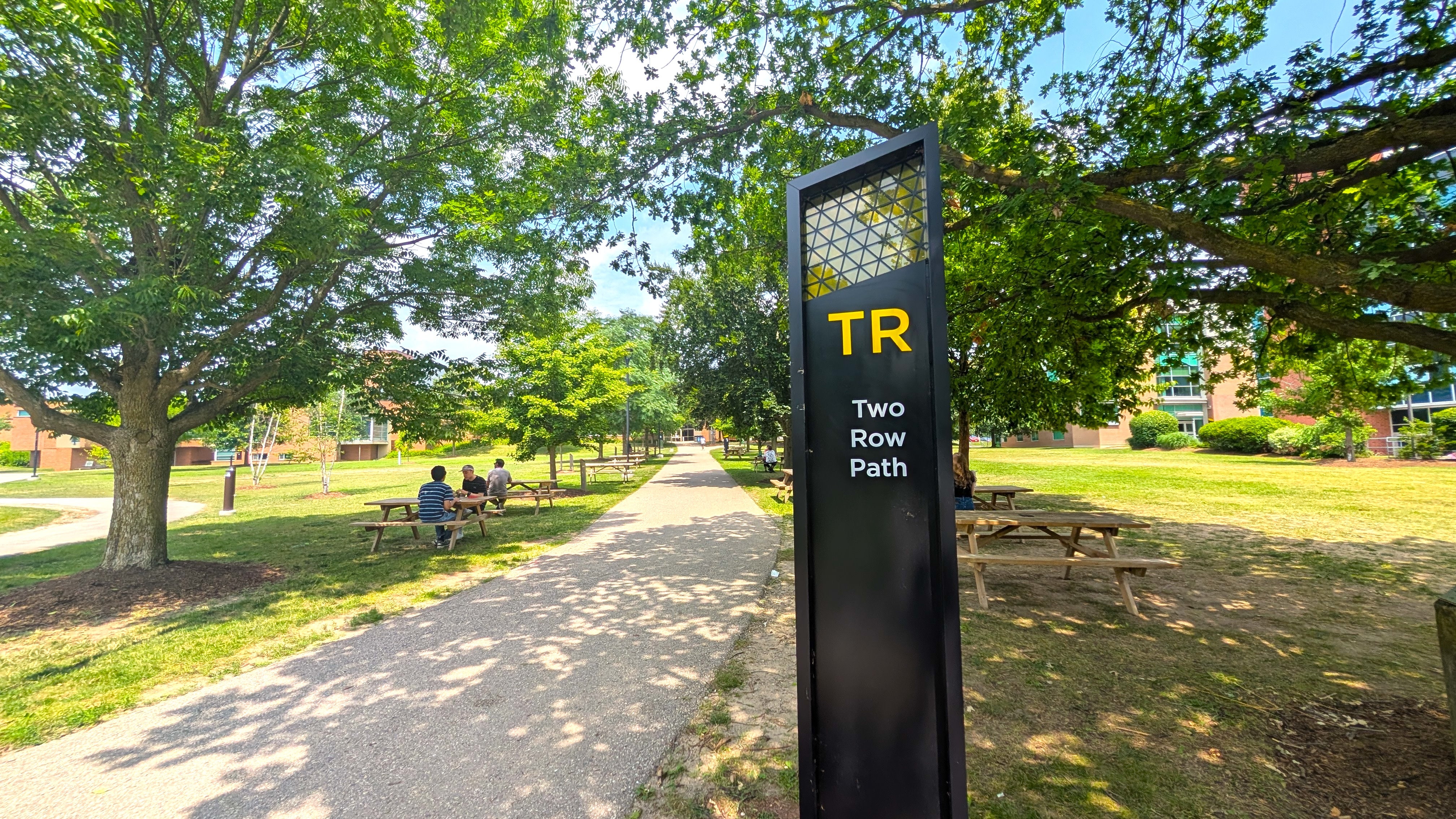
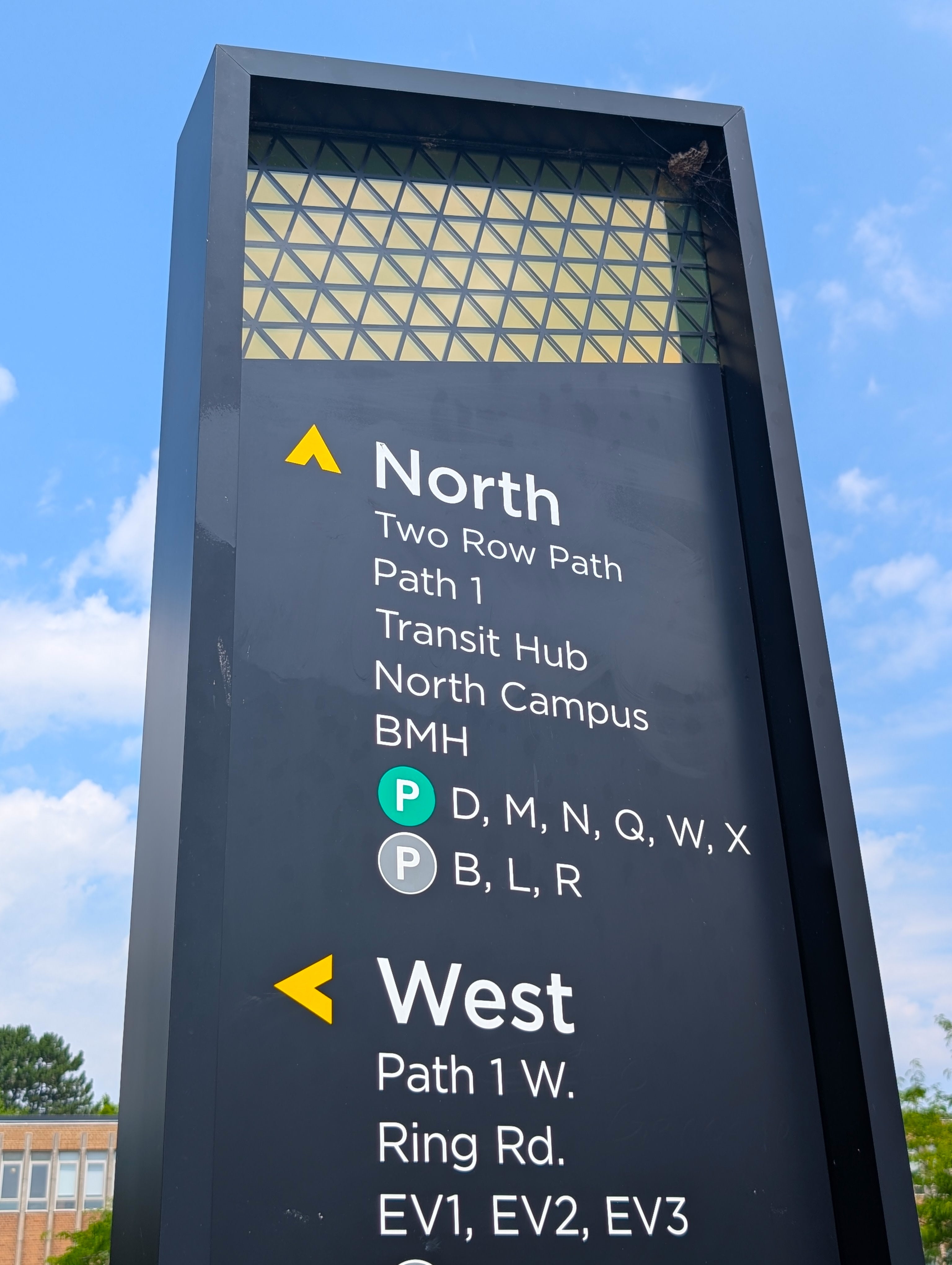
If you have visited University of Waterloo’s main campus, you likely stepped on Two Row Path– the primary pedestrian travel route that connects South Campus Hall to the Indigenous Outdoor Gathering Space.
In Spring 2025, the walking path formerly known as Main Path on the University of Waterloo’s main campus was renamed to Two Row Path, a reference to the Two Row Wampum Belt (Kaswentha) of the Haudenosaunee.
What’s in a Name?
The (re)naming of campus spaces is an important cultural and symbolic act that can support the goals of reconciliation between Indigenous and settler cultures. For Indigenous Peoples, naming spaces to represent Indigenous histories and cultures is a powerful act of cultural resurgence that accomplishes multiple reconciliation goals:
-
Expresses Indigenous Identity: Renaming spaces with Indigenous names is a direct way to reclaim Indigenous presence and identity on the land.
-
Honours Indigenous Knowledge: Indigenous place names often carry deep cultural significance, connecting to oral histories, traditional knowledge, and the land itself. Using these names honours and revitalizes Indigenous ways of knowing.
-
Creates a Welcoming Environment: Indigenous students, faculty, and staff can feel more welcome and respected when spaces reflect their culture and heritage.
-
Educates the Broader Community: Renaming spaces provides an opportunity to educate the wider campus community about Indigenous languages, cultures, and histories.
The Haudenosaunee name for the Two Row Wampum is Teioháte (Two Paths/Roads in Mohawk Language) Kaswenta (Wampum Belt); Other say it is called Tekani teyothata’tye kaswenta; or Aterihwihsón:sera Kaswénta (Cayuga)

Why ‘Two Row’ Path?
Two Row Path is a reference to the Two Row Wampum Belt (Kaswentha) of the Haudenosaunee and is believed to be the first and likely the oldest treaty between Europeans and Indigenous Peoples of Turtle Island. Made of purple and white wampum shell beads, the belt was created by the Haudenosaunee in the early 17th century to establish a relationship of mutual respect and peace with Dutch merchants, which then became the basis for subsequent treaties with other colonial governments.
The belt’s symbolism is simple but powerful. The belt’s two purple wampum rows run parallel to each other and are separated by three bands of white wampum shells. The purple bands represent two boats travelling down the river of life - one representing a Haudenosaunee canoe and the other a European ship. The people, ways of life and laws of each culture are contained within their respective vessels and co-exist without either party to the treaty interfering in the autonomy or distinctiveness of the other. The three white bands represent the river along which both cultures are travelling. While the paths never cross, each white band represents a bond of peace, friendship and mutual respect that connects both cultures along their shared journey.
What does Two Row mean at Waterloo?
Two Row Path is more than an expression of the University of Waterloo’s presence on the Haldimand Tract – i.e. the “…land granted to the Haudenosaunee of the Six Nations of the Grand River…”. In 1996, the Royal Commission on Aboriginal Peoples used the symbolism of the Two Row Wampum Belt to advocate for transformed relationships between Indigenous and colonial governments.
For universities, the symbolism of the Two Row Wampum belt is a reminder that relationships between Indigenous communities and settler researchers/educators need to be grounded in respect for each culture’s distinct ways of knowing and learning. That means sharing the river of knowledge in ways that support dialogue between equal partners and to move away from relationships that have historically advantaged one partner over the other.

Three Wampum belts are displayed in the Board and Senate chamber in Needles Hall to signify respect between peoples and cultures, and as a reminder of the University of Waterloo's commitment to reconciliation, Indigenization and decolonization.
Additional Resources
To learn more about the historic and contemporary significance of the Two Row Wampum Belt, please refer to the following sample of websites and published literature.
Publications
Freeman, B., & Van Katwyk, T. (2020). Navigating the waters: understanding allied relationships through a Tekéni Teyohà: ke Kahswénhtake two row research paradigm. Journal of Indigenous Social Development, 9(1), 60-76.
Hill Sr, R. W., & Coleman, D. (2019). The Two Row Wampum-covenant chain tradition as a guide for indigenous-university research partnerships. Cultural Studies↔ Critical Methodologies, 19(5), 339-359.
Hill, S. M. (2017). The clay we are made of: Haudenosaunee land tenure on the Grand River (Vol. 20). University of Manitoba Press.
Muller, K. V. (2007). The two" mystery" belts of Grand River: A biography of the Two Row Wampum and the friendship belt. American Indian Quarterly, 129-164.
Websites
"Two Row Wampum – Gaswéñdah." Onondaga Nation. https://www.onondaganation.org/culture/wampum/two-row-wampum-belt-guswenta/
Maracle, Candace. "North America's 1st treaty agreements were recorded in wampum belts." (2024, June 12). CBC News. https://www.cbc.ca/news/indigenous/one-bowl-two-row-silver-covenant-chain-treaties-1.7218610
Gadacz, René R. "Wampum." (2020, Nov 5.) The Canadian Encyclopedia. https://www.thecanadianencyclopedia.ca/en/article/wampum
For universities, the symbolism of the Two Row Wampum belt is a reminder that relationships between Indigenous communities and settler researchers/educators need to be grounded in respect for each culture’s distinct ways of knowing and learning. That means sharing the river of knowledge in ways that support dialogue between equal partners.