News

Filter by:

Limit to news where the title matches:
Limit to items where the date of the news item:
Date range
Limit to news items tagged with one or more of:
Limit to news items where the audience is one or more of:
Thursday, December 4, 2025

A winning start in quantum innovation

Congratulations to a team of first-year Nanotechnology Engineering (NE) students who took first place at the HardHaQ Quantum Hardware Hackathon! The event was open to undergraduate teams from across North America.  

Focused on hardware, the competition offers students an opportunity to gain experience with tools and systems driving quantum technologies.

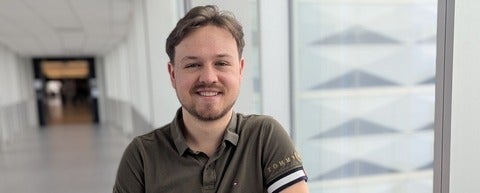
Teammates Philip Szymborski, Arjun Mahes, Prithvi Singh and Keegan Mark were excited to have the opportunity to work in the quantum space. Mark learned of the event through Quantum Club and invited his friends to join.

The challenge in the competition was to optimize ion traps through computer simulations and geometric modelling, and they only had a week to do it!

Tuesday, November 25, 2025

From Waterloo to Paris: A quantum leap

Nanotechnology Engineering (NE) alumnus, Edgar Cao (BASc 2011) is currently working in Paris, France for a company called Nexdot, which specializes in the development of Quantum Dots and their application in industry.

Cao was in the second class accepted into the newly launched NE Program in 2006. His journey in nanotechnology engineering has taken him across continents, industries and disciplines, rooted in the foundations he built at UWaterloo's NE Program.

Today, Cao is a Senior Project Manager at Nexdot, where he works at the interface of materials science, diagnostics, and biotechnology.

A culture of possibilities

For Cao, his co-op experience in the NE Program was an integral part of his career development. He went from doing research in academic labs, to working at a tech transfer hub, to quality testing, to product development in industry. Having worked in the automotive sector and agricultural research and development, his experience sparked his longer-term goal of working on product development projects.

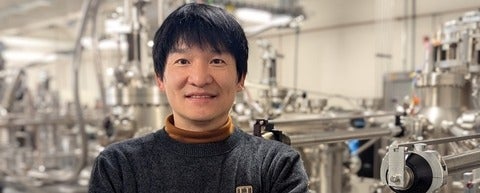
A research team led by Nanotechnology Engineering (NE) instructor Professor  Hamed Shahsavan has developed a new process to reinforce smart, rubber-like materials—paving the way for their use as artificial muscles in robots, potentially replacing traditional rigid motors and pumps.

The research group incorporated liquid crystals (LCs)—commonly used in electronic displays and sensors—into liquid crystal elastomers (LCEs), which serve as promising materials for constructing soft robots.

The LCEs go through a huge shape-change when heated, in a programmable manner. When a small amount of LCs are mixed with LCEs, they become stiffer and up to nine times stronger than before.

The Nanotechnology Engineering (NE) Program is proud to celebrate that, for the second consecutive year, an NE student has been named to The Logic’s ‘Canada’s Leading Innovators’ list. The Logic is a Canadian news outlet that is one of the leading sources of technology and business news.

Helen Engelhardt (BASc 2024) was named as one of Canada’s leading innovators from the class of 2024. Engelhardt is a Clarendon scholar for a PhD in Materials at Oxford. She began her PhD in the fall of 2024, studying earth abundant catalysts for green hydrogen production.

Shawn Benedict (BASc 2025) was named as one of Canada’s leading innovators from the class of 2025. Benedict won 13 awards during his undergraduate degree in Nanotechnology Engineering and recently won an NSERC award for his PhD which he is pursuing in the Department of Chemical Engineering at the University of Waterloo.

Capstone group 4, Vivra sponsored by BDO Canada, won the second place award for the Nanotechnology Engineering (NE) Program.  

Their project, supervised by Professor John Saad, was directed at solving the problem of chronic dehydration. For their Capstone Project, the group was eager to showcase the diverse skills they had attained through both their coursework and co-op experiences. 

Team members Michael Hanley, Tina Hanna, Mathew Maradin and Wyatt Sullivan researched the problem of dehydration in North America and found a study that indicated 75% of people are chronically dehydrated. Dehydration can lead to a myriad of health problems, including electrolyte imbalances, migraines, urinary and kidney problems and more. 

Nanotechnology Engineering (NE) Group 26, Airsero, won several awards for their Capstone Design Project. Airsero won the $5K in an Innovation and Entrepreneurship Award at the Norman Esch Pitch Competition.

They also secured the UN Sustainable Development Goals Award within the Nanotechnology Engineering department. At the inception of their project in 2024, the team received a MITACS Accelerate Award that helped with financing the project.

Group members Anthony Keen, Aliasgar Bawangaonwala, and Hamzah Curtay knew they wanted to focus on working with aerogel materials and were eager to do a project that could lead to a start-up.

"Capstone allowed us to go beyond theory —it pushed us into actual engineering problem-solving. Our supervisor, Professor Milad Kamkar, was incredibly supportive and encouraged us to explore various facets of aerogel and material science,” said Keen.

Nanotechnology engineering (NE) alumnus Holden Beggs was named to the 2024 Forbes 30 under 30 list for his start-up Zero Experience.

This start-up was born out of the COVID-19 pandemic. Beggs and business partner Jackson Mills saw a troubling trend,many students were losing their co-op jobs and having difficulty getting post-graduation employment during the pandemic.

Without access to jobs, students found themselves stuck in a cycle—unable to gain experience, but unable to get a job without it. Yet at the University of Waterloo there is a strong entrepreneurial ecosystem.

During his Capstone experience, Beggs realized entrepreneurship would be a good substitute for getting industry experience.

The infrastructure to create a new start-up was there for the students, however many of them did not know how to start an entrepreneurial journey.

Nanotechnology Engineering alumna CT Murphy’s start-up CELLECT Laboratories is a finalist in the Odlum Brown Forum Pitch, a Canadian program for women entrepreneurs.

Murphy’s partner and COO, Ibukun Elebute presented at the event and secured $44K in winnings for CELLECT.

The initial idea for the menstrual product was part of Murphy’s fourth-year Capstone Project. She aims to create a menstrual pad infused with nanomaterials that could collect cervical and bacterial cells. The pad could then be sent to a lab to test for cervical cancer and human papillomavirus (HPV).

People say that tears can tell you about the emotions that people are feeling, but as Capstone Group 5 discovered, tears can also reveal a lot of other useful information.

Tears also contain rich biomarkers such as proteins and glucose, which are useful for diagnosing both ocular and systemic conditions like diabetic retinopathy.

Nanotechnology Engineering Capstone Group 5 explored the diagnostic potential of tears and embarked on a successful and exciting journey doing their Fourth-Year Design Project.

They won first place in the Nanotechnology Engineering Program, but they did not stop there. They also won the Engineer of the Future Award, the Bayliss Medical Award, and an award from the Sanford Fleming Foundation.

The group competed in the OEC Innovative Design Competition and won second place. They also took second place in the National Canadian Engineering Competition.

Fourth-year student Shawn Benedict has won the Peggy Jarvie Award, sponsored by the Cooperative Education and Internship Association!

Benedict entered the Nanotechnology Engineering Program with the aim of having a diverse co-op experience to explore multiple options and potential career pathways.  Through a co-op in his third year, he attended the prestigious CES conference in Las Vegas, where he was entrusted to meet executives from international companies.

“My varied co-op experience has given me a better appreciation for my program and has really helped me to see all the doors my program opens for me. All these opportunities, connections, and tangible skills have helped solidify my confidence. I know that wherever I am, I will have the ability to thrive,” says Benedict.

The highlight of his co-op experiences was traveling to Norway and working at SINTEF, a nonprofit research organization that collaborates with industry to uncover new discoveries. SINTEF conducts research for industry partners and governments around Europe and beyond.