News

Filter by:

Limit to news where the title matches:
Limit to items where the date of the news item:
Date range
Limit to news items tagged with one or more of:
Limit to news items where the audience is one or more of:

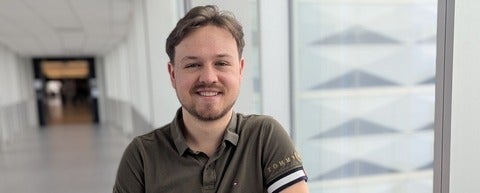
Fourth-year nanotechnology engineering (NE) student Alexei Abiiaka is an entrepreneur with his own software start-up called iNano IoT Corp.

Abiiaka was attracted to the NE program in high school because of the diverse opportunities that the NE Program offers from working with circuits and electronics, to lab work and device fabrication in the cleanroom.

“I’m having a great time in Nano! I love the variety of labs we take part in, and we work with equipment that undergraduate students in other departments never get access to,” says Abiiaka. “Our labs get better every year. For example, working in the cleanroom was interesting—it's a rare opportunity.”

Concurrent to his studies, Abiiaka built a start-up called iNano IoT Corp, inspired by software he began developing in high school. The company offers a highly flexible platform that works like a modular system, allowing users to build customized software solutions, without coding.

Tuesday, March 3, 2026

From classroom to cutting-edge

Khanjan Desai (BASc ’13) and Chong Shen (BASc ’13) are co-founders of Alchemy, a company that fabricates leading-edge coatings using nanotechnology for the automotive and defense industries. Chong and Desai, nanotechnology engineering (NE) alumni, launched the start-up in 2013.

Alchemy recently received $1.8 million in funding from the Government of Canada through the Federal Economic Development Agency for Southern Ontario (FedDev Ontario) to scale up the manufacturing of their automotive products.

University of Waterloo’s entrepreneurial ecosystem played a pivotal role in the development of Alchemy, providing initial funding through the Velocity incubator as well as additional grants from the University.

“To launch Alchemy, we needed lab space, access to advisors and infrastructure that would have been so expensive to have on day one of our start-up. The University of Waterloo provided all of that for us, we would not exist without Waterloo,” says Desai.

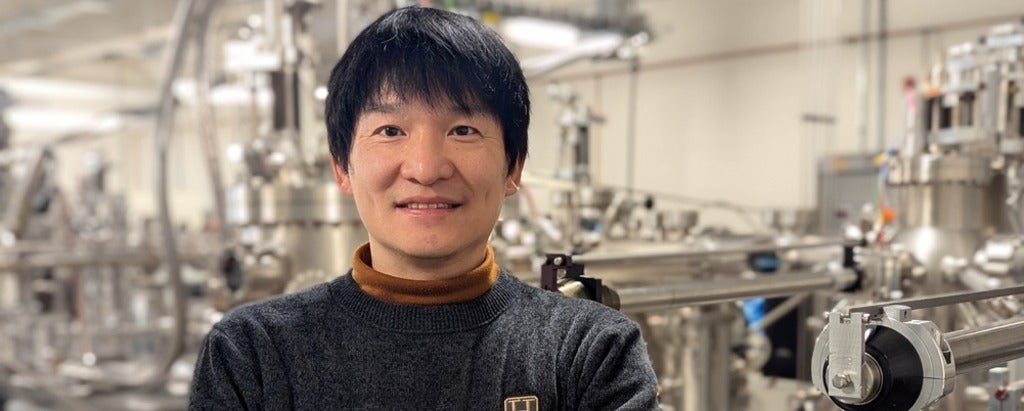
Professor Guo-Xing Miao has won the En-Hui Yang Research and Innovation Award. The En-Hui Yang Award is bestowed annually to an outstanding researcher in the University of Waterloo’s Faculty of Engineering. 

Miao’s research focuses on the specific spin quantum properties in condensed matter platforms. The precise confinement, transport and manipulation of electrons and ions across nano materials and devices, enriched by their accompanied spin degrees of freedom, allows for advanced information processing in both the quantum and classic realms.  

His team synthesizes industrial level quantum materials such as complex spin systems, ion platforms, topological phases, and superconductors—to mass fabricate scalable, wafer-level devices. 

His innovation extends to a new company called SpinQ. Miao is one of the founders and science advisors of SpinQ. This company was founded in Waterloo, with all founding members deeply connected with the Institute for Quantum Computing. 

Thursday, December 4, 2025

A winning start in quantum innovation

Congratulations to a team of first-year Nanotechnology Engineering (NE) students who took first place at the HardHaQ Quantum Hardware Hackathon! The event was open to undergraduate teams from across North America.  

Focused on hardware, the competition offers students an opportunity to gain experience with tools and systems driving quantum technologies.

Teammates Philip Szymborski, Arjun Mahes, Prithvi Singh and Keegan Mark were excited to have the opportunity to work in the quantum space. Mark learned of the event through Quantum Club and invited his friends to join.

The challenge in the competition was to optimize ion traps through computer simulations and geometric modelling, and they only had a week to do it!

Tuesday, November 25, 2025

From Waterloo to Paris: A quantum leap

Nanotechnology Engineering (NE) alumnus, Edgar Cao (BASc 2011) is currently working in Paris, France for a company called Nexdot, which specializes in the development of Quantum Dots and their application in industry.

Cao was in the second class accepted into the newly launched NE Program in 2006. His journey in nanotechnology engineering has taken him across continents, industries and disciplines, rooted in the foundations he built at UWaterloo's NE Program.

Today, Cao is a Senior Project Manager at Nexdot, where he works at the interface of materials science, diagnostics, and biotechnology.

A culture of possibilities

For Cao, his co-op experience in the NE Program was an integral part of his career development. He went from doing research in academic labs, to working at a tech transfer hub, to quality testing, to product development in industry. Having worked in the automotive sector and agricultural research and development, his experience sparked his longer-term goal of working on product development projects.

The Nanotechnology Engineering (NE) Program is proud to celebrate that, for the second consecutive year, an NE student has been named to The Logic’s ‘Canada’s Leading Innovators’ list. The Logic is a Canadian news outlet that is one of the leading sources of technology and business news.

Helen Engelhardt (BASc 2024) was named as one of Canada’s leading innovators from the class of 2024. Engelhardt is a Clarendon scholar for a PhD in Materials at Oxford. She began her PhD in the fall of 2024, studying earth abundant catalysts for green hydrogen production.

Shawn Benedict (BASc 2025) was named as one of Canada’s leading innovators from the class of 2025. Benedict won 13 awards during his undergraduate degree in Nanotechnology Engineering and recently won an NSERC award for his PhD which he is pursuing in the Department of Chemical Engineering at the University of Waterloo.

Fourth-year student Shawn Benedict has won the Peggy Jarvie Award, sponsored by the Cooperative Education and Internship Association!

Benedict entered the Nanotechnology Engineering Program with the aim of having a diverse co-op experience to explore multiple options and potential career pathways.  Through a co-op in his third year, he attended the prestigious CES conference in Las Vegas, where he was entrusted to meet executives from international companies.

“My varied co-op experience has given me a better appreciation for my program and has really helped me to see all the doors my program opens for me. All these opportunities, connections, and tangible skills have helped solidify my confidence. I know that wherever I am, I will have the ability to thrive,” says Benedict.

The highlight of his co-op experiences was traveling to Norway and working at SINTEF, a nonprofit research organization that collaborates with industry to uncover new discoveries. SINTEF conducts research for industry partners and governments around Europe and beyond.

The Nanotechnology Engineering (NE) program is investing in new cutting-edge equipment for undergraduate student use. The NE program focuses on experiential hands-on learning on the latest equipment for its undergraduate students. The program recently purchased an X-ray diffractometer (XRD) with glancing-incidence capabilities to characterize thin films even down to 100 nanometers thick.

Housed alongside a powder-only XRD instrument in NE’s Davis Centre labs, this new model will serve as an educational resource for undergraduate students in the program. With a price tag of approximately $120,000, the XRD represents a substantial investment in the NE program. This will allow students to access technology which combines research-level capability with hands-on learning.

Darshan Parmar, Class of 2019, works as a Pixel Development Engineer at Apple. He develops innovative new camera technologies that are used by millions of people around the world. He credits a large part of his success to experiences and the connections he made in the Nanotechnology Engineering (NE) Program at U Waterloo. It was another UWaterloo alumnus who referred him to his current job.

The co-op jobs Parmar enjoyed during his undergrad degree were foundational to his career journey. He had an exciting co-op position in Singapore at the National University of Singapore as a research assistant. He worked in optical system development at Lumentum in Ottawa and as an optics specialist at P & P Optica.

The journey toward aerogel research began for three students in Nanotechnology Engineering’s (NE) third-year Soft Nanomaterials course. The concept which captured the students’ interest was the hierarchical design and assembly of nanomaterials, which involves structuring materials at multiple scales.

“The Soft Nanomaterials course was a really cool course! What stuck with me after the lecture was the idea that nanomaterials can have a hierarchical design with different levels of structure at different scales, from nano- all the way to macro-scale. The idea to achieve extraordinary properties by controlling materials features at different levels was fascinating.” said Anthony Keen, an NE student.