Current students

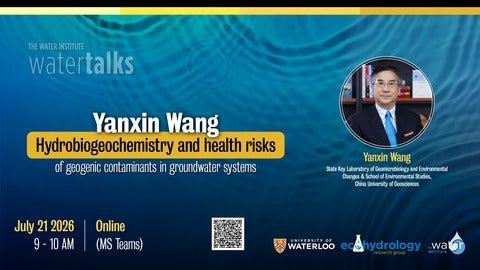
As part of the Water Institute's WaterTalks lecture series, Ali Ameli, Professor & Director of HydroGeoScience for Watershed Management (HGS-WM) Research Group, UBC, will present The functional reality of watersheds: Complexity, time-variance, and the limits of current deep learning models.

This event is in person in DC 1302.

Friday, April 3, 2026

Listening to farmers, learning from nature

by Fridah Silas, PhD student in the School of Environment, Resources and Sustainability and Collaborative Water Program

New research by Fridah Silas, a PhD student in the School of Environment, Resources and Sustainability and Collaborative Water Program student working with Dr. Dustin Garrick is exploring how farmers and actors across food, water, and energy sectors can work with nature, and with each other, to support more sustainable agriculture in Ontario.

This year, World Water Day highlights the need for water equity, ensuring safe water and sanitation for everyone. As part of the celebration at the University of Waterloo, Dr. Elliott is hosting a panel discussion titled “Water Equity and Shared Responsibility: Intersectional Perspectives from Research and Practice.”

Waterloo graduate student Thiruni Thirimanne a PhD candidate in the Department of Civil and Environmental Engineering, has been awarded the Water Institute’s 2026 John Parish Memorial Graduate Scholarship, recognizing excellence in research on river systems and fluvial geomorphology.

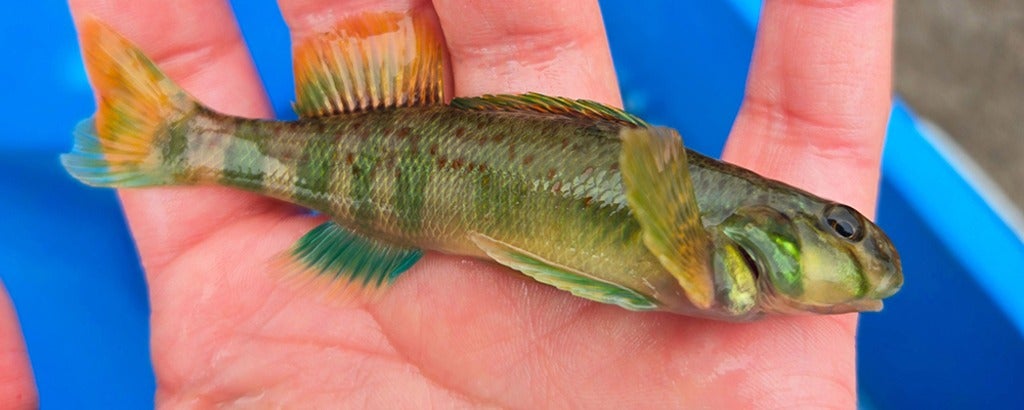
A new collaborative study by water researchers at the University of Waterloo reveals that major investments in wastewater treatment have contributed to significant ecological recovery in the Grand River downstream of the Kitchener and Waterloo, ON wastewater treatment plants.

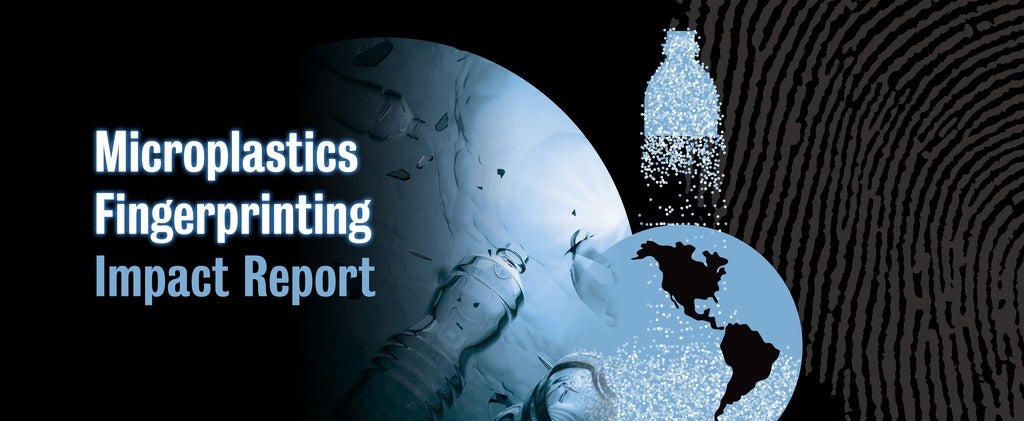
Researchers at the University of Waterloo have developed a sunlight-driven, bio-inspired photocatalysis process that degrades microplastic into acetic acid, the main ingredient in vinegar.

The research is led by PhD student Wei Wei under the guidance of Prof. Yimin Wu and published in Advanced Energy Materials.

Friday, March 20, 2026 10:00 am - 3:30 pm EDT (GMT -04:00)

World Water Day 2026

Celebrate World Water Day 2026 with the Water Institute! Join us for a full-day conference featuring inspiring keynote speakers, a showcase of innovative student research, award presentations and networking opportunities. Don't miss this exciting annual event!

Friday, March 20, 2026 - 10:00 am - 3:30 pm

University of Waterloo, Student Life Centre (SLC) Black and Gold Room,
200 University Avenue West, Waterloo, ON, Canada  N2L 3G

How do we protect water quality in a world increasingly shaped by synthetic chemicals. Research by Water Institute member Dr. Maricor Arlos explores this challenge by tracking harmful micropollutants through urban water systems and translating technical data into practical solutions. Based in the Faculty of Engineering, Arlos leads a community focused research lab that combines advanced analytical tools, policy relevant insights and hands on student training to support more informed wastewater treatment and water management decisions. Her work, conducted in partnership with municipalities and communities across Canada, reflects the strength of Waterloo’s water research community and its commitment to protecting water for people and ecosystems alike.

Researchers and community partners gathered in Calgary on November 26 and 27 for the forWater Network Insights Forum. Established in 2017 as a national network dedicated to advancing science on forested drinking water sources, forWater used this event to mark the conclusion of its initial research program and reflect on nearly a decade of collaboration. The two-day forum, held at the city’s Ralph Klein Park Environmental Education Centre, brought together members of the forWater Network and partners from across Canada to share research, identify emerging challenges, and plan next steps for forest water protection efforts.

Carter McCrae, a master’s student in Climate Change, and Aidan Iapicco, an MSc candidate in Biogeochemistry and a student in the Collaborative Water Program (CWP), are developing a solution that links water, energy, and circular economy thinking. It is the first project to combine solar panel pumps and repurposed electric vehicle batteries in a system that will enable millions of small farms and billions of people to access water for irrigation. The solution aims to reduce costs and improve reliability for farmers facing growing water and energy constraints.