News

Filter by:

Limit to news where the title matches:
Limit to items where the date of the news item:
Date range
Limit to news items tagged with one or more of:
Limit to news items where the audience is one or more of:
Limit to news items where the faculty or school is one or more of:

A virus that infects harmful freshwater cyanobacteria is challenging one of biology’s most fundamental assumptions about the difference between viruses and living cells.

Published in The ISME Journal, new research reveals that the jumbo cyanophage PhiMa05 carries the largest set of ribosomal protein genes ever found in a virus. The discovery is prompting scientists to rethink how viruses evolve and where the line between viral and cellular life truly lies.

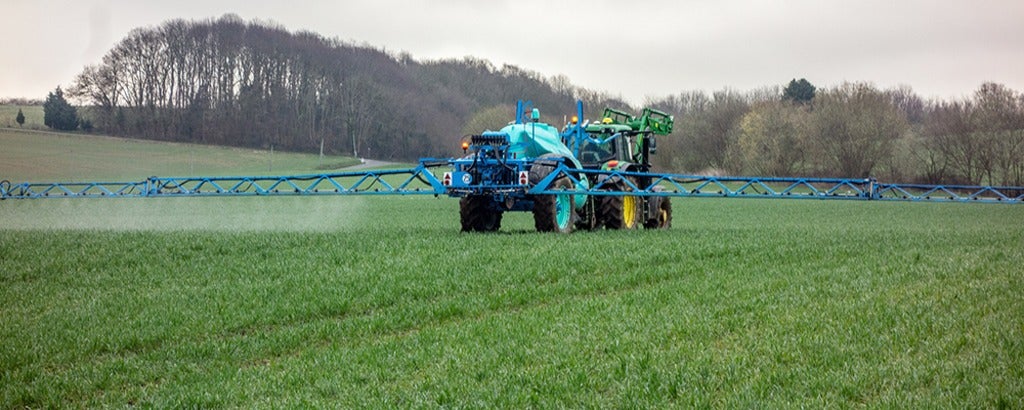
New research from University of Waterloo and Penn State researchers suggests that fertilizer shortages linked to global conflict may be having an unexpected effect on water quality.

The researchers found that in nutrient-rich agricultural systems, farmers may be able to tap into legacy nutrient reserves already stored in the soil, reducing the need for additional fertilizer and decreasing nutrient runoff into rivers, lakes and streams.

This summer, a new collaboration will bring together members of the University of Waterloo and members of Six Nations to share a journey along the Grand River. Two Row by the Grandis a five-day, reconciliation-focused bicycle tour following the river from Cambridge to Port Maitland, taking place July 15 to 19, 2026, alongside the annual Two Row on the Grand, a paddling event that brings together over 75 participants over 10 days each July.

Ocean conservation efforts are often guided by ambitious global targets, from protecting 30 per cent of marine and coastal areas to advancing the United Nations Ocean Decade goals. But new thinking co-authored by Water Institute member Derek Armitage and published in The Conversation argues that targets alone are not enough to ensure meaningful progress.

Every year, the Waterloo Wellington Children's Groundwater Festival helps hundreds of elementary school students discover the hidden world of groundwater and the importance of protecting our water resources. This year, members of the Society of the Water Institute Graduate Students (SWIGS) helped bring those lessons to life through a new four-part educational video series created for the festival’s virtual programming.

Dr. Nandita Basu delivered a distinguished public lecture at the University of Victoria, highlighting integrated pathways to water, food, and energy sustainability through the SOLUTIONSCAPES framework. Her talk emphasized that while many effective environmental solutions already exist, their impact depends on coordinated, landscape-scale implementation that accounts for real-world complexity. The lecture also marked her recognition with the Distinguished Women Scholars Award.

The Microplastics Fingerprinting research project has released their latest impact report. This report showcases the remarkable scientific advancements and societal contributions our researchers have made since the microplastics fingerprinting research group's launch.

As part of the Collaborative Water Program’s WATER 601 course, student teams delivered final presentations featuring integrated water management solutions to complex water challenges, sharing their ideas with a panel of experts from the University of Waterloo and the Canada Water Agency (CWA). The exercise goes beyond a typical class assignment. It asks students to think across disciplines, weigh ecological, social and economic trade-offs and deliver practical recommendations that could inform real policy and practice.