Privacy, Infrastructures, Policy
Media, government, and industry commonly frame Security and Privacy as diametrically opposed: protecting one requires sacrificing the other.


The Centre for Information Integrity and Information Systems Assurance at the University of Waterloo (UW CISA) will be holding its 11th biennial symposium held in Toronto, Canada. Our symposia are recognized for the extensive interaction between practitioners and academics. Papers and panels from academe and practice will address risks, controls and assurance issues associated with the following topics:
A pair of second-year University of Waterloo students shared the top prize at the inaugural Citizen Hacks, a recent hackathon focused on creating technology to protect privacy.
Professor Ian Goldberg, his colleagues David Wagner, Randi Thomas, and former PhD supervisor Eric Brewer have won the 2019 USENIX Security Test of Time Award for their research that also received the Best Paper Award at the Sixth USENIX Security Symposium in 1996.
Researchers at the University of Waterloo have integrated the use of blockchain into energy systems, a development that could result in expanded charging infrastructure for electric vehicles.
In a study that outlines the new blockchain-oriented charging system, the researchers found that there is a lack of trust among charging service providers, property owners and owners of electric vehicles (EVs).
C&O graduate students Samuel Jaques and John Schanck have won the Best Young Researcher Paper Award at Crypto 2019, the 39th Annual International Cryptology Symposium.
The Cybersecurity and Privacy Institute (CPI) hosted the All Hands On Deck for a Security Incident workshop at True North 2019 and announced their new industry collaboration with CyberCity, a Waterloo Region cybersecurity industry organization.
Vitalik Buterin
Creator of Ethereum, Cofounder of Bitcoin Magazine
Nolen Scaife, PhD candidate
Florida Institute for Cybersecurity, University of Florida
Credit, debit, and prepaid cards have dominated the payment landscape for decades, empowering the economy. Unfortunately, these legacy systems were not designed for today's adversarial environment, and deployment of new technologies is slow, expensive, and difficult to adopt.
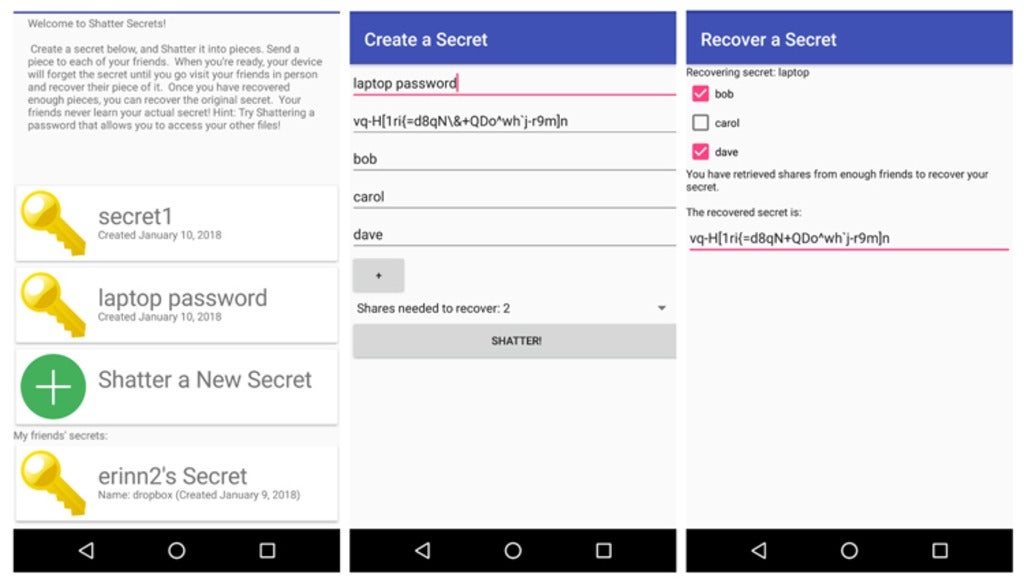
Computer scientists at the David R. Cheriton School of Computer Science have found a novel method to help travellers protect sensitive information from border control agents.
The system is being developed into an app called “Shatter Secrets” by Erinn Atwater, who is the research director of the not-for-profit Open Privacy, an organization dedicated to understanding, researching and serving the privacy needs of marginalized and highly targeted at-risk communities.