News

Filter by:

Limit to news where the title matches:
Limit to items where the date of the news item:
Date range
Limit to news items where the audience is one or more of:
Limit to news items where the faculty or school is one or more of:

At the AMO conference in Ottawa, municipal leaders and city staff connected with FCI to explore practical, data-backed solutions for their communities. From high-demand resources like the Development Charges Monitor and CivicInquire (an AI-powered homelessness policy platform led by FCI Director Dr. Leia Minaker that recently secured SSHRC funding) to collaborative student partnerships, FCI demonstrated how research moves out of academia and directly into local council chambers. Through the i-Capstone program, municipalities of any size can partner with University of Waterloo student teams to tackle local infrastructure and policy challenges across one or two terms at zero cost.

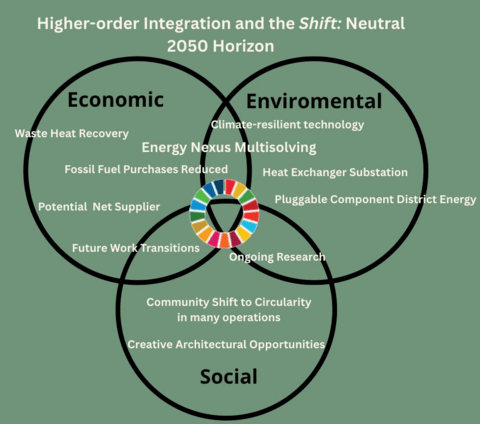
What does excess heat from a data centre have to do with warming a local hospital? For University of Waterloo students in the WE Accelerate program, it is a practical answer to Waterloo Region's growing resource limits. On July 29, student teams presented data-backed concepts for a municipal design challenge framed by the Future Cities Institute and the Region of Waterloo. Focused on the water-energy-food nexus, student concepts delivered actionable interventions, from capturing data centre heat for hospital infrastructure to expanding urban tree canopies using Silva Cell stormwater systems.

Master of Future Cities student Johanna B. secured Best Idea honors at the Brookfield Renewable Innovation Challenge. Bringing a systems-thinking lens to the Pearl Sullivan Engineering IDEAs Clinic, Johanna’s interdisciplinary team designed an on-campus waste-to-energy organics digester and biogas generator. By turning local campus organic waste into methane fuel for central heating operations, the concept delivers immediate waste management savings while establishing a practical, scalable building block for campus-wide district energy planning and long-term net-zero targets.