Research

Thursday, August 10, 2017

Efforts to reduce pollution from agriculture paying off slowly

by Media Relations

Efforts by farmers to reduce the amount of fertilizer that reaches drinking water sources can take years to have a positive impact, according to a new study from the University of Waterloo.

The study found that that depending on the type of terrain, efforts to reduce algae-causing nutrients such as nitrogen and phosphorus from reaching water sources such as the Great Lakes and can take decades to bear fruit.


With sea surface temperatures in the North Atlantic Ocean already climbing, scientists are predicting Atlantic Canada’s $400 million salmon aquaculture industry could be wiped out within the next 25 years.

But a $4.4M collaboration between biologists at University of Waterloo, Memorial University and the Universities of Guelph and Prince Edward Island could be the key to helping the industry adapt with a superior salmon stock that can survive in higher water temperatures.

Monday, August 7, 2017

Bush and Obama’s gifts to Trump: More war-making powers

by Media Relations

The study of U.S. military interventions between 2001 and 2016 found considerable similarities in the way Bush and Obama navigated around consultation and authorization protocols with Congress and the United Nations Security Council (UNSC).

This set a precedent that presidents could unilaterally go to war as opposed to seeking authorization from Congress, as was the practice in previous administrations.

Tuesday, August 1, 2017

Seeing the potential of radio-frequency applications everywhere

by Shane Schick, Faculty of Engineering

When delegates gathered in San Francisco for a big annual conference in his field earlier in 2016, Raafat Mansour was eager to find out how many of his former Waterloo Engineering graduate students were among them.

It has become his tradition to hold a dinner for former and current PhD students who attend the IEEE International Microwave Symposium (IMS).

Sunday, July 30, 2017

AI with a difference

by Brian Caldwell, Faculty of Engineering

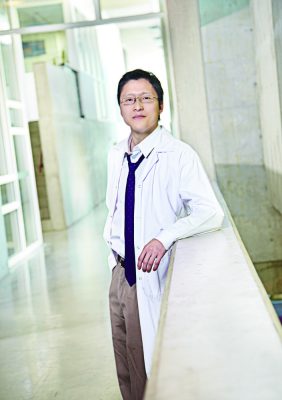
Alexander Wong in lap coat and blue tie
Alexander Wong is explaining the concept at the core of his groundbreaking artificial intelligence (AI) research when he realizes a comparison would probably help.

A new method for measuring extremely tiny objects could lead to cheaper, more accurate sensors for use in fields including medical research and gas detection.

Research at the University of Waterloo found that nanoscale devices using electromagnetism would be sensitive enough to determine the mass of viruses a hundred billion times lighter than a strand of human hair.

A key area of Waterloo’s partnership with Ciena involves squeezing as much capacity as possible out of fibre optic cables that run under the world’s oceans and handle upwards of 95 per cent of all intercontinental communications, including $10 trillion a day in financial transactions.

The reliable, high-speed transmission of vast amounts of information via undersea cables is increasingly important in fields including healthcare and academic research, as well as for consumer demand for quality high-speed Internet service on cell phones.

Gay men and Lesbians who don’t feel socially supported feel less secure about their retirement then heterosexual adults, a study from the University of Waterloo has found.

The study of working Canadians aged 45 to 70 found the majority of them believed that retirement by age 62 was achievable. While the number held true for gay men and lesbians who felt socially supported, it dropped by a year more for those that felt isolated or marginalized.

Thursday, June 22, 2017

Putting others first can cost lives in emergencies

by Media Relations

The study, which used computer modeling of a flooded subway station, found overall survival rates were substantially higher when strong people in a 30-member group reached safety themselves before trying to help weaker people.

“Foolhardiness is not a good strategy for rescuing,” said Eishiro Higo, a civil engineering PhD candidate at Waterloo who led the research. “In very critical situations, we have to be kind of selfish, but we can still help others if we have proper equipment and proper strategies.”