The Quantum-Nano Fabrication and Characterization Facility (QNFCF) is pleased to announce updates to the SUSS MA6 mask aligner. The UV light source, which utilizes a high pressure, short arc mercury lamp, has been upgraded to a light source utilizing a UV-LED lamp.The UV-LED upgrade lamp will provide improvements to functionality, sustainability, and cost of operation. The system has been re-commissioned and is now available for use in the QNFCF cleanroom lab.
Background
High-pressure, short-arc mercury lamps have long been the industry-standard as an ultraviolet (UV) light source for photolithography to deliver precise, high-intensity, and stable output at wavelengths: 365nm i-line, 405nm h-line, 436nm g-line. However, mercury lamps have very short life spans, and by their nature generate significant mercury-contaminated solid waste once expired.Thanks to the advances in LED technology, UV-LEDs have become a very attractive alternative to the hazardous and energy-consuming mercury lamps.With generous support from the University of Waterloo Sustainability Office and Transformative Quantum Technologies (TQT), the QNFCF team have upgraded the MA6 mask aligner by switching the lamp source from mercury to UV-LED.
Longevity and Functionality
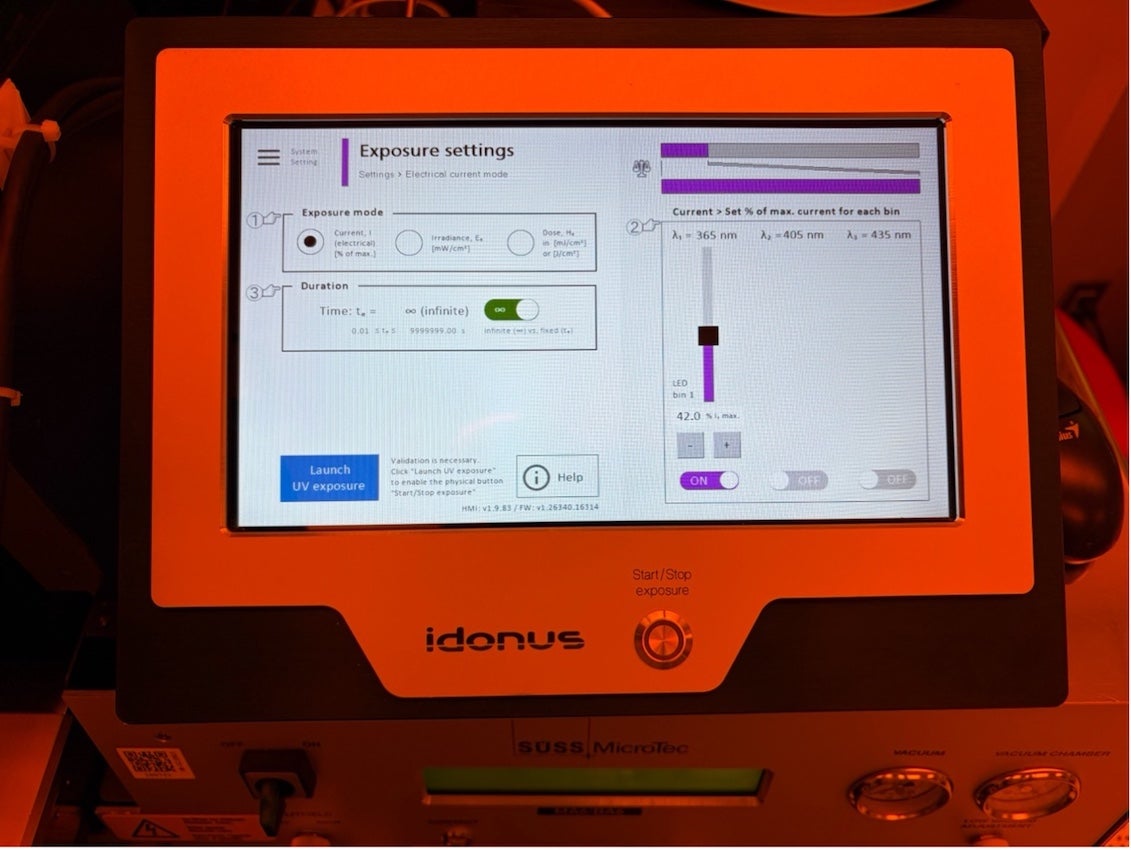
The UV-LED lamp upgrade comes with a programmable touch screen that offers expanded modes and exposure parameters over the mercury lamp system. The control system offers 3 different exposure modes. Each wavelength has a separate UV-LED that must be selected and energized on the touch screen.
Sustainability
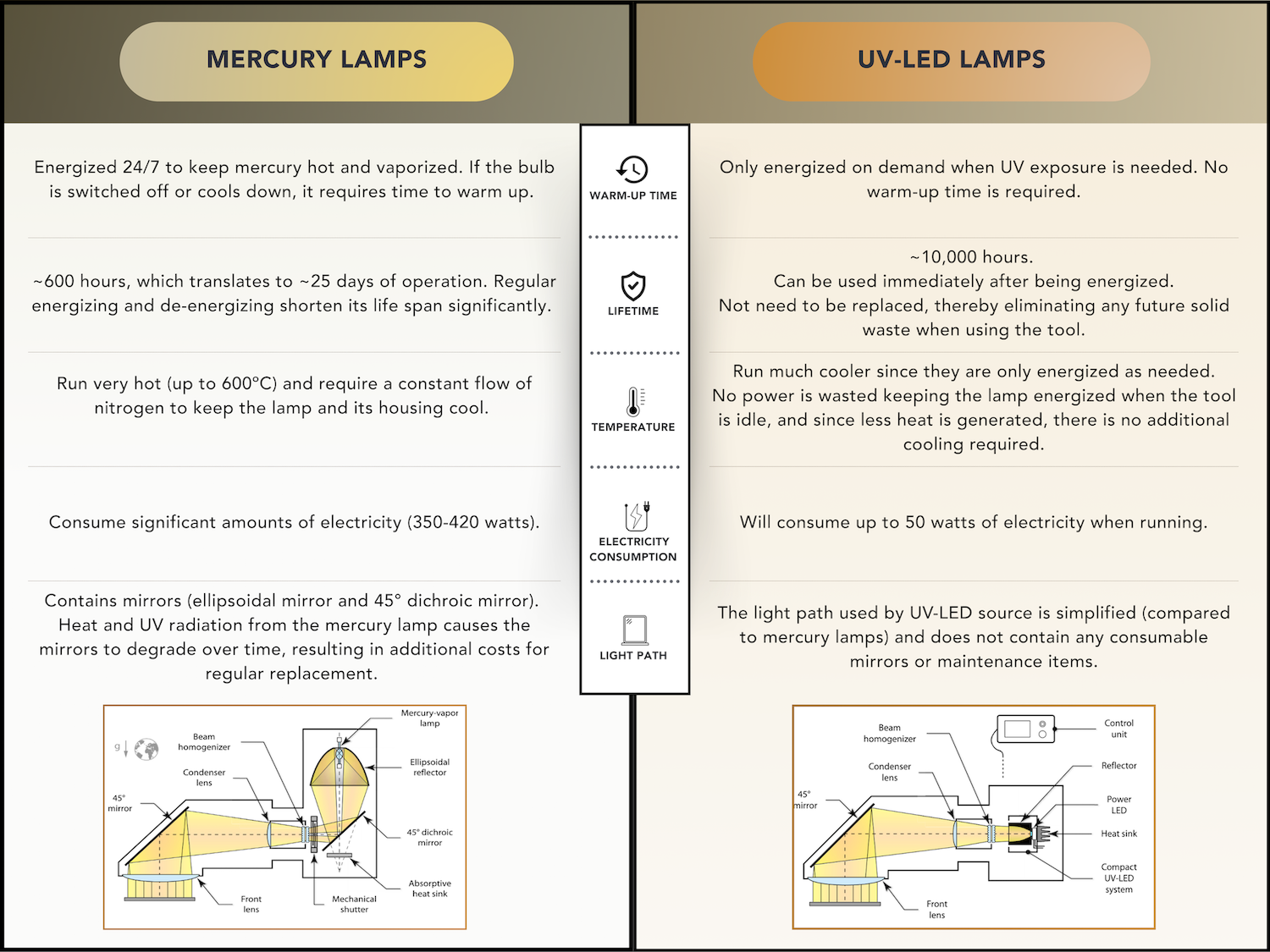
Below is a contrast of some of the properties of mercury discharge lamps and the replacement UV-LED, highlighting some of the sustainability benefits of this upgrade.

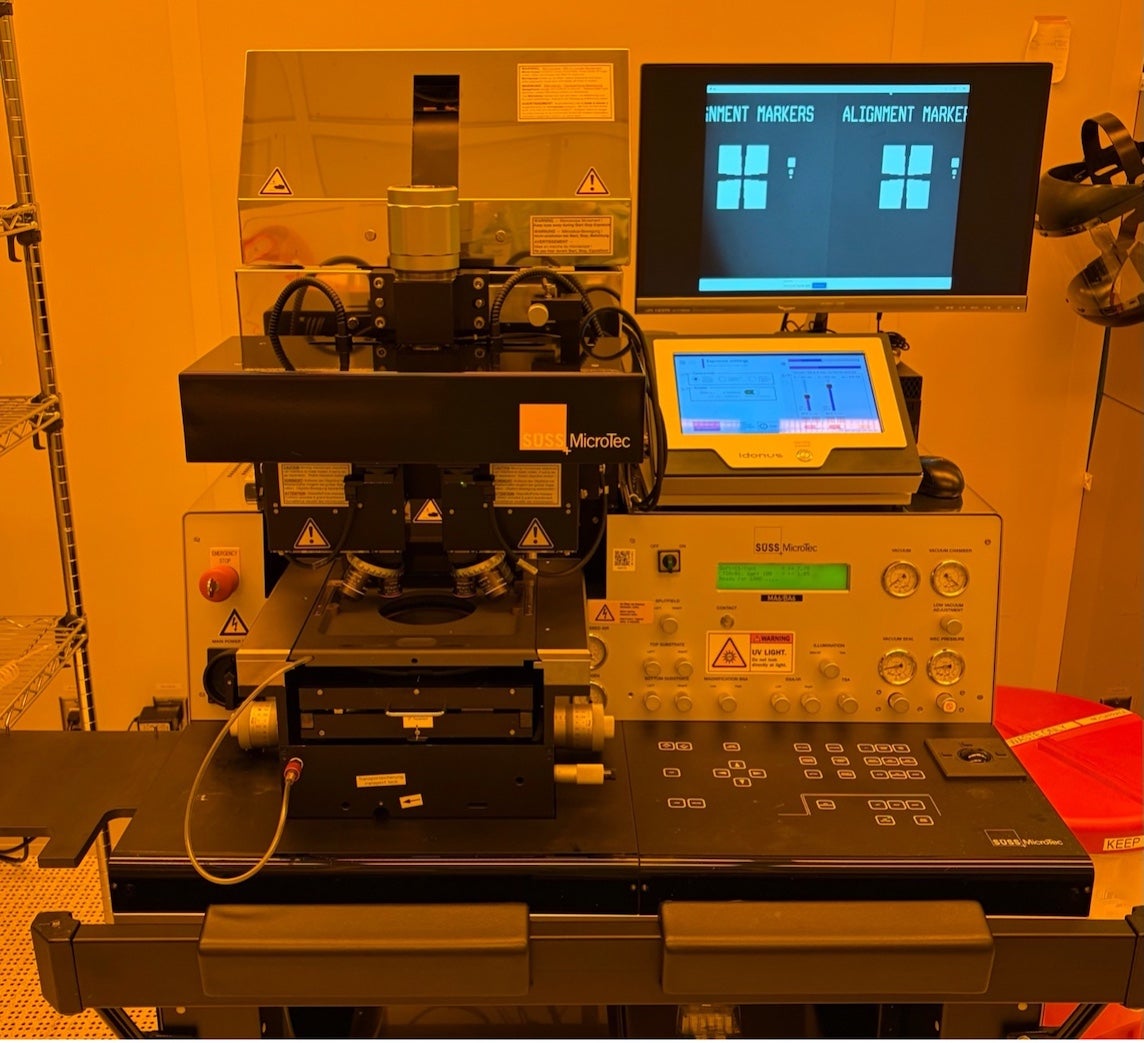
SUSS MA6 mask aligner with Idonus UV-LED control panel installed.

The 3 exposure modes are as follows: 1) Current – A slider can adjust the maximum current percentage that the UV-LED lamp can handle. This is a quick and easy way to test different exposure levels without the use of any UV sensory feedback. 2) Irradiance – Users can enter the radiant energy needed (mW/cm2) per second. Users have a large range at their disposal for exposure levels against time. 3) Dosage – The feedback sensor on the UV-LED system can measure the irradiance and keep exposure running to it until it has reached the cumulative radiant energy (mJ/cm2) specified by the user.
Energy Savings
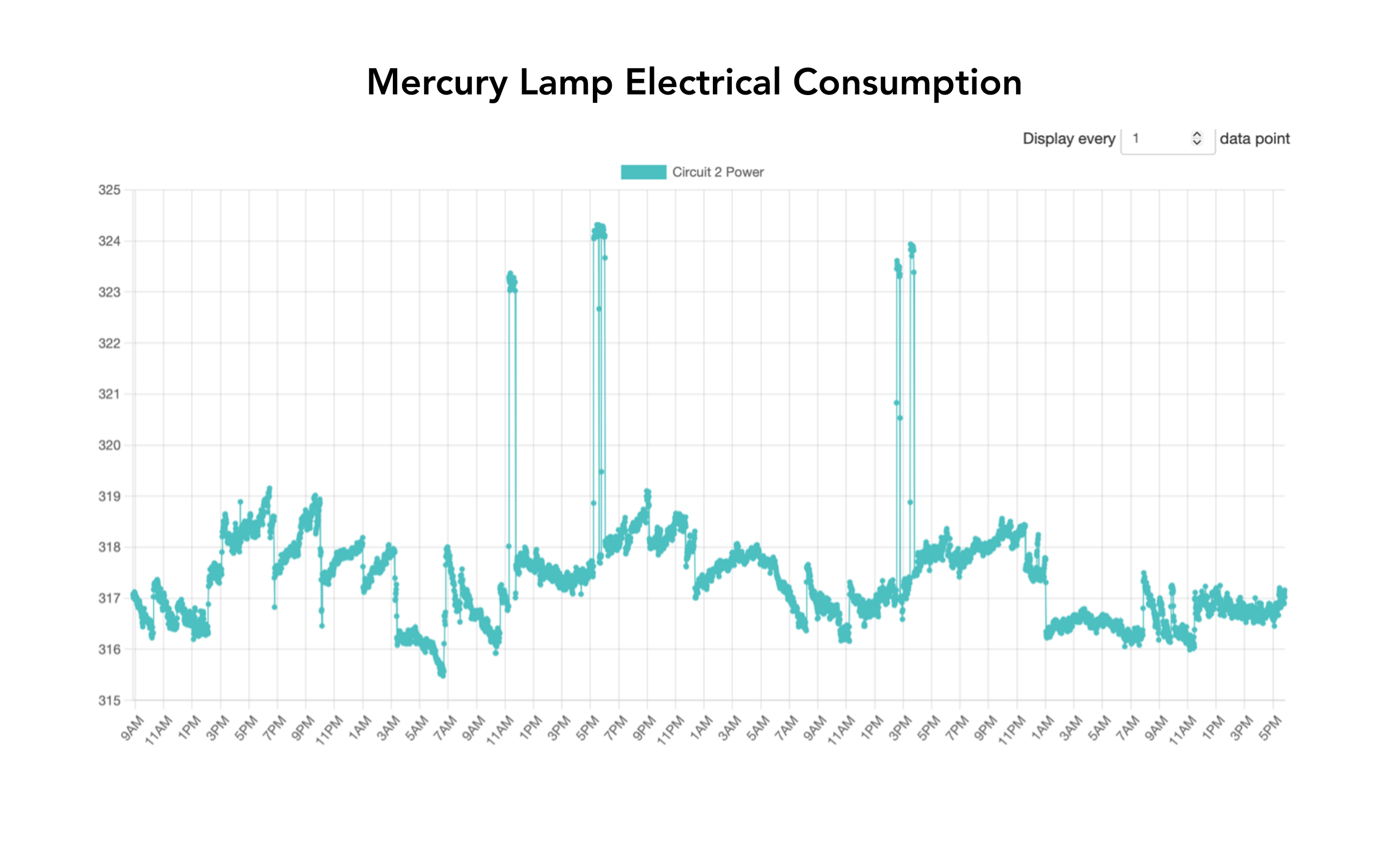
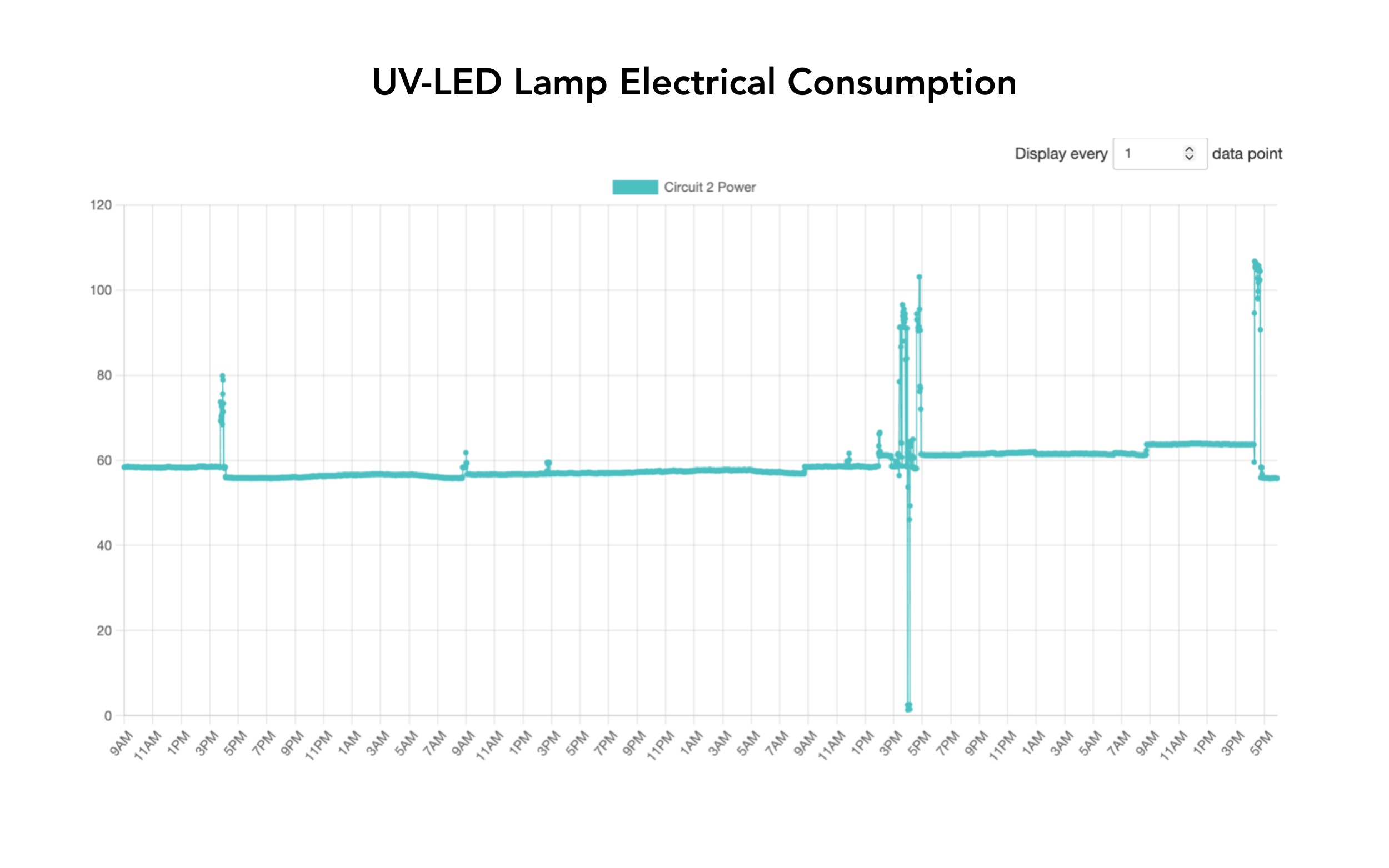
As part of this upgrade, the QNFCF conducted a study of total electrical consumption of the tool when running the mercury lamps vs the UV-LED lamp. The chart below is a small sample of data displaying typical electrical consumption of the tool over several days. Based on the numbers from the chart, the MA6 running the mercury lamp on average uses 7.62kWh per day and the UV-LED at 1.42kWh per day.

The total electrical consumption used by the tool (in Watts) is shown on the Y-axis over time on the X-axis. The first chart shows data while the tool was using mercury lamps and the second chart shows electrical consumption over a similar period using UV-LED lamps. The sharp peaks seen on both charts is activity by users when running UV exposures for patterning and testing.

The total electrical consumption used by the tool (in Watts) is shown on the Y-axis over time on the X-axis. The first chart shows data while the tool was using mercury lamps and the second chart shows electrical consumption over a similar period using UV-LED lamps. The sharp peaks seen on both charts is activity by users when running UV exposures for patterning and testing.
Other Savings
The use of UV-LED upgrade also eliminates the additional nitrogen purge cooling required by existing mercury lamps. Furthermore, the elimination of future regular maintenance tasks and consumables required by mercury lamps is a considerable advantage.
|
Mercury Light Source |
UV-LED Light Source |
|||
|
unit |
total |
unit |
total |
|
|
Replacement lamp |
$ 525.00 |
N/A |
N/A |
N/A |
|
Annual Lamp Cost |
N/A |
$ 7,665.00 |
N/A |
N/A |
|
Ellipsoidal Mirror (consumable) |
$ 396.00 |
N/A |
N/A |
N/A |
|
45° Dichroic Mirror (consumable) |
$ 756.00 |
N/A |
N/A |
N/A |
|
Consumables Annual Cost |
N/A |
$ 1,152.67 |
N/A |
N/A |
|
Annual Nitrogen purge (cooling) |
N/A |
$ 969.38 |
N/A |
N/A |
|
Annual Electricity Cost |
N/A |
$ 417.00 |
N/A |
$ 77.17 |
|
Total Annual Cost |
N/A |
$ 10,204.05 |
N/A |
$ 77.17 |
Acknowledgements
This new capability has been made possible with support from the 2025 Sustainability Action Fund sponsored by the University of Waterloo Sustainability Office with additional supporting funds from the University of Waterloo Transformative Quantum Technologies group. Questions about capabilities, access, and support can be directed to Ken Speirs.