The University of Waterloo School of Architecture is a leader in design education and research.
Offering a fully cooperative professional program, Waterloo Architecture is the only Canadian school of architecture to have a permanent international facility, which has operated since 1979 in Rome, Italy. The school attracts top students from across Canada and around the world and has been rated the greenest architecture curriculum in Canada.
Find out more about Waterloo Architecture.


News

Students sweep national steel design competition
University of Waterloo architecture and engineering students claimed the top three prizes at the 2025-2026 Canadian Institute of Steel Construction (CISC) Architectural Student Design Competition. James Miller and Luke Carone won the Award of Excellence for Resonance, while the teams behind Thirteen Ascents and UBC Tropical Conservatory secured second and third place, respectively. The national contest challenges students to creatively utilize exposed structural steel in ambitious architectural frameworks. Under the guidance of professors Terri Meyer Boake and Cory Zurell, the winning Waterloo projects were recognized for their unique interplay of scale, light, and natural greenery.

Call for submissions, Masterworks Curator/Exhibitor
Alumni applications are now open for the 2026 Masterworks exhibition curator.
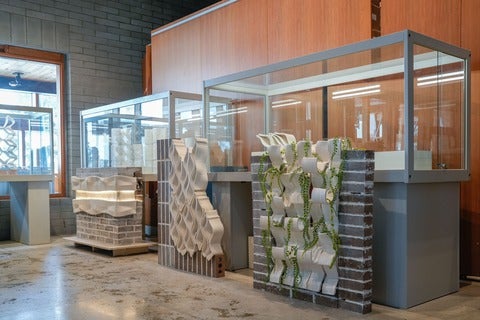
Waterloo Students work showcased at Canadian Clay & Glass Gallery
Material Syntax: 3D Printed Masonry Façade Systems is on view at the Canadian Clay and Glass Gallery from January 16 – March 27, 2026
Events

Paths to Practice
Paths to Practice is coming this fall 2026, hosted by the University of Waterloo’s School of Architecture and the Co-Operative Education Department. This event is an excellent opportunity for employers to network with students across both the Bachelor of Architectural Studies Program and the Master of Architecture Program, helping to expand co-op and hiring applicant pools, while also learning about recent research and successes coming out of the school.

Fall Open House 2026
Join us on Saturday, November 14, 2026, between 10 a.m. and 4 p.m. to see what makes Waterloo Architecture one of North America's top architecture schools.