September 18 - Joseph Kunkel - An Architecture of Belonging: The Role of Design in Indigenous Culture
October 9 - Philip Beesley - Reflections on Open Space: Metastable, precarious, resilient
October 23 - Alex Yueyan Li & Masha Malek - Out of Stock
November 13 - Andrew Ruff - De-carbonizing Design: Notes from the Field
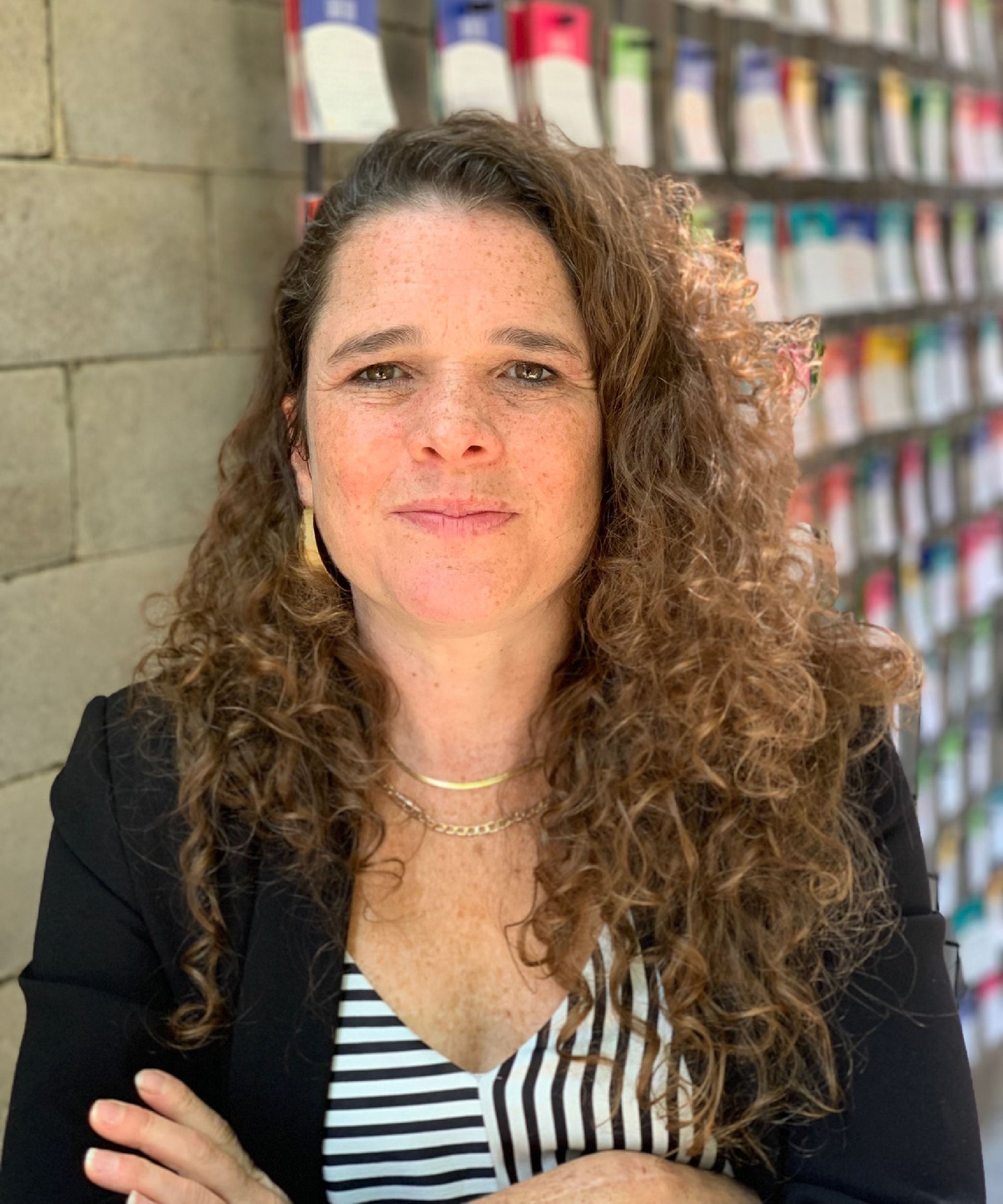
Joseph Kunkel, MASS Design Group
Thursday, September 18, 2025
4:30 pm, Cummings Lecture Theatre
A citizen of the Northern Cheyenne Nation, Joseph Kunkel is a community designer and educator, focused on sustainable development practices for Indigenous communities. As a Principal at MASS Design Group, Joseph directs the Sustainable Native Communities Design Lab in O’ghe P’oghe (Santa Fe, New Mexico).
Joseph’s work includes exemplary Indian housing projects, such as the Wa-Di Housing Project, a 41-unit affordable housing development supported by the National Endowment for the Arts and ArtPlace America. His research on affordable housing was developed into emerging best practices, leading to an online Healthy Homes Road Map for tribal housing development, funded by HUD’s PD&R Office.
In 2019, Joseph was awarded an Obama Fellowship in recognition of his work with Indigenous communities. In 2018, he received a Rauschenberg SEED grant from the Robert Rauschenberg Foundation to expand his work in arts based community development and a 2019 Creative Capital Award for his work on the Northern Cheyenne Healing Trail. Joseph is a Fellow of the inaugural class of the Civil Society Fellowship, a partnership of ADL and The Aspen Institute, and a member of the Aspen Global Leadership Network.
The University of Maryland’s Alumni Association awarded Joseph the 2021 inaugural Elaine Johnson Coates Award. Most recently, Joseph was named a 2022 Rubinger Community Fellow by the Local Initiative Support Corporation (LISC). He is a past recipient of the Enterprise Rose Architectural Fellowship.
Joseph holds a Master of Architecture & Urban Design from the University of Maryland and a Bachelor of Science in Architectural Engineering from the University of Hartford, where he graduated magna cum laude.
Hosted by Professor David Fortin.
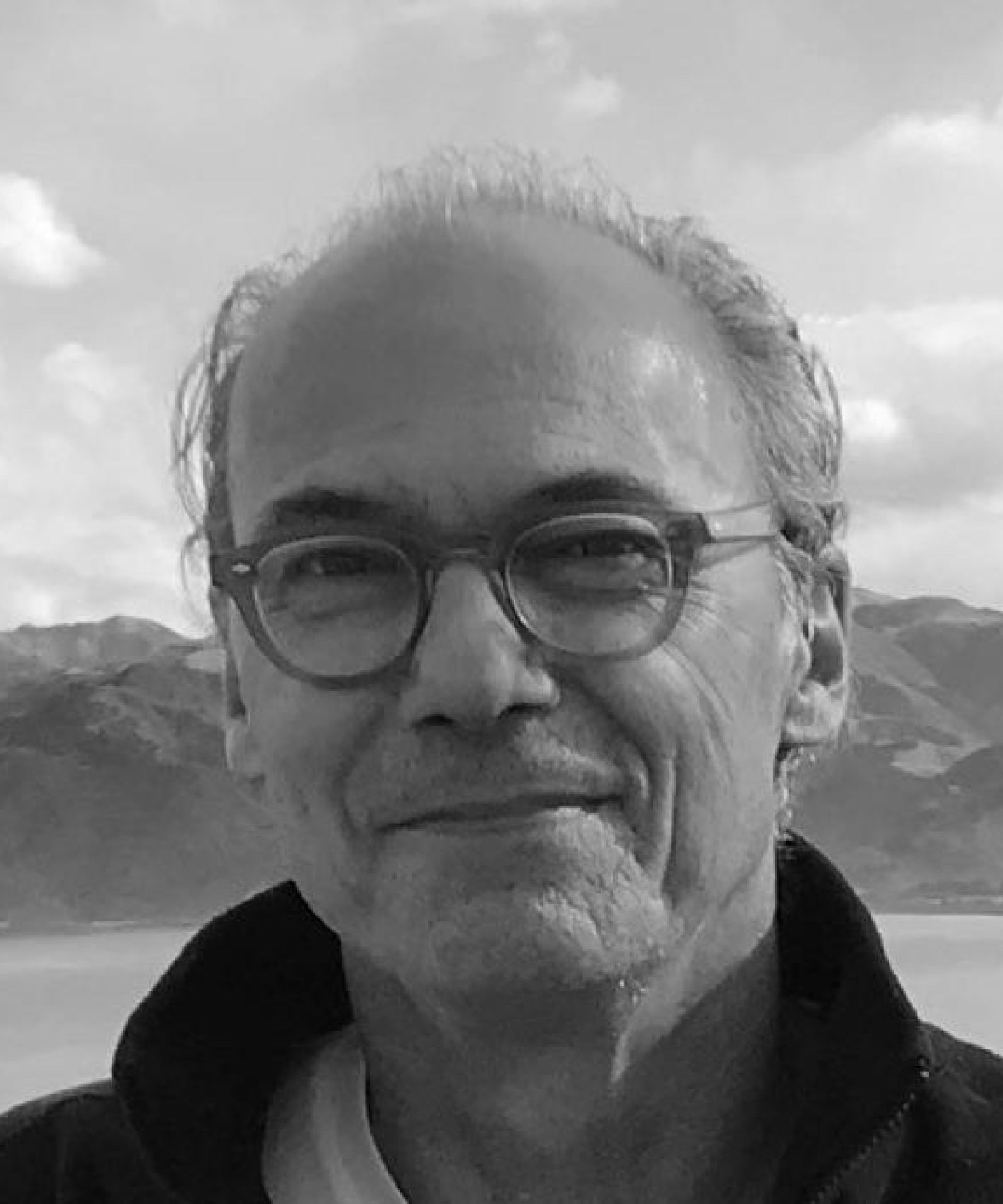
Philip Beesley, University Professor Emeritus, Living Architecture Systems Group
Thursday, October 9, 2025
4:30 pm, Cummings Lecture Theatre
This talk will outline a conceptual approach to current architecture offering precarious instruments that can indicate possible emerging realities. A tough and resilient optimism can be expressed within new kinds of form-language that are delicate, and open. What is coming in our future? How can we speak of the future when the world seems almost unspeakably insecure?
It is tempting to respond by building closed walls around our homes and closed shells around each of our individual worlds. Yet new science tells me that life is always open, not closed. It tells us that life is continually arising and continually being created. My work is based on this new science. The hovering, oscillating membranes that are gathering within this work speak of worlds arising in fertility. They invite us to be open, instead of closed. With these architectures, the boundaries of our own homes and cities and even our own bodies might resemble crystalline snowflakes and petaled flowers. We can be unapologetically fragile.
Hosted by O'Donovan Director / Associate Professor Maya Przybylski
Philip Beesley is widely known for his immersive sentient physical environments. His current research focuses on the architectural implications of dissipative adaptation and biogenesis at the boundary between mineral and organic realms, revealing fertile qualities. His installations were presented twice at the Venice Biennale for Architecture and are now touring Europe and Oceania. His collaborations with haute couture designer Iris van Herpen appear within 15 collections.
Integrative probes offer paradigms, tools and frameworks for the emerging discipline of living architecture. Beesley has created an interdisciplinary organization in the Living Architecture Systems Group located at the University of Waterloo and connecting some sixty organizations and 150 member researchers. He has contributed innovative curriculum frameworks across education and practice. A multi-year collaboration with TU Delft reaches across multiple departments and research groups. Awards distinguishing his collaborative work include two Governor General's awards for Architecture, the Canadian Prix de Rome, ACADIA Design Excellence, ACADIA Innovation in Research, VIDA, and FEIDAD. The University of Waterloo awarded Beesley the singular title of University Professor in 2023.
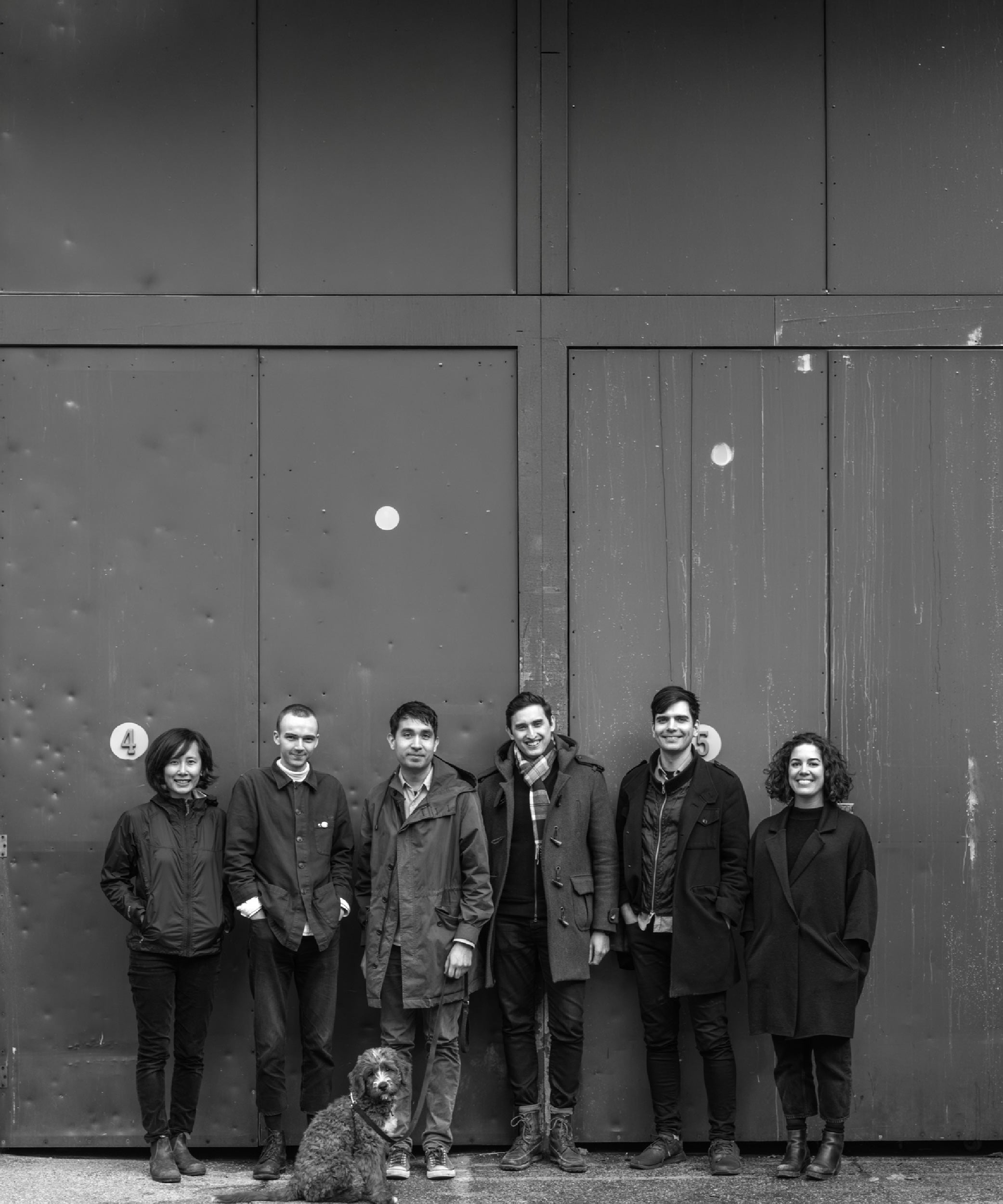
Alex Yueyan Li & Mahsa Malek, 11x17
Thursday, October 23, 2025
4:30 pm, Cummings Lecture Theatre
Architects do not make buildings, and they certainly do not make materials; they specify. The “out of stock” sign, often considered as a hiccup in procurement, is in fact a threshold where the ethical reach of architecture becomes visible, yet remains perpetually at risk of collapse.What if architecture is never fully available? What happens when specifying itself no longer leads directly to the production of a building? Drawing on 11 x 17’s recent projects, this lecture explores a material politics of “unavailability” and speculates on new modes of architectural practice that consider how form, material, and labor entangle to produce an architecture of resourcefulness.
Hosted by Assistant Professor, Teaching Stream / Associate Director, Undergraduate Studies Fiona Lim Tung
11 x 17 is a research-driven design practice based in Toronto and Denver. Founded by Mahsa Malek and Alex Yueyan Li in 2022, the studio works across scales, producing exhibitions, installations, interiors, furniture, books, and buildings. Works undertaken by 11 x 17 explore architecture’s material politics, approaching building construction as a conceptual device to engage larger issues around resources, labor, and form. Experientially rich and economically accessible, 11 x 17’s speculative and built projects have appeared in the US, Canada, and China. In 2025, the practice was named a winner of the League Prize by the Architectural League of New York. Their work has been featured in e-flux, Architectural Record, AZURE, and Archinect, New York Review of Architecture and in institutions such as the Chicago Architecture Biennial, Harvard University, DesignTO, and the Denver Art Museum.
Mahsa Malek holds a Bachelor of Architectural Studies from the University of Waterloo School of Architecture and an MArch from Princeton University School of Architecture. She is currently a lecturer at the John H. Daniels Faculty of Architecture, Landscape and Design at the University of Toronto and adjunct faculty at the University of Waterloo School of Architecture. As an executive committee member of BEAT (Building Equality in Toronto), Malek was awarded the RAIC Advocate for Architecture award in 2024. She received the Suzanne Kolarik Underwood Prize for Excellence in Design from Princeton University in 2020.
Alex Yueyan Li holds a Bachelor of Architectural Studies from the University of Waterloo School of Architecture and an MArch from Harvard University GSD, where he was awarded the 2022 Irving Innovation Fellowship Research Grant and the 2019 Clifford C.F. Wong Prize in Housing Design. He is currently an assistant professor at the University of Colorado Denver’s College of Architecture and Planning.
Thursday, November 13, 2025
4:30 pm, Cummings Lecture Theatre
Andy Ruff is the Research Director at Gray Organschi Architecture and the Timber City Research Initiative, where he focuses on developing a comprehensive approach for incorporating timber construction into cities, an approach which simultaneously addresses regional material flows, economies of carbon generation and sequestration, the development of new industrial processes, and the complex spatial, architectural, legal, and logistical challenges of constructing timber buildings in dense urban centers. He previously held appointments as Critic at the Yale School of Architecture, Visiting Assistant Professor at Wesleyan University, and Lecturer at the Georgia Institute of Technology, and served as part of the guest faculty at the Roger Williams School of Architecture, Art, and Historic Preservation, where he led design research into the applications of mass timber assemblies in mid-rise building applications.
In addition to his professional degree in Architecture from the University of Tennessee, Andy holds a Master of Environmental Design from the Yale School of Architecture and has lectured and published on the subject of mass timber buildings in the global carbon economy.
Hosted by Assistant Professor, Teaching Stream Jaliya Fonseka