Waterloo’s Chemistry Advisory Council, comprised of alumni, individuals from the chemistry community, and beyond, provides strategic advice to the Chair of Chemistry, and Executive Committee of the Chemistry program at the University of Waterloo. This council serves as a bridge between the Department of Chemistry and industry, government, alumni, and other academic institutions.
Using their combined professional experiences, the Chemistry Advisory Council advises the department on immediate and long-term planning, curriculum considerations and fundraising initiatives, ensuring that the Department’s programs remain relevant, innovative, and aligned with societal and industry needs.
Current members

Maarij Baig
BSc ’16, Biochemistry
Maarij Baig is a proud alumnus of the University of Waterloo with over a decade of experience in the life sciences, specializing in bridging the gap between scientific innovation and commercial success. His career is defined by his leadership in translating complex analytical technologies from the lab into market-ready solutions that address critical societal needs, including public health and food safety.
As a co-founder and Chief Scientist at Medella Health, he was instrumental in setting the strategic vision and securing over $2.8 million in combined grant and private funding to drive biosensor technology development. His leadership continued as Chief Scientist at Spectra Plasmonics, where he directed the scientific strategy for the Amplifi ID system, a real-time analytical substance identification platform designed to combat the opioid crisis. In his current role as Head of Strategy, he is guiding the global commercialization of Toxin Alert, a groundbreaking platform for rapid marine toxin testing, which includes directing the large-scale validation studies required for regulatory approval. He is committed to applying his experience to the council's mission, ensuring the Chemistry program remains a premier launching pad for future leaders in the field.

Alex Brown
BSc ’92, Chemical Physics
Alex Brown obtained his BSc degree from the University of Waterloo and his PhD from the University of Western Ontario. He then held post-doctoral positions at the University of Bristol, the University of Alabama, University of Western Ontario, and Emory University. Alex joined the Department of Chemistry at the University of Alberta in 2003, and he is currently a Professor and Department Chair.
His group pursues diverse research in the field of computational and theoretical chemistry including photochemistry and photophysics of fluorescent proteins, small molecule biofluorophores, and phosphorescent inorganic species; molecular quantum dynamics and potential energy surface fitting; optimal control theory for laser control; physical organic chemistry; as well as understanding novel bonding and structure in inorganic materials. He has published 130+ research articles, given 100+ presentations around the world, and received awards for teaching and mentorship. He is an associate editor of the Computational and Theoretical Chemistry section for the Canadian Journal of Chemistry, serves as the President for the Canadian Society of Chemistry, served as the past-chair, chair, and vice-chair for the Physical, Theoretical, and Computational Chemistry division of the Canadian Society of Chemistry, and has served over 15 years as the secretary/treasurer for the Canadian Association of Theoretical Chemists.

Christina Cella
BSc ’02, Biochemistry
Christina Cella obtained her B.Sc. (Honours) from the University of Waterloo, her B.Sc.Phmfrom the University of Toronto, and most recently an Executive Master of Health Administration from University of Ottawa. Currently, she is a Clinical Pharmacist Professor, sharing her time between The Ottawa Hospital and the School of Pharmaceutical Sciences at the University of Ottawa. Christina is a pharmacist and administrator with almost 20 years of progressive experience working in a variety of healthcare settings, including hospital pharmacy, community pharmacy, telepharmacy, specialty pharmacy, consulting, medical information, and academics. Christina is also a lifelong volunteer, having served on the Board of Directors and Executive Committees of the Pembroke Regional Hospital, the Canadian Society of Healthcare-Systems Pharmacy, the Hospital Pharmacy Section of the International Pharmaceutical Federation, West Side Pride, and most recently the Joan of Arc Academic Society. Her strengths are in relationship management, collaboration, and problem-solving and she is passionate about improving patient care; diversity, equity, and inclusion; lifelong learning; and contributing to a healthy workplace culture.

Terry Gilton
Partner, Celesta Capital
Terry Gilton is a Partner with Celesta Capital. His 37-year career in the semiconductor industry includes R&D in materials, memory and processing devices, sensors, algorithms, as well as extensive experience bringing these technologies to production. He began his career in R&D at Micron Technology where he eventually became VP of R&D for the rise of CMOS imager technology, delivering the sensor to the Motorola Razr and first iPhone. He was recruited by Apple to create a sensor technology development team as its Senior Director of Sensor Technology, reporting to the SVP of Engineering. At Apple, Terry’s team was involved in all product lines and all sensing modalities, and he was personally responsible for many technologies used in current Apple products.

Jeffery Hendrycks
BSc ’09, Biochemistry
Jeffery Hendrycks is a pioneer in laboratory informatics, dedicated to transforming how research and manufacturing organizations manage scientific data. He has been at the forefront of lab automation and software development that replace manual processes, paper-based systems, and siloed databases with fully integrated digital solutions.
At Thermo Fisher Scientific’s Digital Science and Automation Solutions division, Jeffery specializes in laboratory information management systems (LIMS) and informatics platforms that simplify quality control, improve regulatory compliance, and accelerate product development. He has led the adoption of automation-driven workflows for some of the division’s largest global customers for measurable gains in efficiency and scientific accuracy.
Jeffery’s career began as a synthetic biochemist at Toronto Research Chemicals, where he gained hands-on insight into the challenges that automation and software could solve. In roles at Advanced Chemistry Development (ACD/Labs), he collaborated with teams to design custom software applications that automated complex spectroscopic data analysis — empowering R&D groups to innovate faster and at scale. At Abbott, he further advanced digital strategies in manufacturing and quality control, deploying IT systems that minimized overhead while enhancing compliance across pharma, biotech, and consumer goods. His
Today, Jeffery is recognized as a trusted partner for organizations pursuing digital transformation in the lab. His work reflects a commitment to innovation, automation, and empowering laboratories to achieve more with technology.

Michael Houston
BSc ’87, Chemistry; PhD ’93, Chemistry
From an early age, Mike Houston enjoyed strong ties to the University of Waterloo. As the son of long-time Kinesiology professor, Michael Sr, he and his family lived on campus. He regularly attended Warrior hockey and basketball games, so it was no surprise that he chose to attend the University Waterloo as a student. After receiving his BSc and PhD in chemistry, Mike pursued careers that fed his fascination with biotechnology.
Mike initially focused on peptide and proteins, but in the early 2000s began investigating new therapeutic modalities based on nucleic acids. During this time, he was involved in developing delivery systems that were licensed to multiple companies. He pursued an interest in mRNA, leading R&D departments to develop drugs for orphan liver diseases. When COVID-19 arrived, and the use of mRNA exploded, which resulted in the need for companies to make mRNA as well as the novel reagents and raw materials required for these new mRNA vaccines. While working as the Chief Scientific Officer for TriLink Biotechnologies in San Diego, one of TriLink’s cap analogs was selected for Pfizer’s COVID-19 vaccine. It required a complete overhaul of the manufacturing of this compound, as well as the need to scale up production by 100-fold- ensuring his company could supply this reagent so Pfizer could start production of the vaccine.

Jake Reder
BSc ’97, Chemistry
Jake Reder cofounded Celdara Medical with Dr. Michael Fanger to bridge academic innovation and the marketplace. He led Celdara from concept to the fastest growing company across all sectors in New Hampshire three years running, and into the top ten for six consecutive years. Jake also serves as Principal Investigator of the DRIVEN Accelerator Hub which has resulted in follow-on funding (average exceeds $10M) for 67% of participants, seven clinical trials, and three products to market. In 2008, he founded the New Ventures Office at Dartmouth Medical School where he continues to serve as director.
Previously, Jake held roles at Cabot Corporation and PolyTechnos Venture-Partners. He currently serves on several business boards, including Celdara, and holds academic advisory roles at three different universities, including Waterloo. He has testified before Congress, and serves on several senate and legislative advisory boards and committees. In 2017, Jake was selected by the US SBA as New Hampshire Small Business Person of the Year.
Jake has completed executive studies at Harvard Business School, Harvard Law School, MIT’s Sloan School of Management, and Dartmouth’s Tuck School of Business. He earned a BSc at the University of Waterloo, and a PhD in Chemistry at Purdue University and Ludwig Maximilians Universität.

Charmaine Rodriques
BSc ’96, Chemistry
Charmaine Rodriques is a senior regulatory affairs leader whose career integrates science, sustainability, and regulatory strategy across North America. With more than a decade of experience in the cosmetics and consumer goods industries, she has built a reputation for guiding organizations through complex compliance challenges while advancing sustainable product development.
Charmaine earned a BSc (Chemistry) from the University of Waterloo, a MSc (Environmental Studies) from Long Island University, and an MLS (Legal Studies and Public Policy) from Northeastern University School of Law. This multidisciplinary training equips her with a unique perspective — blending scientific rigor, environmental responsibility, and legal insight — to shape effective and forward-looking regulatory strategies. Her expertise spans advertising claims review, packaging and labeling compliance, chemical management, and product stewardship. She has led cross-functional teams in developing claims substantiation programs, ensured compliance with Canadian and US frameworks, and embedded sustainability principles into corporate product management practices.
Beyond her corporate leadership, Charmaine is committed to advancing science and mentorship. As a member of the University of Waterloo Chemistry Advisory Council, she aims to strengthen the link between academia and industry, helping prepare future scientists and regulatory professionals to meet the challenges of a sustainability-driven marketplace. She mentors emerging leaders to pursue careers at the intersection of science, policy, and industry.
Ex-officio Members
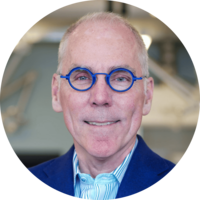
John Corrigan
Chair, Department of Chemistry

Meaghan Middleton
Director of Science Advancement,
Faculty of Science