Events

Filter by:

Limit to events where the title matches:
Limit to events where the first date of the event:
Date range
Limit to events where the type is one or more of:
Limit to events where the audience is one or more of:
Wednesday, March 13, 2019 2:30 pm - 5:20 pm EDT (GMT -04:00)

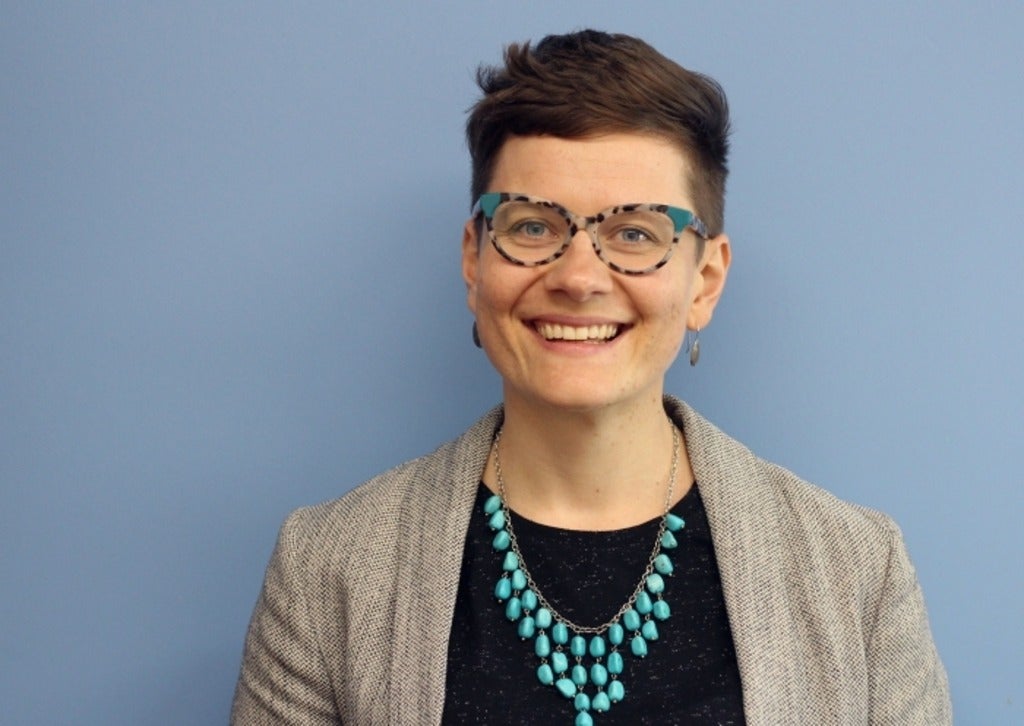
Mobility, Identity, Literacy: Mennonites by Christine Kampen Robinson

On March 13, alumna Dr. Christine Kampen Robinson (former UWaterloo PhD-student in Germanic & Slavic Studies) will come back to campus to present on her dissertation research in our graduate course “Language, Identity and Mobility” and to participate in the graduate seminar. Her research on Low German-speaking Mennonites from Mexico with a focus on identity, literacy, and language learning in this migration context encompasses several aspects of the course.
Wednesday, November 24, 2021 3:30 pm - 3:50 pm EST (GMT -05:00)

Canadian Summer School in Germany - Info session

Would you like to spend Summer 2022 in Germany with students from across Canada?

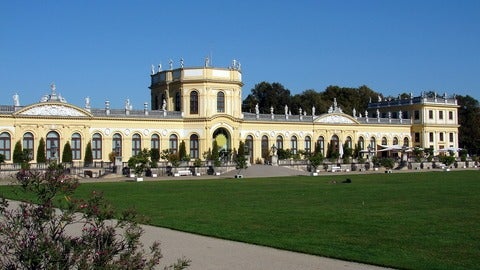
The Canadian Summer School in Germany (CSSG) offers elementary, intermediate, and advanced German language & culture immersion classes, as well as German community service-learning courses in Kassel, Germany, May 4 – June 22, 2022.

Tuesday, November 30, 2021 11:30 am - 11:50 am EST (GMT -05:00)

Canadian Summer School in Germany - Info session

Would you like to spend Summer 2022 in Germany with students from across Canada?

The Canadian Summer School in Germany (CSSG) offers elementary, intermediate, and advanced German language & culture immersion classes, as well as German community service-learning courses in Kassel, Germany, May 4 – June 22, 2022.

Thursday, March 5, 2026 7:00 pm - 9:00 pm EST (GMT -05:00)

Priscilla Layne

Swiss Postcolonial Literature? Reading Martin Dean's Meine Väter (2003) Through Trauma, Mutism, and Third Space

Priscilla Layne

Martin Dean’s novel Meine Väter (“My Fathers,” 2003) follows Robert, a Swiss man of Indo-Trinidadian origin, whose daughter’s birth triggers an existential crisis over his uncertain identity. Raised by his Swiss mother and Indo-Trinidadian stepfather, Robert seeks answers from his biological father, Ray. Yet when he finally finds Ray in London, living in a nursing home and mute following a racist attack, Robert’s search becomes an exploration of absence rather than revelation. Robert and his father’s subsequent journey to Trinidad unfolds as a quest for truth that remains unresolved, fragmented across conflicting accounts from relatives, friends, and cultural artefacts. I argue that Dean’s novel employs psychoanalytic and postcolonial frameworks, in particularly trauma, hybridity, dislocation, and Homi Bhabha’s “third space,” to stage the impossibility of recovery and self-coherence. Ray’s muteness functions as both the bodily trace of colonial violence and an aesthetic “void,” positioning Meine Väter as a compelling example of Swiss postcolonial literature.

Part of The Diefenbaker Lectures, a series of talks by leading scholars in German studies.

Priscilla Layne is Professor of German and Director of the Center for European Studies at the University of North Carolina at Chapel Hill.


If you wish to attend, please register at Eventbrite - there's a reception after the lecture, and we want to make sure everyone gets something to eat and drink!

Thursday, March 26, 2026 7:00 pm - 9:00 pm EDT (GMT -04:00)

Hannah Eldridge

The (Germanophone) Poem and the (Connected) World

Hannah Eldridge

I bring discussions of lyric poetry and its affordances together with thinking about race and identity, specifically through postcolonial theory and poetics. Drawing on Édouard Glissant’s conception of “Relation” as multidirectional and dynamic interconnection, I trace paths from Rainer Maria Rilke in Paris to Algeria, Sudan, and the Caribbean. In doing so, I aim to re-think the canon and the margins of German poetry as porous and open to contestation. This means both expanding definitions of “Germanness” and setting Germanophone and other language texts into relation, tracking routes of mutual strangeness and influence.

Part of The Diefenbaker Lectures, a series of talks by leading scholars in German studies.

Hannah Eldridge is Professor of German at the University of Wisconsin-Madison where she also edits the scholarly journal Monatshefte.


Please register at Eventbrite -  there's a reception after the lecture, and we want to make sure everyone gets something to eat and drink!

Monday, April 6, 2026 7:00 pm - 9:00 pm EDT (GMT -04:00)

Anjeana Hans

From Vienna to Hollywood: Independent Films, Exile, and the Shaping of Hollywood Genre

Anjeana Hans

When the Nazis rose to power in Germany in 1933, they instituted laws that systematically excluded Jewish Germans from cultural and social life and thus marked the start of a wave of forced immigration. Many filmmakers, writers, and actors forced into exile initially went to Austria, where they were able to produce independent films until the Anschluss of 1938. This talk focuses on director Henry Koster, who began his career in Berlin, made several independent films while in exile in Austria, and finally reached Hollywood, where he was one of a fairly small number of exile directors to build a truly successful career. By tracing continuities across his work, I will consider how Koster’s Austrian independent films, which were marked indelibly by the experience of exile, shaped his later work and contributed to the development of Hollywood genres.

Part of The Diefenbaker Lectures, a series of talks by leading scholars in German studies.

Anjeana Hans is Professor and Chair of German Studies at Wellesley College.


If you wish to attend, please register at Eventbrite - there's a reception after the lecture, and we want to make sure everyone gets something to eat and drink!