PSCI 424 Experiences in Political Science Beyond the Classroom
PSCI 424 provides students with a unique opportunity to select a learning experience that takes them beyond the classroom and connect it to their theoretical learning in political science. These experiences can range from researching a current issue of political relevance, internships, volunteer positions, community engagement, research assistantships, etc. Throughout the term, students work towards the completion of a final project that demonstrates how their learning experience relates to contemporary politics, policy and governance.
What are the course expectations?
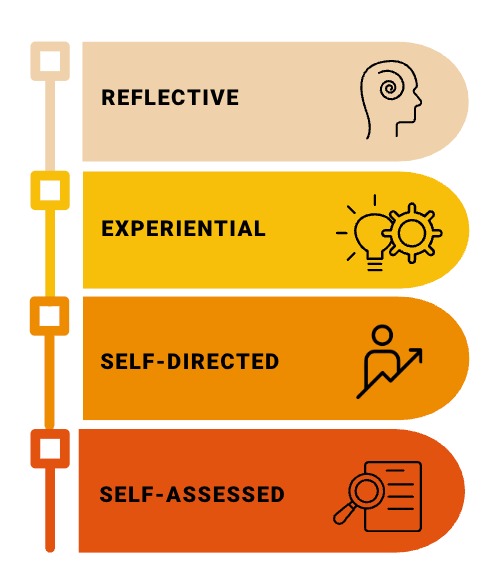
PSCI 424 uses the SLICC Framework, a self-directed, experiential and reflective learning framework, designed to scaffold and empower students to design their own learning experience. Using the framework, the student outlines their proposed learning experience and their plans for completing it. They include an audit of the skills they currently possess, those they would need to develop to undertake the project, and their plans for developing those skills. In addition, students determine how they will assess themselves as they complete their proposed learning experience. The SLICC framework emphasizes deep reflection and adaptability, allowing students to take ownership of their learning while gaining experience in setting goals, managing uncertainty, and reflecting critically on their own learning journey and development, including how they will transfer their learning to new and different contexts in the future. In essence, the framework enables students to actively participate in all aspects of their learning, from inception through to evaluation and transfer of learning considerations.
Students begin this course by submitting a course proposal that defines their individualized learning experience, the final project that they will be working on, and a roadmap for completing their project. Throughout the term, students document and reflect on their learning experience. In doing so, they will be reflecting on not only the product but also the process of their learning. At the end of the term, students will present a creative final output such as a blog, website, video, podcast, poster board etc. at the Political Science Symposium attended by their peers and professors.
What are some examples of projects that students have worked on?
Type of learning experience: Research Project
- Project title: President Re-Elect: Donald Trump's First Six Months in Office
- Final project output: An Anthology of Poems
Type of learning experience: Arts International Exchange in Switzerland
- Project title: A Comparative Study of Canada and Switzerland’s Youth Populations and Political Engagement
- Final project output: Video
Type of learning experience:Internship/Volunteer position at Community Healthcaring, Kitchener-Waterloo
- Project title: Community Healthcare Centers: An Effective Model for Healthcare in Ontario?
- Final project output: Poster Board

How does grading work in this course?
Grading in this course is a combination of student self-assessment and instructor assessment.
Students are responsible for assessing their progress towards the learning outcomes defined in their proposal. To do this, students will review the reflections they've added to the PebblePad workbook and the interim presentation to justify the numerical grade they assign to themselves based on a self-assessment rubric (provided). This is worth 30% of the total grade. The remaining 70% of the grade will be assessed by the course instructor and will comprise the proposal and the final project.
"It's a great opportunity to branch out from typical academic learning, research a topic you're interested in, and get really involved in it." (Student testimonial)
What is the role of the course instructor?
The course instructor advises, provides timely feedback, and supports students in the achievement of the learning outcomes they define for themselves. The instructor thus acts as a mentor, rather than a traditional lecturer.
How should I enroll in this course?
You will be contacted by the PSCI Advising Team when you are entering your level 3B, 4A, or 4B term to determine when you should take this course. You will then be enrolled automatically. Note that this course is only offered in the Winter term. Once you are successfully enrolled, you will be asked to fill out a form outlining your planned learning experience by the first day of class.
If you have any questions, please email psciadvising@uwaterloo.ca.