Professors

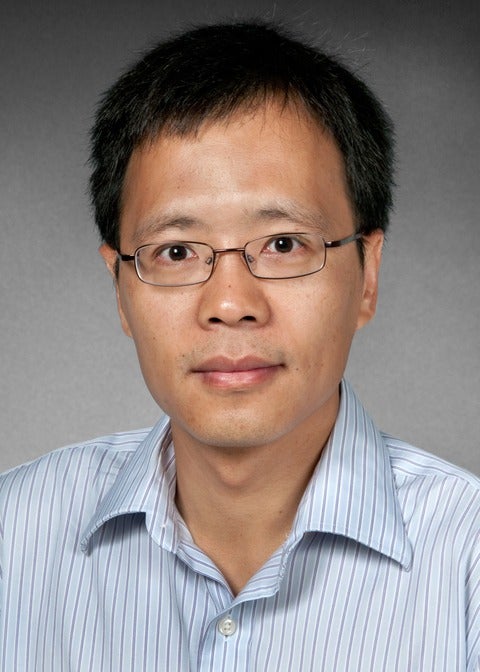
David Matthews

Professor Emeritus

Contact Information:
David Matthews

Research interests

Professor Matthews' research interests encompass the fields of biostatistics, quality improvement-especially in relation to health care-and statistical consulting. He is particularly concerned with finding effective ways to communicate statistical ideas and results to clinical researchers.

Contact Information:
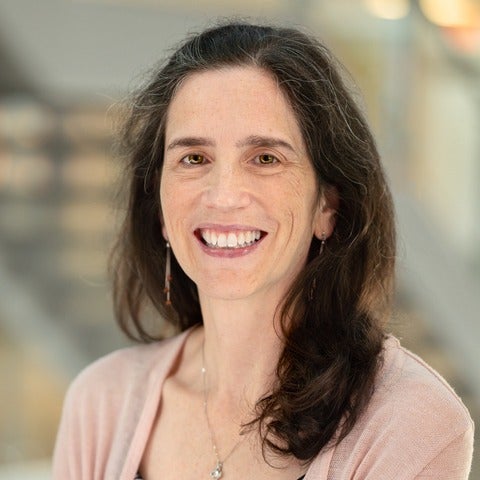
Christiane Lemieux

Christiane Lemieux's personal website

Research interests

Professor Lemieux is interested in quasi-Monte Carlo methods and their applications. These methods can be thought of as deterministic versions of the well-known and highly used Monte Carlo method. They are designed to improve upon the performance of Monte Carlo by replacing random sampling by a more uniform sampling mechanism based on low-discrepancy point sets. A major goal of Professor Lemieux's research is to improve the applicability of quasi-Monte Carlo methods to a wide variety of practical problems.

Adam Kolkiewicz

Associate Professor Emeritus

Contact Information:
Adam Kolkiewicz

Research interests

Professor Kolkiewicz's research interests are primarily in the areas of statistics and financial mathematics. In statistics, he has focused on statistical tools for time series analysis, robust methods of estimation, and asymptotic methods of inference.

Ali Ghodsi

Professor

Contact Information:
Ali Ghodsi

Ali Ghodsi's personal website

Research interests

Machine learning, Deep learning, Computational statistics, Dimensionality reduction, Natural language processing, Bioinformatics.

Professor Ghodsi's current research sweeps across a broad swath of AI encompassing machine learning, deep learning, and dimensionality reduction.  He studies theoretical frameworks and develops new machine-learning algorithms for analyzing large-scale data sets, with applications in natural language processing, bioinformatics, and computer vision. Dr. Ghodsi's work has been published extensively in high-quality proceedings and journals. He is the co-author of the "Elements of Dimensionality Reduction and Manifold Learning" (Springer)  and several US patents. His popular lectures on YouTube have more than one million views. View a complete list of his online lectures.

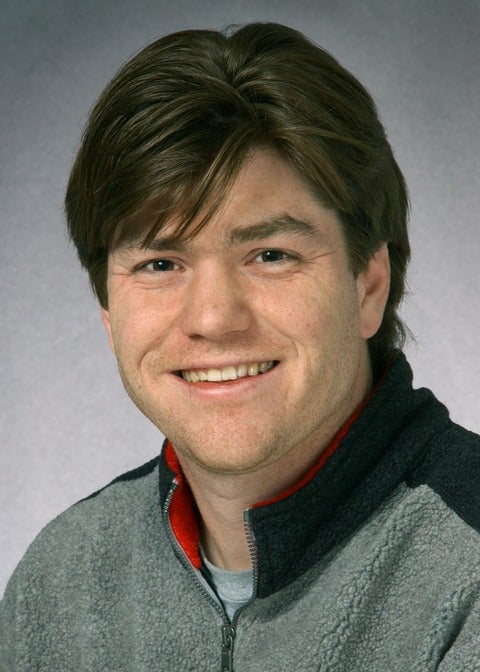
Joel Dubin

Professor

Contact Information:
Joel Dubin

​Health Data Science Lab (HDSL) Lead:

HDSL Website 

Research interests

My primary research interest is in the area of methodological development in longitudinal data analysis, including for multivariate longitudinal data, where more than one outcome, (e.g., systolic and diastolic blood pressure) are each followed for individuals over time. Methods pursued for this type of data include the correlation of different longitudinal outcomes over time using curve-based methods, and incorporating lags and derivatives of the curves. I am also interested in change point and latent response models for longitudinal data, as well as prediction models, including the consideration of similarity to improve prediction accuracy.

Steve Drekic

Professor / Associate Chair – Undergraduate Studies

Contact Information:
Steve Drekic

Steve Drekic's Google Scholar profile

Research interests

Professor Drekic has co-authored over 40 articles, and has published in key journals across several disciplines, including actuarial science, operations research, and statistics. His work has garnered particular attention in the fields of applied probability, insurance risk/ruin theory, and queueing theory. Professor Drekic's expertise lies in the use of probabilistic/stochastic techniques with advanced computational methods to analyze mathematical problems arising in several different application areas.

Cecilia Cotton

Associate Professor / Associate Chair – Undergraduate Studies

Contact Information:
Cecilia Cotton

Research interests

The underlying theme of my research interests is using longitudinal data to solve problems in public health:

  • Inference for comparing survival across multiple dynamic treatment regimens based on observational longitudinal data.
  • Applications to epoetin dosing strategies for hemodialysis subjects with chronic kidney disease.
  • Joint modeling of longitudinal and survival data in the context of causal inference.