Shoulder Shenanigans: A Comical Dive into Biomechanics, Vision, and Proprioception
Shoulder Shenanigans: A Comical Dive into Biomechanics, Vision, and Proprioception event page.
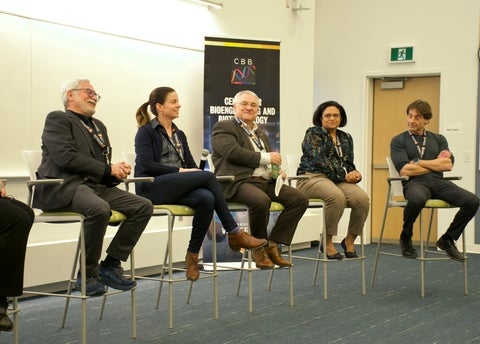
The article discusses the launch of the Clinical Council by the Centre for Bioengineering and Biotechnology (CBB), aimed at fostering collaboration between researchers and clinicians to address healthcare challenges. The council, consisting of six clinicians with diverse expertise, seeks to connect with health technology innovators and facilitate broader connections within the healthcare community. The article highlights the council's goals, upcoming events, and opportunities for engagement, emphasizing its role in bridging the gap between research and healthcare innovations.
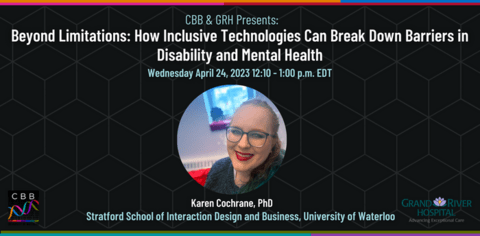
Imagine a world where everyone, regardless of ability, can lose themselves in the joy of playing a videogame, or the thrill of playing music, or even the satisfaction of being able to water your plants or grow your first tomato? Accessible technology can make this world a reality. Dr. Karen Cochrane is looking at how we can better design assistive technologies that can help support everyone to participate and enjoy their hobbies no matter their cognitive or physical ability. In this talk she will discuss some of her previous work and ongoing projects in her lab the Embodied Computing Lab where she is working on projects in both the area of accessible technology and designing technology to support mental health.
The second opportunity for Engagement Sessions will occur in November 2024. Sessions are intended to provide face-to-face interactions with relevant Clinical Council members to discuss current or future project ideas, and develop potential partnerships, collaborations, and receive expert clinical perspectives and feedback. Priority for this round of talks will be given to research applicants whose research areas align with the Clinical Problem Space Talks.
This event will occur in October and feature a blend of health care professionals giving invited talks on prominent and urgent health care problems they see in their own contexts and professional settings along with opportunities for students to showcase their current work.
The first opportunity for Engagement Sessions will occur in May/June 2024. Sessions are intended to provide face-to-face interactions with relevant Clinical Council members to discuss current or future project ideas, and develop potential partnerships, collaborations, and receive expert clinical perspectives and feedback. Researchers will need to apply to participate in this event.
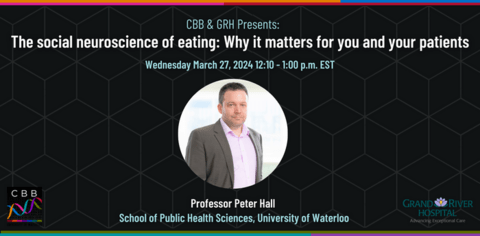
Eating is part of everyday life and takes on special significance for all of us at one point or another. Nearly all cultural activities take place in the presence of foods, many with an emphasis on accentuated flavour, colour, and texture. Celebration of life through food is common around the world, and this is a hint as to the special significance of food in our lives. But what makes food desirable, and worthy of expressing joy and celebration? Does any of this matter for patients in healthcare settings? In this talk I will explore the special significance of food in cultures around the world, and the role that the brain plays in rendering food worthy of special significance. This will be a different take on food and eating than would be prescribed by a conventional focus on health promotion; however, the key to addressing the need for flavour and the relationship between flavour and other sensory dimensions of foods will be explored as critical to promoting healthy diets. Brain networks involved in restraint, indulgence and decision-making will be given special consideration, and we will review some findings from the neuroimaging and brain stimulation literature. Importantly, our coverage of the topic of eating will be framed by the evolutionarily ancient roots of the drive toward calorie maximization present in nearly all heterotrophic organisms, including herbivores and carnivores, but especially omnivores (e.g., humans). We will conclude with a discussion of why understanding these dynamics are critical to consider when tailoring menu options and dietary prescriptions for patients, and why we should consider the relationship between brain health and eating as being a reciprocal one.
This session covers the basics of Intellectual Property (IP) protection with a focus on patents.
You’ll learn about the different types of IP protection available and some of the most common pitfalls to avoid. Learn about the resources available to you at the University of Waterloo, including the Waterloo Commercialization Office (WatCo). Hear how IP is used to commercialize technology through licensing or start-up creation. Included is a brief discussion on “Are You an Inventor?", this highlights some key points for consideration as this issue has come up when there may be a misunderstanding between Faculty and Grad Students.” Also included are some helpful tips for those interested in creating a Start-Up.
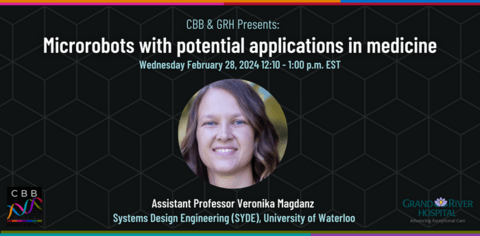
This talk will introduce micro-and nanorobots and their potential to revolutionize medicine. One of the main goals of microrobots is to make medical interventions more targeted and less invasive. Nano-and microrobots show great potential for active and remote-controlled motion inside the human body. Possible future applications include active, targeted delivery of therapeutics to diseased sites (e.g. tumours), cell delivery for regenerative therapy and non-invasive surgery. The removal of obstructions inside the body such as blood clots, renal stones or other blockages in a minimal invasive manner is another main subject of our research. This talk will give an overview of the very interdisciplinary research that combines expertise from robotics, medicine, engineering, chemistry and biology.
Arya Amiri, a PhD student at the University of Waterloo's department of Systems Design Engineering, and a trainee in the Centre for Bioengineering and Biotechnology's Training in Global Biomedical Technology Research and Innovation program, has been awarded a prestigious Vanier Canada Graduate Scholarship for 2023.