The Waterloo Centre for German Studies promotes research into any and all aspects of the German-speaking world. As part of this mandate, the WCGS encourages the communication of research findings to both academics and the broader public. The Waterloo Centre for German Studies Book Prize has been established to recognize first-time authors whose scholarly work provides a substantial contribution to our understanding of any aspect of German-speaking society.
2024 Winner - Michelle Lynn Kahn

Michelle Lynn Kahn, author of Foreign in Two Homelands. Racism, Return Migration, and Turkish-German History (Cambridge University Press), has been awarded the Waterloo Centre for German Studies Book Prize for first books published in 2024. The prize consists of a cash award of CAD $3,000 and an invitation to give a public talk on the book.
2024 Shortlist
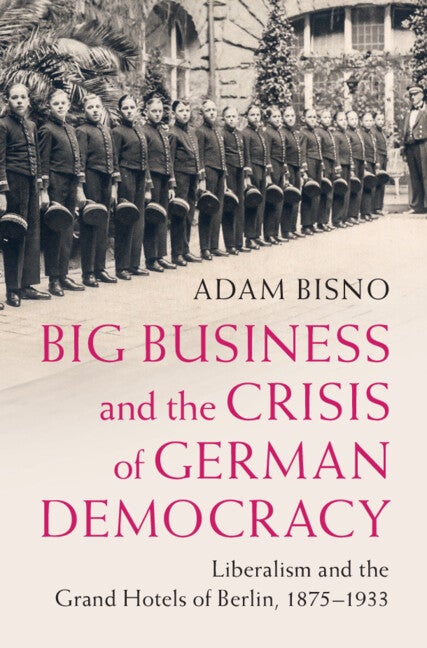
Adam Bisno. Big Business and the Crisis of German Democracy. Liberalism and the Grand Hotels of Berlin, 1875 - 1933 (Cambridge University Press)
Set in the world of Berlin’s grand hotels, this book traces a new history of German liberalism by examining the links between big business, society, and politics. Beneath the hotels’ orderly facades, class tensions simmered, erupting during World War I and persisting into the Weimar years. Doubting the republic’s ability to manage these conflicts, prominent hotel owners, many of them Jewish industrialists and financiers, allowed Adolf Hitler to use the Hotel Kaiserhof as his Berlin headquarters in 1932. From there, he orchestrated the Nazi seizure of power, the collapse of the Weimar Republic, and ultimately the destruction of his hosts, who were forced to flee.
Stephanie Galasso. Genre, Race and the Production of Subjectivity in German Romanticism (Northwestern University Press)
This book exposes German Romanticism’s deep entanglement of aesthetic philosophy with racialized models of humanity. Late Enlightenment thinkers such as Herder, Goethe, and Schiller broke with established genres to promote an idealized universality that was implicitly racialized and shaped by newly translated colonial literatures. These texts informed efforts to define a distinct “German” national tradition that celebrated freedom and modernity while reinforcing emerging concepts of whiteness. Stephanie Galasso shows how aesthetic theory, literary genre, and racialized subjectivity developed together, and how poetic forms both reflected and produced the cultural violence underlying the colonial project.

Alice Goff. The God Behind the Marble. The Fate of Art in the German Aesthetic State (University of Chicago Press)
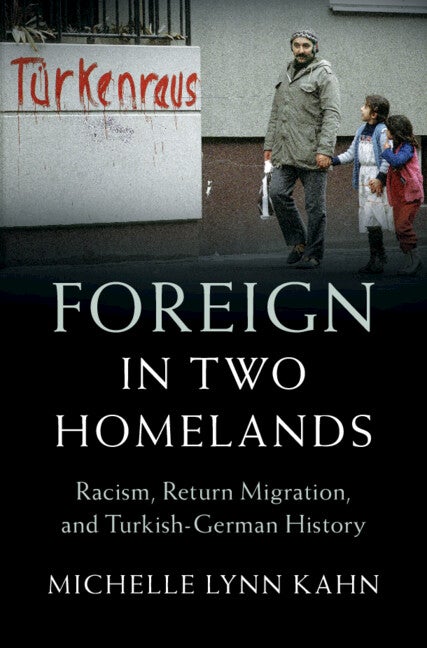
Michelle Lynn Kahn. Foreign in Two Homelands. Racism, Return Migration, and Turkish-German History (Cambridge University Press)
Foreign in Two Homelands examines the transnational history of Turkish migrants in Germany, who arrived as “guest workers” between 1961 and 1973. By the 1980s, rising racism and political backlash cast Turks as outsiders accused of unemployment, religious difference, and failed integration. In 1983, the German government enacted a controversial policy paying migrants to return to Turkey, triggering one of Europe’s largest remigration waves: 250,000 people, or 15 percent of the community, left within a year. Yet returnees found themselves rejected again, labeled Almancı (“Germanized Turks”) in their homeland. Drawing on archival research and oral histories in both countries, Michelle Lynn Kahn reveals how migrants navigated exclusion on both sides and came to feel foreign in two homelands.
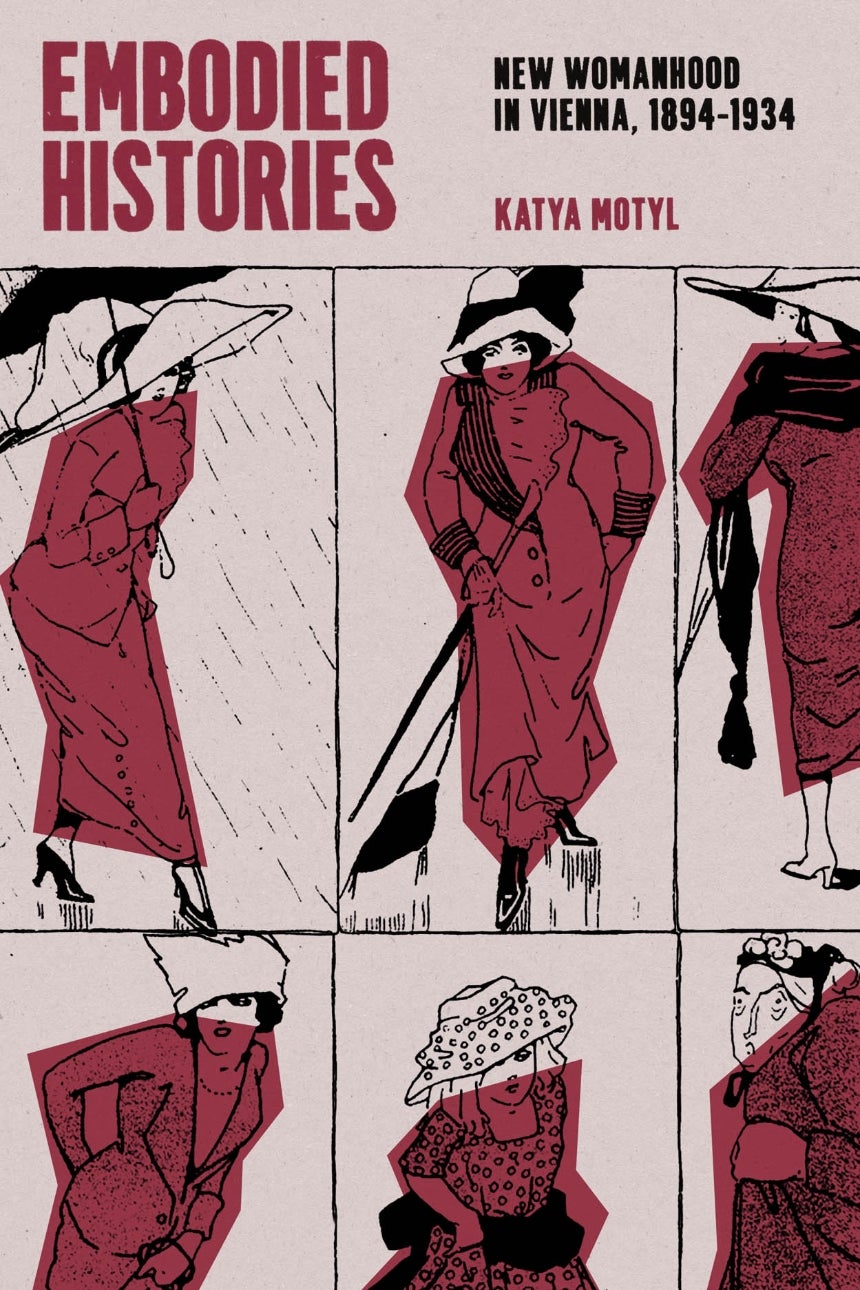
Katya Motyl. Embodied Histories. New Womanhood in Vienna, 1894-1934 (University of Chicago Press)
Embodied Histories explores the emergence of new forms of womanhood in turn-of-the-century Vienna through the everyday acts of defiance practiced by unconventional women. Katya Motyl brings to life figures who challenged gender norms through their dress, behavior, and self-expression, reshaping what it meant to exist as a woman. Focusing on seemingly ordinary practices such as loitering outside cafés and wandering city streets, Motyl shows how women actively inhabited and transformed Vienna’s modern urban spaces. The book offers a new account of how gender, the body, and the city evolved together, revealing how ways of being are deeply intertwined with the spaces people occupy.
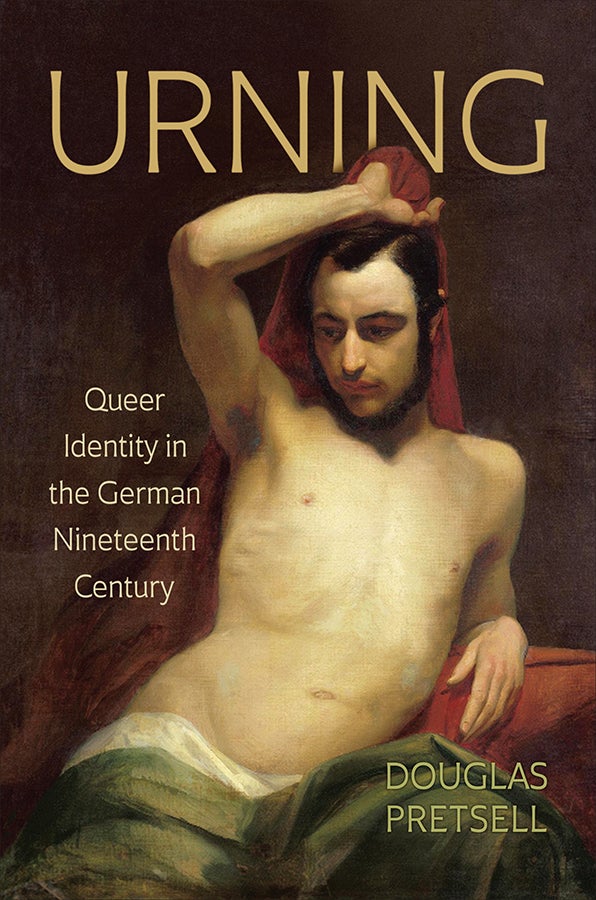
Douglas Pretsell. Urning. Queer Identity in the German Nineteenth Century (University of Toronto Press)
In 1864, German jurist Karl Heinrich Ulrichs coined the term “urning” to describe men attracted to other men and soon began campaigning against their persecution. Douglas Pretsell examines the same-sex–attracted men in German-speaking Europe who adopted the term and used it to define themselves and seek social change. Drawing on letters, memoirs, and psychiatric case studies, the book reconstructs an informal yet activist community that sought recognition and reform without formal organization or leadership. Pretsell argues that these men were self-conscious agents whose efforts helped lay the groundwork for the world’s first queer rights organization.
Johannes Wankhammer
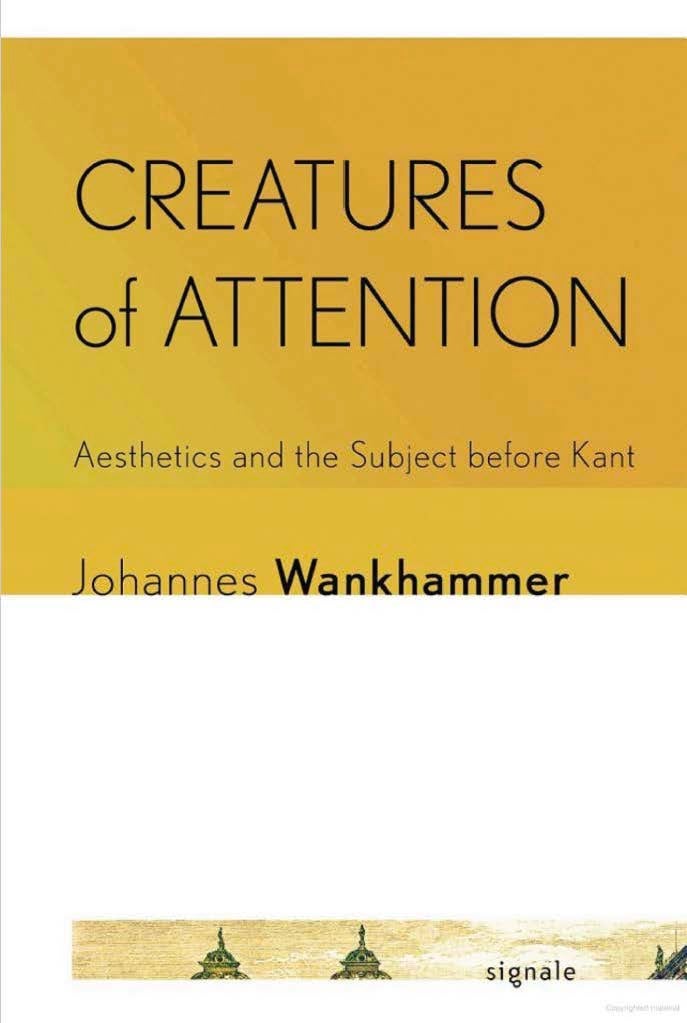
Johannes Wankhammer. Creatures of Attention. Aesthetics and the Subjects before Kant (Cornell University Press)
Creatures of Attention traces the early modern origins of today’s crises of attention. As Europe entered modernity, philosophers, scientists, and writers came to view attention as central to knowledge and autonomous agency. Focusing on eighteenth-century Germany, Johannes Wankhammer examines how concepts of attention, subjectivity, and aesthetics took on their modern meanings, showing how the control of attention became a foundation of individual autonomy. He also highlights how aesthetics, founded by Alexander Baumgarten as a science of sense perception, challenged this ideal by proposing alternative forms of selfhood and attention through art.
By the Numbers for 2024


Learn about previous WCGS Book Prize Winners and Finalists
Present and Past Winners


Click through each year to learn more about that year's Winner and Finalists.
Mailing List
Would you like to receive periodic updates about the book prize? Subscribe to our WCGS Book Prize mailing list.