COMPASS Technical Report Series, Volume 10, Issue 1, Fall 2024
COMPASS Year 11 and 12 Recruitment and Retention (pdf)
Table of Contents
Acknowledgements
Introduction
Figure 1: COMPASS School Sample for Year 11– Year 12 (2022/23 - 2023/24)
COMPASS Sample in Year 11 (2022-2023)
COMPASS Sample in Year 12 (2023-2024)
Conclusion
References
Acknowledgements
Authors
Sherry Rezvani, MPH1
Nicole Nguyen, BMSc1
Katie Burns, PhD1
Scott T. Leatherdale, PhD1
1- School of Public Health and Health Systems, University of Waterloo, Waterloo, ON Canada.
Report funded by:
The COMPASS study has been supported by a bridge grant from the CIHR Institute of Nutrition, Metabolism and Diabetes (INMD) through the “Obesity – Interventions to Prevent or Treat” priority funding awards (OOP-110788; awarded to SL), an operating grant from the CIHR Institute of Population and Public Health (IPPH) (MOP-114875; awarded to SL), a CIHR project grant (PJT-148562; awarded to SL), a CIHR bridge grant (PJT-149092; awarded to KP/SL), a CIHR project grant (PJT-159693; awarded to KP), and by a research funding arrangement with Health Canada (#1617-HQ-000012; contract awarded to SL), a CIHR-Canadian Centre on Substance Use and Addiction (CCSA) team grant (OF7 B1-PCPEGT 410 10-9633; awarded to SL), a project grant from the CIHR Institute of Population and Public Health (IPPH) (PJT-180262; awarded to SL and KP).
A SickKids Foundation New Investigator Grant, in partnership with CIHR Institute of Human Development, Child and Youth Health (IHDCYH) (Grant No. NI21-1193; awarded to KAP) funds a mixed methods study examining the impact of the COVID-19 pandemic on youth mental health, leveraging COMPASS study data. The COMPASS-Quebec project additionally benefits from funding from the Ministère de la Santé et des Services sociaux of the province of Québec, and the Direction régionale de santé publique du CIUSSS de la Capitale-Nationale.
Suggested citation:
Rezvani S, Nguyen N, Patte K, Leatherdale ST. COMPASS Year 11 and 12 Recruitment and Retention: Technical Report Series. (2024); 10 (1): Waterloo, Ontario: University of Waterloo. Available at: https://uwaterloo.ca/compass-system/publications#technical.
Contact:
COMPASS Research Team
University of Waterloo
200 University Ave West, BMH 1038
Waterloo, ON Canada N2L 3G1
compass@uwaterloo.ca
Introduction
COMPASS is an ongoing longitudinal study (starting in 2012-13) designed to follow a prospective cohort of grade 9 to 12 students attending a convenience sample of Canadian secondary schools over several years to understand how changes in school environment characteristics (policies, programs, built environment) and provincial, territorial, and national policies are associated with changes in youth health behaviours [1]. COMPASS originated to provide school stakeholders with the evidence to guide and evaluate school-based interventions related to obesity, healthy eating, tobacco use, alcohol and marijuana use, physical activity, sedentary behaviour, school connectedness, bullying, and academic achievement. Based on feedback from participating schools as well as current issues among Canadian youth, COMPASS expanded its topic areas to include mental health, vaping, and prescription drug use. COMPASS has been designed to facilitate multiple large-scale school-based data collections and uses in class whole-school sampling data collection methods consistent with previous research [2-5]. However, due to the COVID-19 pandemic in 2020, Year 8 (Y8) data collections happening in March 2020 or later were completed online instead of in-class as a function of school closures. Additional details on the transition to an online data collection format for the COMPASS student questionnaire are available [6]. COMPASS also facilitates knowledge transfer and exchange by annually providing each participating school with a school-specific feedback report that highlights the school-specific prevalence for each health behaviour outcome, comparisons to provincial/territorial and national norms or guidelines, and provides evidence-based suggestions for school-based interventions (programs and/or policies) designed to address the outcomes covered in the feedback report (refer to: https://uwaterloo.ca/compass-system/).
As previously reported [7], 182 schools participated in Year 10 (Y10) of the COMPASS study. Of the participating schools, there were 51 Ontario schools, 5 Alberta schools, 13 British Columbia schools, and 113 Quebec schools. For additional information on the recruitment and retention of schools in Y10, please refer to this technical report [7].
The purpose of this report is to provide details on the school recruitment and retention during Year 11 (Y11; 2022-2023) and Year 12 (Y12; 2023-24) of the COMPASS study.
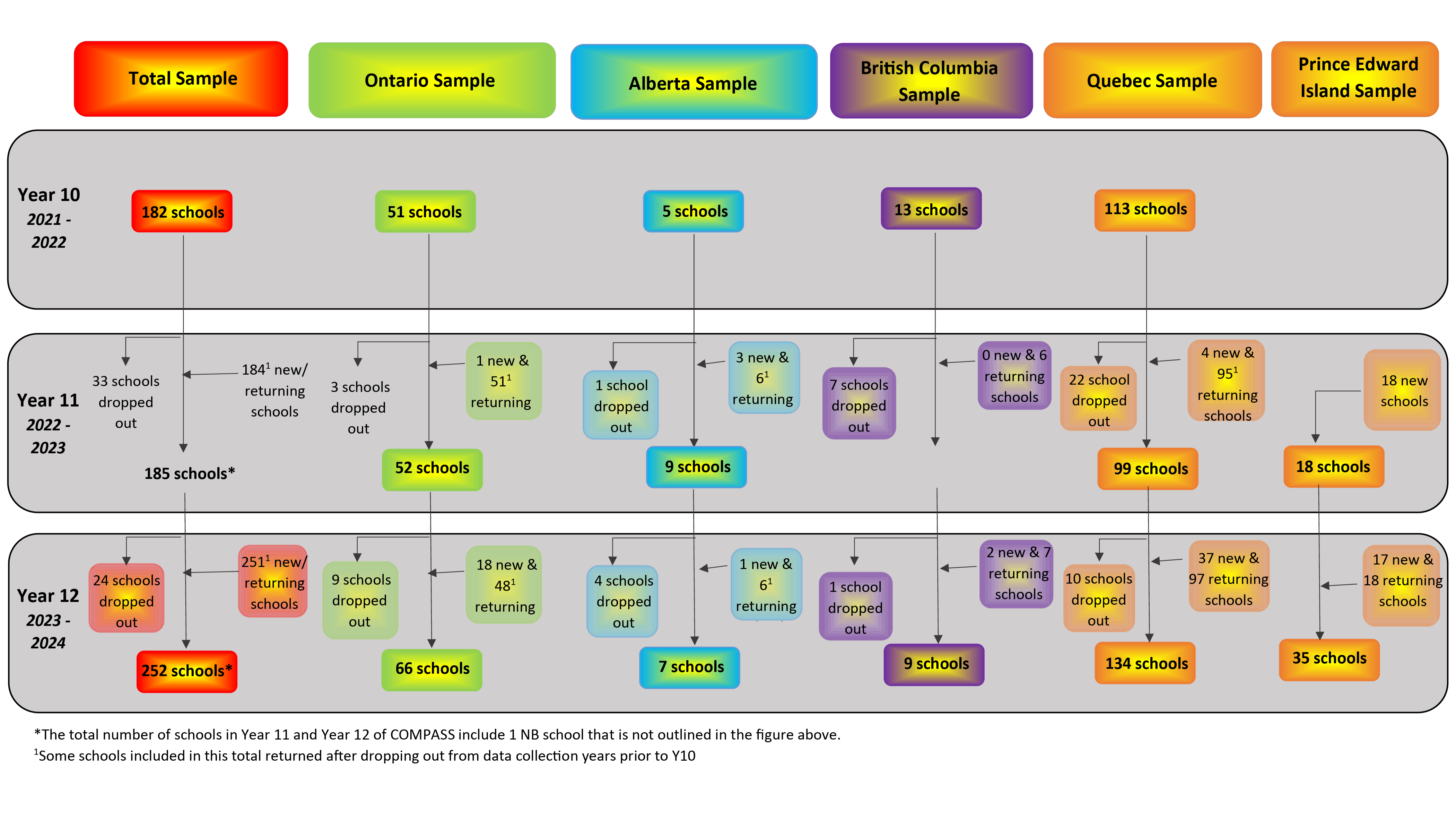
Figure 1: COMPASS School Sample for Year 11– Year 12 (2022/23 - 2023/24)
Figure 1 shows the school sample size from Y10 to Y12 of COMPASS overall and by province/territory, including annual drop out and replenishment totals. For school sample size for Year 5 to 6, please refer to this technical report [8]. For school sample size for Year 9 to 10, please refer to this technical report [7].
COMPASS Sample in Year 11 (2022-2023)
As shown in Figure 1, 185 schools participated in Y11 of COMPASS - 52 Ontario schools, 9 Alberta schools, 6 British Columbia schools, 99 Quebec schools, and 18 Prince Edward Island Schools. Of the sample, 25 schools completed their first COMPASS data collection in 2012/13 (Y1 schools), 19 schools completed their first data collection in 2013/14 (Y2 schools), 1 school completed its first data collection in 2015/16 (Y4 schools), 13 schools completed their first data collection in 2016/17 (Y5 schools), 29 schools completed their first data collection in 2017/18 (Y6 schools), 14 schools completed their first data collection in 2018/19 (Y7 schools), 11 schools completed their first data collection in 2019/20 (Y8 schools), 7 schools completed their first data collection in 2020/21 (Y9 schools) and 40 schools completed their first data collection in 2021/22 (Y10 schools).
Recruitment in Y11
A total of 283 schools (including 182 schools that participated in Y10) were contacted via email and/or phone between September 2022 and April 2023 (depending on when the school participated in Y10) with the purpose of coordinating a COMPASS data collection date for the upcoming school year (Y11). In total, there were 150 returning schools from Y10 of COMPASS (48 Ontario schools, 4 Alberta schools, 6 British Columbia schools, 91 Quebec schools, and 1 New Brunswick school). These schools participated in both Y10 and Y11. Additionally, there were 6 returning schools from Y9 of COMPASS (2 Ontario schools, and 2 Quebec schools). These schools participated in Y9, skipped Y10, and participated in Y11 again. There were 7 returning schools that participated between Y1 and Y8 but did not participate in Y9 or Y10 (1 Ontario school, 2 Alberta schools and 4 Quebec schools). In addition to the returning schools, 1 new Ontario school, 3 new Alberta schools, 4 new Quebec schools, and 18 new Prince Edward Island schools were added to the COMPASS sample in Y11.
In Y11, COMPASS received ethics approval to have grades 7 and 8 students participate in the study. COMPASS only recruited grades 7 and 8 students from secondary schools that also had students in grades 9 through 12.
Withdrawals in Y11
Out of 283 schools that were reached out to, 98 refused to participate in Y11 of COMPASS. Of total refusals, the COMPASS team did not hear from 51 schools after the initial email invitation to participate in Y11 of COMPASS despite a few follow up emails. Furthermore, 23 schools refused to participate because they were participating in other surveys or projects, 11 schools did not have the time or capacity to administer the COMPASS survey, and 4 schools did not specify a reason. Additionally, 9 schools refused to participate because of other reasons (i.e., refusal at the board level, no interest, no direct communication method with parents, etc.).
Out of total refusals, 33 schools (3 Ontario schools, 1 Alberta school, 7 British Columbia schools, and 22 Quebec schools) participated in Y10 but did not participate in Y11.
Survey Administration in Y11
In previous years, the COMPASS team advised schools to allocate class time for survey completion depending on each school’s capacity and availability of technology. Class time allocation has shown to increase participation rates, making the school’s results a better representation of their entire student population. In Y11, the COMPASS team worked more closely with schools to ensure that most participating schools had a class time allocation plan in place to administer the Y11 survey at their school. In Y11, 99% of participating schools allocated class time for survey administration. The average participation rate for schools that participated in Y11 was 75%.
The COMPASS team also put additional measures in place to ensure each school had direct communication methods to send out the parent information scripts to parents and the student survey invite and reminder to students. These measures were implemented to ensure compliance with ethical protocols regarding active information and passive consent.
COMPASS Sample in Year 12 (2023-2024)
As shown in Figure 1, 252 schools participated in Y12 of COMPASS - 66 Ontario schools, 7 Alberta schools, 9 British Columbia schools, 134 Quebec schools, and 35 Prince Edward Island schools. Of the sample, 23 schools completed their first COMPASS data collection in 2012/13 (Y1 schools), 19 schools completed their first data collection in 2013/14 (Y2 schools), 1 school completed its first data collection in 2015/16 (Y4 schools), 13 schools completed their first data collection in 2016/17 (Y5 schools), 28 schools completed their first data collection in 2017/18 (Y6 schools), 13 schools completed their first data collection in 2018/19 (Y7 schools), 9 schools completed their first data collection in 2019/20 (Y8), 6 schools completed their first data collection in 2020/21 (Y9 schools), 41 schools completed their first data collection in 2021/22 (Y10 schools), and 24 schools completed their first data collections in 2022/23 (Y11 schools).
Recruitment in Y12
A total of 419 schools (including 185 schools that participated in Y11) were contacted via email and/or phone between October 2023 and May 2024 (depending on when the school participated in Y11) with the purpose of coordinating a COMPASS data collection date for the upcoming school year (Y12). In total, in Y12, there were 161 returning schools from Y11 of COMPASS (43 Ontario schools, 5 Alberta schools, 5 British Columbia schools, 89 Quebec schools, 18 Prince Edward Island schools. Additionally, there were 11 returning schools from Y10 of COMPASS. This included 1 Ontario school, 2 British Columbia schools, and 8 Quebec schools that participated in Y10, skipped Y11, and participated in Y12 again. There were 7 returning schools that participated between Y1 and Y8 but did not participate in Y9 or Y10 (4 Ontario schools and 1 Alberta school). In addition to the returning schools, 75 new schools (18 Ontario, 1 Alberta, 2 British Columbia, 37 Quebec, and 17 Prince Edward Island schools) were added to the COMPASS sample during Y12.
Withdrawals in Y12
Out of 419 schools that were contacted, 154 refused to participate in Y12 of COMPASS. Of total refusals, the COMPASS team did not hear back from 82 schools after the initial email invitation to participate and a few follow up emails. Furthermore, 23 schools did not participate due to refusal at the school board level, 14 schools refused to participate due to participating in other surveys or projects, 11 schools did not have the time or capacity to administer the COMPASS survey, and 6 schools did not specify any reasons. The rest of the schools refused because of other reasons (i.e., concerns related to academic time loss, not being interested, etc.).
Out of total refusals, 24 schools (9 Ontario schools, 4 Alberta schools, 1 British Columbia school, and 10 Quebec schools) participated in Y11 but did not participate in Y12.
Survey Administration in Y12
As with Y11, the COMPASS team advised schools to allocate class time for survey completion depending on each school’s capacity and availability of technology. Class time allocation has shown to increase participation rates, hence, making the school’s results a better representation of their student population. Out of 252 schools that participated in Y12 of COMPASS, 98% allocated class time for survey completion with an average participation rate of 77%.
In addition, COMPASS Research Coordinators provided the primary school contact, who administered the survey at their school, with additional support by meeting with them virtually or speaking with them on the phone. This was a great opportunity, especially for new schools joining the COMPASS study in Y12, to learn about the study and data collection process, explore different options of class time allocation and understand the importance of doing so to increase participation rates.
Conclusion
As outlined in this report, the total sample size increased from 185 schools in Y11 to 252 schools in Y12 with much of the increase observed in Quebec followed by Prince Edward Island and Ontario. Starting from Y11 (2022-23), the COMPASS study received ethics approval to recruit students in grades 7 and 8 from secondary schools that also included grade 9 -12 students. The final decision to include grade 7 and 8’s in COMPASS was at the discretion of the school and school board.
The total number of schools initially invited to participate in COMPASS increased significantly from Y11 (283) to Y12 (419) with much of the increase seen in Quebec. Consequently, it was expected to observe an increase in refusals in Y12 (154 vs. 98 in Y11). The most common refusal reasons in both years included 1) not receiving a response from the school contact, 2) participating in other surveys or projects, and 3) not having the time or capacity to administer the survey.
The percentage of schools that allocated class time for survey administration in both years stayed relatively the same (99% in Y11 and 98% in Y12), but the total average participation rate increased by 2% in Y12. Since class time allocation proves to be an effective way to increase participation rates, the COMPASS team will continue to strongly advise this option to schools participating in Y13 (2024-25) of the COMPASS study.
References
- Leatherdale ST, Brown KS, Carson, V, et al: The COMPASS study: a longitudinal hierarchical research platform for evaluating natural experiments related to changes in school-level programs, policies and built environment resources. BMC Public Health. 2014,14,33 doi:10.1186/1471-2458-14-331
- Leatherdale ST, Burkhalter R: The substance use profile of Canadian youth: exploring the prevalence of alcohol, drug and tobacco use by gender and grade. Addict Behav 2012, 37:318-32
- Leatherdale ST, Manske S, Faulkner G, Arbour K, Bredin C: A multi-level examination of school programs, policies and resources associated with physical activity among elementary school youth in the PLAY-ON study. Int J Behav Nutr Phys Act 2010, 25;6. doi: 10.1186/1479 -5868-7-6.
- Leatherdale ST, McDonald PW, Cameron R, Brown KS: A multi-level analysis examining the relationship between social influences for smoking and smoking onset. Am J Health Behav 2005, 29:520-530.
- Leatherdale ST, Papadakis S: A multi-level examination of the association between older social models in the school environment and overweight and obesity among younger students. J Youth Adolesc 2011, 40:361 - 372.
- Reel B, Battista K, Leatherdale ST. COMPASS Protocol Changes and Recruitment for Online Survey Implementation During the Covid-19 Pandemic: Technical Report Series. (2020); 7(2): Waterloo, Ontario: University of Waterloo. Available at: https://uwaterloo.ca/compass-system/publications#technical
- Rezvani S, Burns K, Leatherdale ST. COMPASS Year 9 and 10 Recruitment and Retention: Technical Report Series. (2023); 9 (1): Waterloo, Ontario: University of Waterloo. Available at: https://uwaterloo.ca/compass-system/publications#technical.
- Reel B, Bredin C, Leatherdale ST. COMPASS Year 5 and 6 School Recruitment and Retention: Technical Report Series. (2018); 5(1): Waterloo, Ontario: University of Waterloo.