Submit content for the Daily Bulletin through the Daily Bulletin article or When and Where intake forms.
For all other requests, please contact communications@uwaterloo.ca.
Join us for President Rosehart’s official installation

On Thursday, October 22, Waterloo will celebrate Dr. Bill Rosehart at his presidential installation: a formal ceremony that marks this new chapter of the University’s leadership.
The event will be broadcast via livestream from 3 to 4 p.m. and everyone in the University community is invited to attend. Register to view the ceremony.
Celebrations are always better together. Gather your team, department, class, or colleagues for a watch party, and send us your pictures. Following the installation, President Rosehart will select one group for a visit—and he won't arrive empty-handed. More details are available on the Presidential Installation webpage.
In advance of the installation, we’re collecting congratulatory messages from across the University community and the President would love to hear from you. With your permission, messages may be featured on the Presidential Installation webpage and in other University communications.
Thank you for helping mark this momentous occasion for the University of Waterloo.
How tiny technology is changing industries
This article was originally published in Waterloo News.
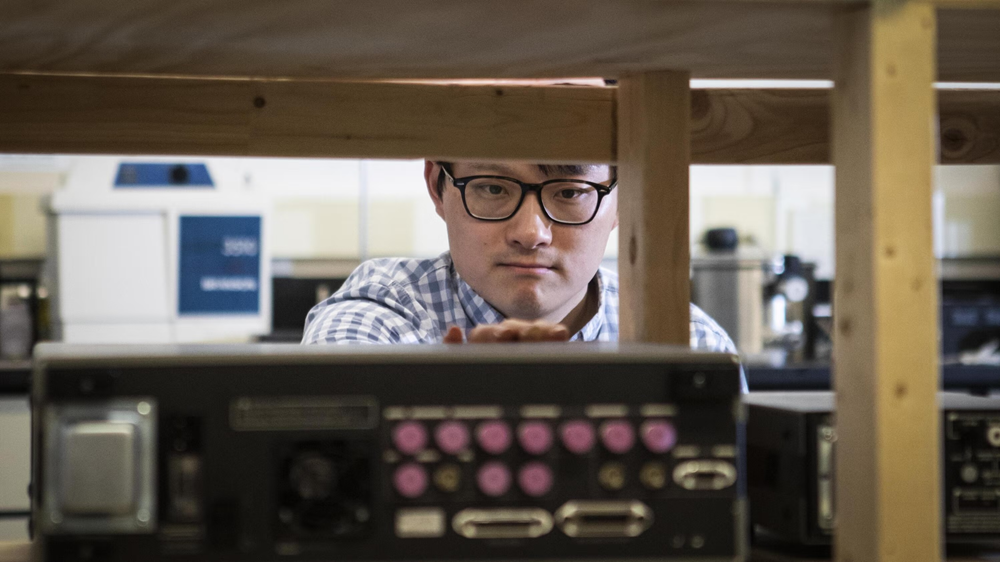
The field of nanotechnology is enabling unprecedented precision on a tiny scale. Across the University of Waterloo’s Faculty of Science, researchers are innovating nanotechnology to develop solutions to challenges in medicine, chemical manufacturing, and electronics. By designing materials at the nanoscale, scientists are discovering new possibilities that could improve our day-to-day lives.
Improving drug delivery through nanotechnology
At the School of Pharmacy, Dr. Marianna Foldvari and her team are developing nanoscale delivery technologies that help drugs, biologics, vaccines, and gene therapies navigate the body’s natural barriers. By enabling non-invasive delivery through the skin, eye, and nose, their work is creating new opportunities for treating skin, ocular, and neurological diseases.
Biological barriers designed to protect us, such as the skin, the eye, and the blood-brain barrier, can also prevent medicine from reaching diseased tissues. Researchers in the Foldvari Lab are developing nanomedicines that address this by packaging therapies inside carefully designed carriers. These carriers protect therapeutic agents, improve their stability, and help transport them to their intended destination.
“Conventional medicines are often distributed broadly throughout the body, even when only a small amount is needed in one specific tissue,” Foldvari says. “Nanotechnology allows us to control the journey a therapy takes. The therapeutic provides the message and the nanocarrier ensures the message reaches its destination.”
Foldvari’s lab is advancing drug delivery technologies for retinal, skin and neurological diseases, based on the belief that the future of medicine depends on delivering therapies precisely where they are needed. For example, her team has used nanotechnology to deliver neuroprotective genes to retinal tissues to preserve vision and slow neurodegeneration and has demonstrated highly efficient intranasal delivery of neuroprotective agents to the brain.
More precise drug delivery could improve treatment effectiveness, reduce side effects, and help make advanced therapies practical for a broader range of diseases. As treatments become tailored to an individual's genetics and disease profile, nanoscale delivery systems will need to become equally precise. By working at the same scale as the molecules, cells, and biological processes they seek to influence, Foldvari and her team are helping unlock new possibilities for precision medicine.
Advancing sustainable chemical manufacturing with nanoparticles
Clean energy solutions are often focused on how we generate and store electricity. However, another emissions challenge gets far less attention: how chemicals are made. Fossil feedstocks, high temperatures, and large, centralized plants manufacture fuels, fertilizers, plastics, and industrial chemicals. In Dr. Anna Klinkova’s lab in the Department of Chemistry, researchers are designing nanoparticles that let renewable electricity drive those reactions instead.
“We are exploring ways to convert carbon dioxide into fuels and chemical feedstocks, using captured carbon as a building block for organic synthesis rather than simply treating it as waste,” Klinkova says. “We are also developing processes to recover nitrogen from urea and ammonia in wastewater, and more recently, we’ve begun working on ways to produce hydrogen peroxide, an important industrial oxidant, on site and on demand.”
Each avenue of research has the same goal: replacing heat and fossil carbon with electrons and a well-designed catalyst. Researchers synthesize metal nanoparticles (crystals measuring only tens of nanometers across). By controlling their size, shape, composition, and atomic arrangement, they create highly efficient electrocatalysts that allow renewable electrons to drive complex chemical reactions. “Making a reaction go faster is comparatively easy," Klinkova says. "Making it go one way and not another is the hard part, and it's decided by structure.
While research remains in its early stages, the goal is to replace carbon-intensive fossil fuels with clean, renewable electricity to manufacture chemicals, fuels and everyday materials directly from recycled waste.
Nanotechnology for next-generation technology
Each year, electronics get smaller, faster and more powerful. However, conventional technologies are reaching their limits, and we need new materials to drive innovation. In Dr. Adam Wei Tsen’s lab in the Department of Chemistry, researchers are exploring ultra-thin two-dimensional quantum materials reduced to the nanoscale that could pave the way for next-generation technology.
“Two-dimensional materials have a layered structure similar to graphite, which means they can be stabilized all the way down to a single layer,” Tsen says. “In single-layer materials, the natural interaction between layers disappears, completely changing how electricity, magnetism and light behave within them. By artificially stacking these layers back together in new combinations, we can engineer entirely new properties that do not exist in nature."
This cutting-edge research takes place at Waterloo’s Institute for Quantum Computing, one of the top quantum information research institutes in the world. The team is using these ultra-thin materials to build advanced light sensors, such as broadband photodetectors that allow a single, microscopic sensor to see a massive range of light. This research could lead to more compact and higher-functioning light-sensing solutions for security and diagnostic applications.
Uniting visionaries
This article was originally published in Optometry & Vision Science News.
The University of Waterloo’s School of Optometry unites vision researchers through its newly launched Vision Science Consortium.
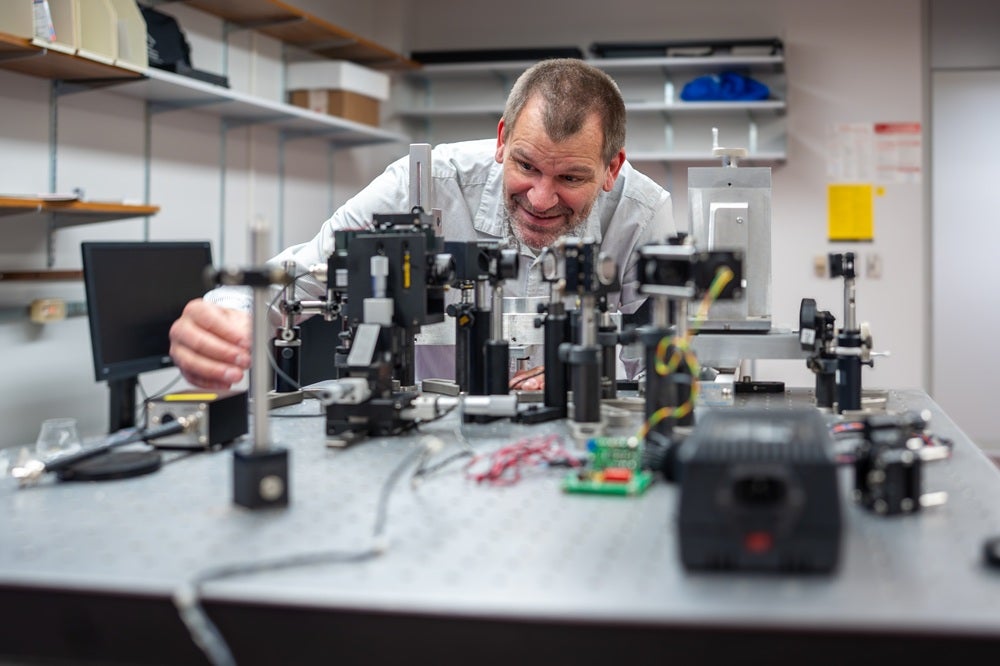
The University of Waterloo’s School of Optometry and Vision Science is proud to announce the launch of the Waterloo Eye Institute Vision Science Consortium (WEI VSC), connecting researchers across campus who are working to understand, protect, and enhance human vision.
At the helm of its establishment is Dr. Austin Roorda, a professor in the School of Optometry and Vision Science. When Roorda joined the school, he set a goal to establish new connections to advance his research. He has always viewed vision science as a multidisciplinary field that requires expertise from a wide range of disciplines.
He found that collaborative approaches to innovative solutions are embedded in Waterloo’s culture. In Optometry, Lyndon Jones and Maud Gorbet (Systems Design Engineering) have collaborated for more than 20 years, bringing together complementary expertise in vision science, biomaterials and engineering to advance knowledge of tear film and contact lenses, Krista Kelly has teamed up with Ewa Niechwiej-Szwedo (Kinesiology and Health Sciences) to study hand-eye coordination in children with strabismus, and Stanley Woo is also working with Helen Chen (School of Public Health) to develop Can-View, a national eye data repository for AI-driven vision care.
Roorda’s goal is to accelerate more research partnerships like this by developing a community that will strengthen, showcase and leverage the depth of vision science expertise at Waterloo.
“Unlike most disciplines where researchers are trained with a single set of skills and apply them in different areas, Vision Science is a field where multiple disciplines are directed toward one system – human vision,” says Roorda. “This is why the consortium is so important. By facilitating multidisciplinary collaborations, the WEI-VSC will ensure that the University of Waterloo will be better poised to make impacts in vision healthcare and research.”
The WEI VSC comprises 57 researchers from 12 departments and spans 37 research areas. More than half of the consortium’s members are researchers outside the School of Optometry and Vision Science, a testament to Waterloo’s breadth of expertise and culture of collaboration.
The vision for the WEI VSC is to build a community that will serve as a one-stop hub for current and prospective researchers looking for collaborators. Through these connections, the consortium also aims to foster more interdisciplinary training opportunities for students, whether informally or through joint degree programs.
“The WEI is a national resource for education, clinical care and research,” says Ben Thompson, the Director of the School of Optometry. “The VSC provides a platform that will accelerate activity in all three of these areas enabling the development of new knowledge, skills, technologies and treatments.”
Learn more about the Waterloo Eye Institute and Vision Science Consortium.
Building closure
The Douglas Wright Engineering (DWE) building will reopen for regular operations on Monday, October 19. Until then, please continue to avoid the building unless you have been authorized access for select activities.
For the past several weeks following the sewage backup, crews have worked to clean, repair and restore the building and systems. As of October 19, regularly scheduled activity will resume. If you have classes, labs, research activities or other scheduled activity in DWE, you may receive any additional instructions from your instructor, supervisor or organizer as needed. The DWE service tunnels will remain restricted to authorized Plant Operations staff and contractors.
Office closure
All Campus Wellness locations will be closed today,Thursday, October 15 for a staff meeting. Campus Wellness locations will reopen at noon.
When and Where
The Campus Wellness Student Medical Clinic offers healthcare visits with Physicians and Nurse Practitioners to current undergraduate and graduate students. Services include: vaccinations, immunity testing, naturopathic services and more.Counselling Services offers appointments with counsellors in person as well as via phone and video. Students can book appointments for these services by calling Campus Wellness at 519-888-4096.
The privately-run Student Health Pharmacy(located in the lower level of the Student Life Centre) is now offering new COVID booster shots and flu shots. Covid booster shots are available by appointment only – please call ext. 33784 or 519-746-4500. The Student Health Pharmacy’s summer hours are Monday to Friday, 9:30 a.m. to 4:30 p.m. Naloxone kits are still available – pick them up in the pharmacy at no charge.
The Waterloo Eye Institute optometry clinics in Waterloo and downtown Kitchener offer comprehensive eye exams and eyewear, including glasses and contact lenses, with the Waterloo location offering various specialized services including urgent eye care. Discounts apply for University of Waterloo students and employees. The Waterloo Clinic is at a nearby interim location, 419C Phillip St, during construction at the School of Optometry and Vision Science. The Kitchener Clinic remains at the Health Sciences Campus, 10B Victoria St. S. Book online or by phone at 519-888-4062.
Instructional Innovations Week, Tuesday, October 13 to Friday, October 16. Featuring a range of sessions exploring innovative approaches to teaching and learning, with a particular focus on generative AI and emerging technologies.
Don McCrae Naismith Classic Basketball Tournament, Thursday, October 15 to Saturday, October 17, PAC
Teaching Critical Thinking in a Time of AI (CTE7563), Thursday, October 15, 1:30 to 3 p.m., MC 2036
GenAI Assessment Showcase (with faculty examples) (CTE7564), Thursday, October 15, 10:30 a.m. to noon, MC 2036
Identity offboarding, Friday, October 16, 9 to 10 a.m., virtual
Augmented Reality Video for Online / Hybrid Teaching and Tutoring (CTE7566), Friday, October 16, 1:30 to 3 p.m., Tech Sandbox (LIB 329)
Warriors Football vs. McMaster– Saturday, October 17, 1 p.m. (Warrior Field). Senior Game. Buy your tickets today!
AI Before the Ruins: Industry and Inquiry Before and After the Bubble, keynote lecture by Dr. Anne Pasek, Environmental Humanities Symposium, October 17, 9 to 10 p.m. EV3 1408
Bodies, Bones, and Burials: What Human Remains Reveal About the 1845 Franklin Northwest Passage Expedition, Wednesday, October 21, 7 to 8:30 p.m., Humanities Theatre, Hagey Hall
ABC (African, Black, Caribbean) Chill, Sunday, October 18, 8 p.m. to 9 p.m., REN 1401 (Link Inclusion Lounge)
Ancient Greece and Rome in German Scholarship and Culture, 18th to 20th Centuries, Monday, Oct. 19, 2 p.m. to Tuesday, October 20, 4:30 p.m., DRAGEN Lab, St. Jerome's University College
Introduction to Crochet, Wednesday, October 21, noon to 1:00 p.m. (class is held over two weeks). It will also be held on Monday, November 2, 5 to 7 p.m. Location will be sent at registration. Note: This workshop costs $25.
Queer & Christian, Wednesday, October 21, 6:00 p.m. to 7:00 p.m. Renison's Chapel of St. Bede (REN 2400)
Safeguarding Science Webinar: Module 7 - Conducting Open-Source Due-Diligence (English), Thursday, October 22, 1 to 2:30 p.m.
Mature Student Coffee Chat, Thursday, October 22, 12:30 to 1:30 p.m., REN 1401 (Link Inclusion Lounge)
SCSRU Workshop - Conducting Surveys with Qualtrics, Thursday, October 22, 9:30 a.m. to 4 p.m., M3 3127
Home Routes folk concert: Brian Conway and Cate Sandstrom, Friday, October 23, 7 p.m. to 9 p.m., Brubacher House - North Campus UW.
Warriors Women's Hockey vs. York – Friday, October 23, 7 p.m. (CIF Arena). Home Opener, Residence Night, Employee Night. Email WarriorsTickets@uwaterloo.ca for coupon code. Buy your tickets today!
Kids’ Science Open House, Saturday, October 24, 10:30 a.m. to 4:30 p.m., Science Teaching Complex. Family event - an extravaganza of science discovery for school-aged kids!
Pumpkin Patch Bus Trip, Saturday, October 24, 11:15 a.m. to 3:15 p.m., $40 to attend
Honk! Spot the scam: Cyber Awareness Month information booth, Tuesday, Oct 27, 9 a.m. to 4 p.m., Student Life Centre (SLC)
Queer & Cozy, Tuesday, October 27, 7. to 8 p.m., REN 1401 (Link Inclusion Lounge)
AI: Opportunity, Risk and Choices Ahead, Thursday, October 29 from 7 to 9 p.m., Centre for International Governance Innovation
Halloween Haunt: The Canvas breach (Shadow IT), Friday, Oct 30, 9 to 10 a.m., virtual
Warriors Volleyball vs. Nipissing – Friday, October 30, 6 p.m. (Women) / 7:30 p.m. (Men) (Carl Totzke Court, PAC) - Home Opener, Camps and Minor Leagues Day, Employee Night. Email WarriorsTickets@uwaterloo.ca for coupon code. Buy your tickets today!
Risk, Resilience, and Climate Change - from Power Systems to Communities: Seminar with Seth Guikema, Friday, October 30, 12:00 p.m. to 1:30 p.m., PSE Faculty Hall
Chinese Student Hangout, Friday, October 30, 5 p.m. to 6 p.m., REN 1400 (Dunker Family Lounge)
SCA 50th Anniversary Celebration, Tuesday, November 3, 3 to 5 p.m., Dana Porter Library, First Floor.
Warriors Men's Hockey vs. Laurier– Wednesday, November 4, 7 p.m. (CIF Arena). Battle of Waterloo. Buy your tickets today!
Safeguarding Science Webinar: Module 6 - Travelling Safely: Protecting Your Research While Travelling Abroad (English) - Thursday, November 4, 1 to 2:30 p.m.
2026 National Bank Field Hockey Canada U SPORTS Championship, presented by Farm Mutual Re– Wednesday, November 5 to Sunday, November 8 (Warrior Field). Buy your tickets today!
Warriors Basketball vs. Carleton– Friday, November 6, 6 p.m. (Women) / 8 p.m. (Men) (Carl Totzke Court, PAC). Home Opener, Camps and Minor Leagues Day. Buy your tickets today!
Upcoming service interruptions
Stay up to date on service interruptions, campus construction, and other operational changes on the Plant Operations website.